Make development faster, simpler, and easier to test
|
Prototype quickly using flexible network options
Test cloud workflows without rewriting firmware
Move faster by offloading complexity to the platform |

Development Features
Build and test connected devices faster with less complexity
Use tools that simplify connectivity, streamline cloud routing, and reduce device-side logic so teams can prototype rapidly and move confidently into production.
Streamline development, from first connection to cloud integration
Developers shouldn’t have to configure complex networking, embed large SDKs, or operate custom servers just to send a test message or validate device behavior. Development Features let teams prototype with real devices, test data flows, inspect traffic, route messages to cloud services, and diagnose behavior long before production—without rewriting firmware or setting up backend infrastructure.
These capabilities are designed to help teams move quickly during early development while laying a smooth path toward scalable, maintainable production deployments.
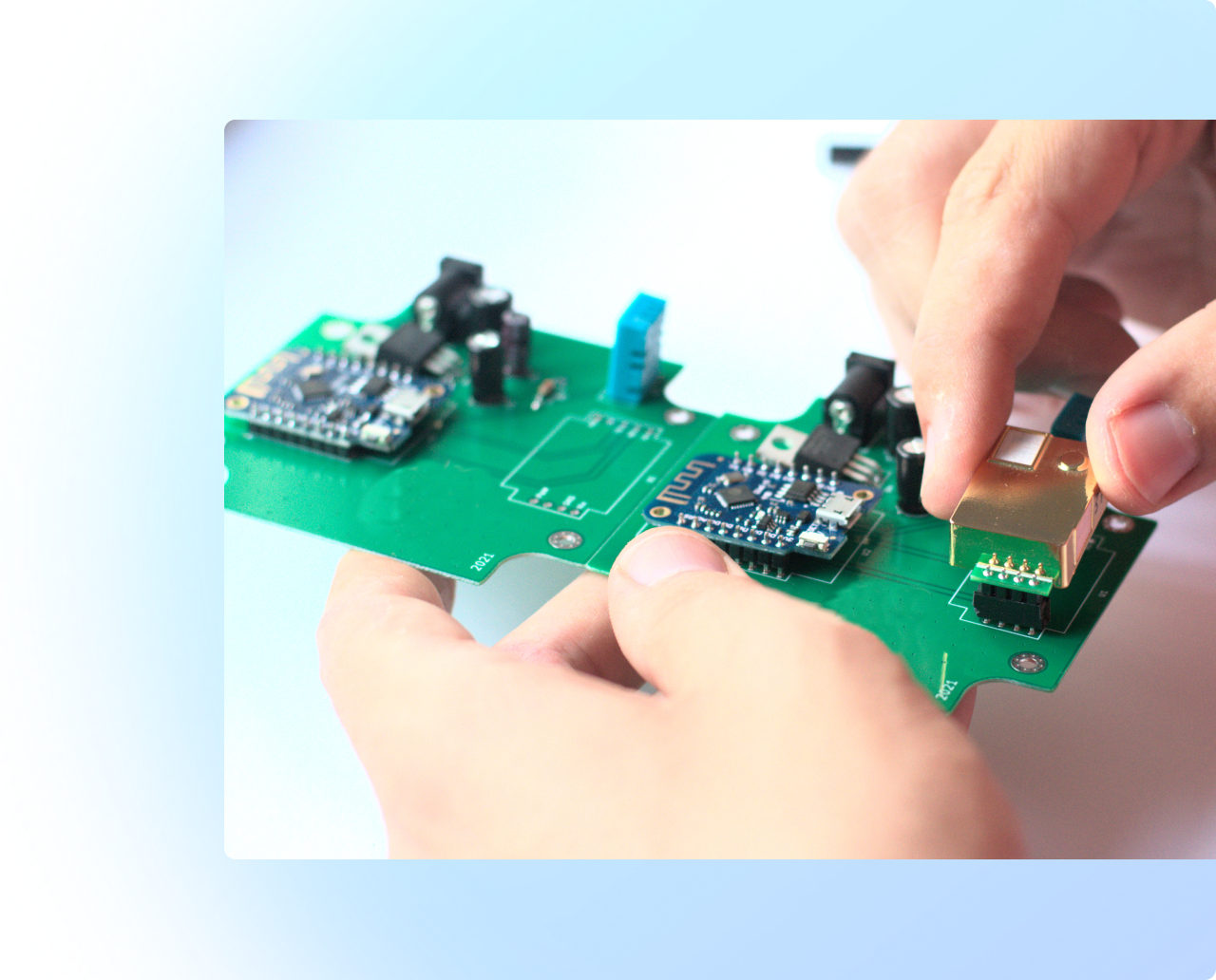
Build with confidence from day one
Test data flow, inspect behavior, and integrate cloud services without complex setup
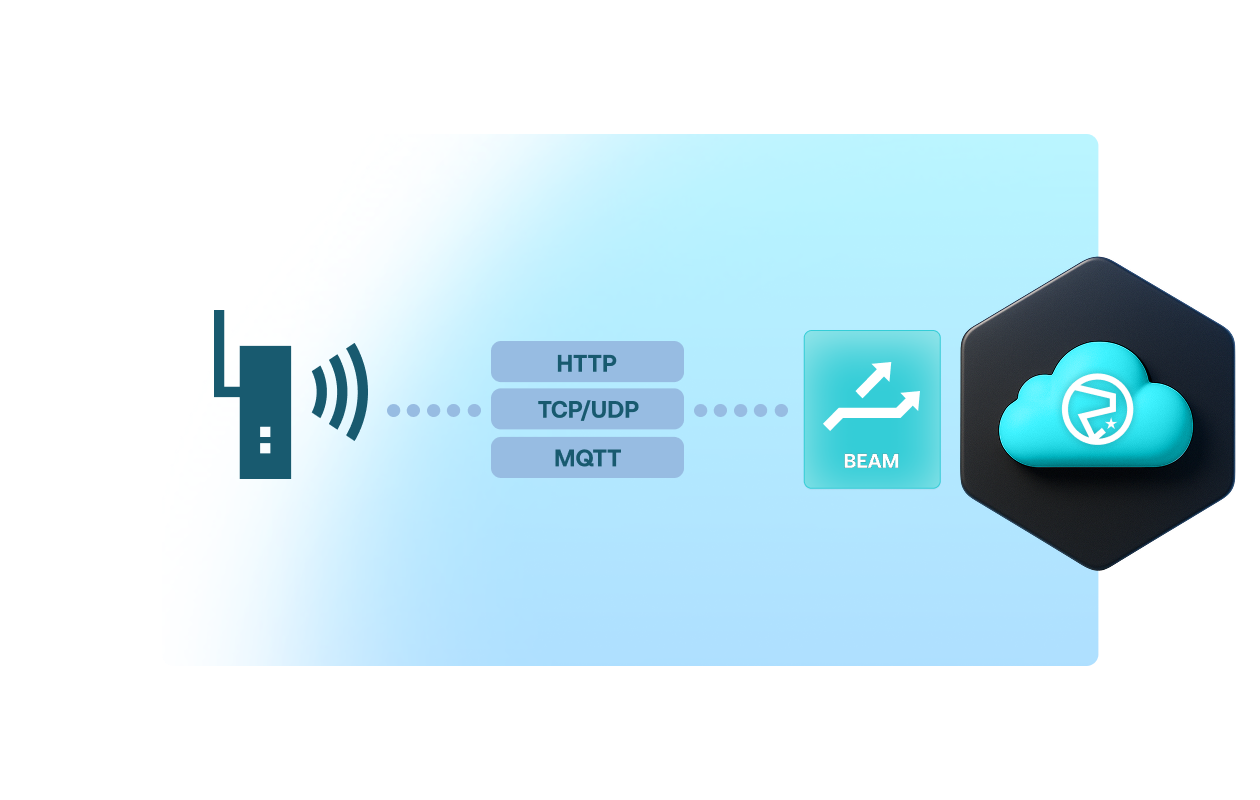
Prototype cloud connectivity without SDKs or custom APIs
Devices can send simple HTTP, MQTT, TCP, or UDP messages, and the platform will handle protocol translation, encryption, authentication, and cloud-specific formatting. This reduces firmware complexity and accelerates early testing. (Soracom Beam)
Example:
A developer can send a simple HTTP POST from a microcontroller, and the platform converts it into an authenticated MQTT publish to AWS IoT or another destination.
- Lightweight device code
- No cloud SDKs required
- Flexible protocol options
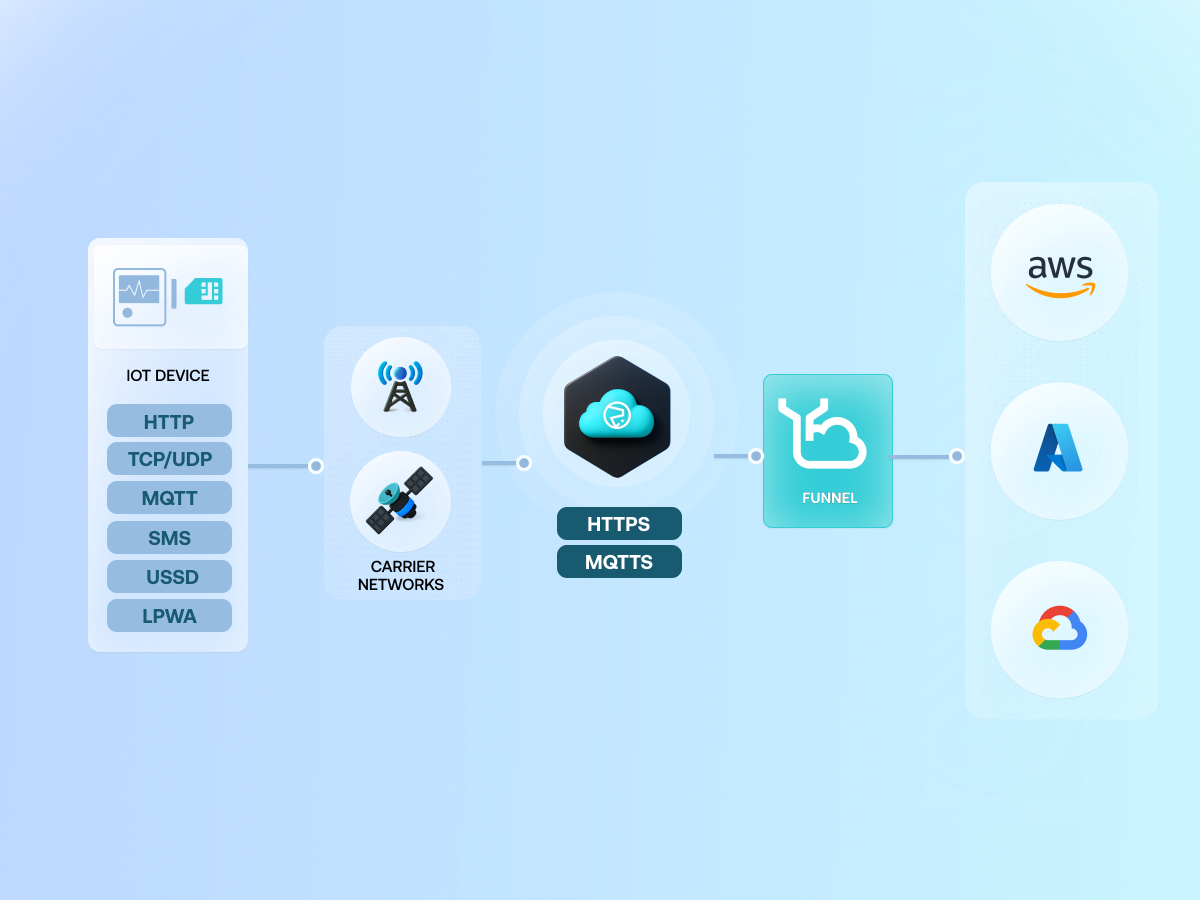
Test data flows by connecting directly to cloud services
Devices can route telemetry and events directly into cloud-native services—such as AWS IoT, Kinesis, Azure Event Hubs, or Google Pub/Sub—without developers having to build relay servers or configure complex infrastructure. (Soracom Funnel)
Example:
A team evaluating event-driven IoT workflows can post test messages and instantly see them in their cloud dashboards, with no backend setup required.
- Minimal setup
- Direct cloud ingestion
- No servers to maintain
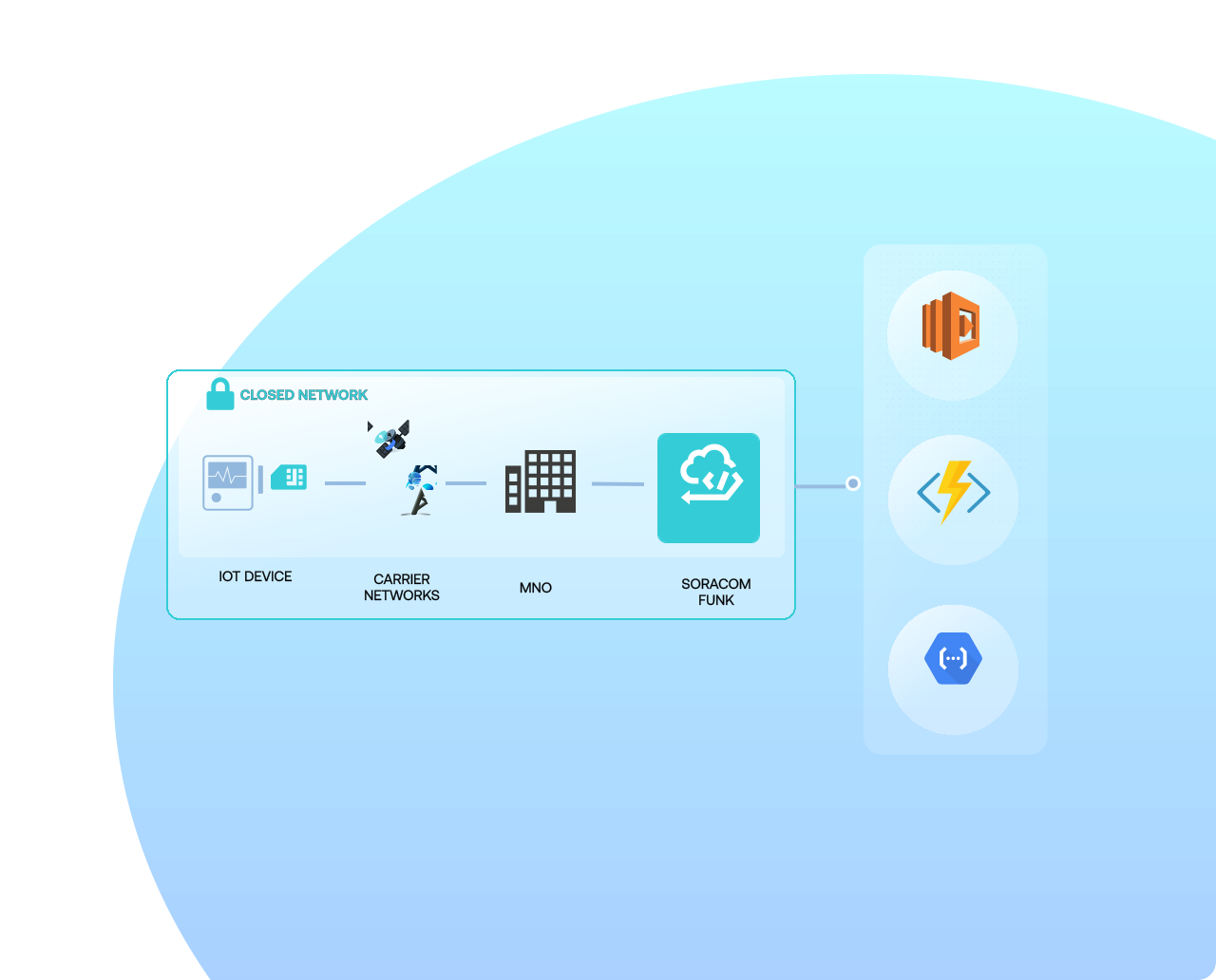
Trigger serverless functions from device events
Developers can experiment with cloud-side logic by sending device data directly to AWS Lambda, Azure Functions, or Google Cloud Functions—perfect for validating workflows before building full applications. (Soracom Funk)
Example:
A developer testing a pressure threshold workflow can trigger a Lambda function to send a Slack alert or store values in a database.
Bullets:
- Ideal for prototyping features
- No backend code required
- Works with lightweight device messages
What teams normally struggle with
|
Setting up backend infrastructure for early tests
Embedding heavy encryption or cloud libraries
Testing workflows across multiple clouds
Diagnosing early connectivity or data issues |
Test and debug device behavior in real time
Capture traffic for de-bugging
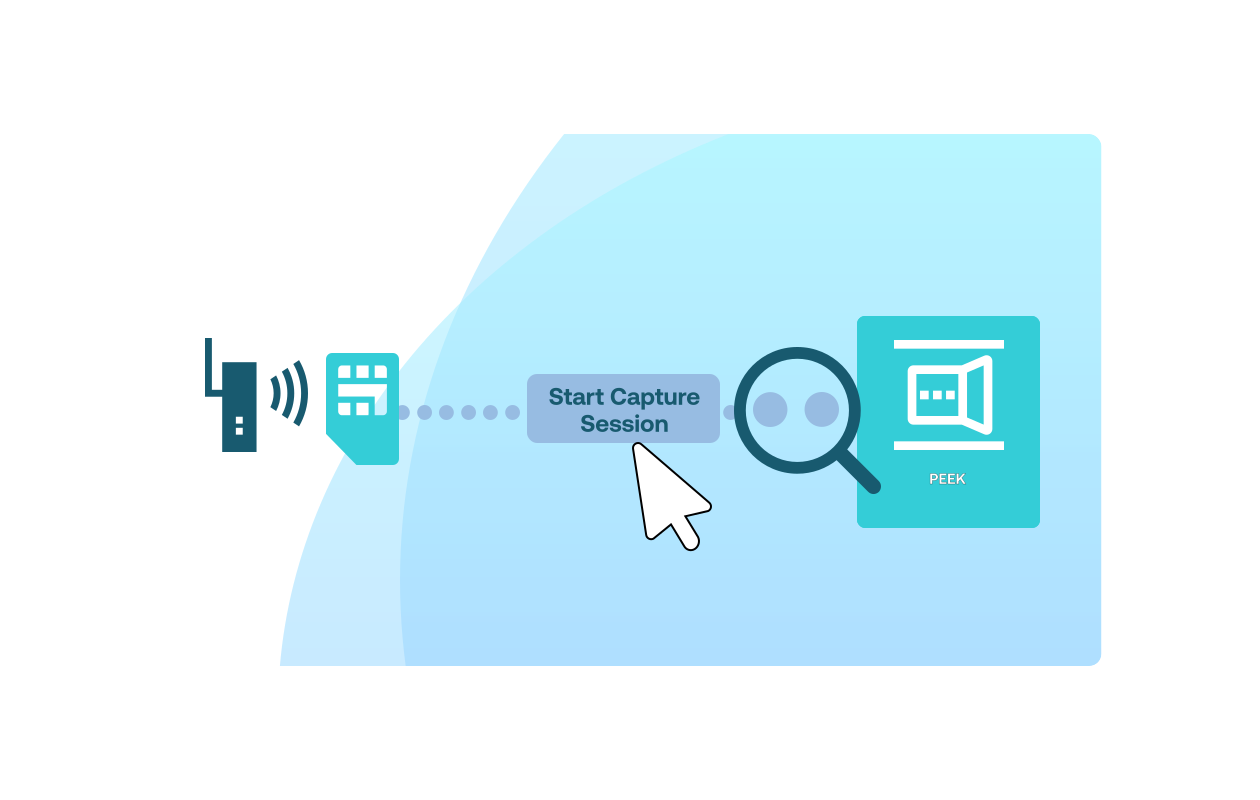
Record network packets without installing capture tools on devices or routers.
- Inspect device behavior
- Debug payload formats
- Validate routing changes
Remote access without special setup
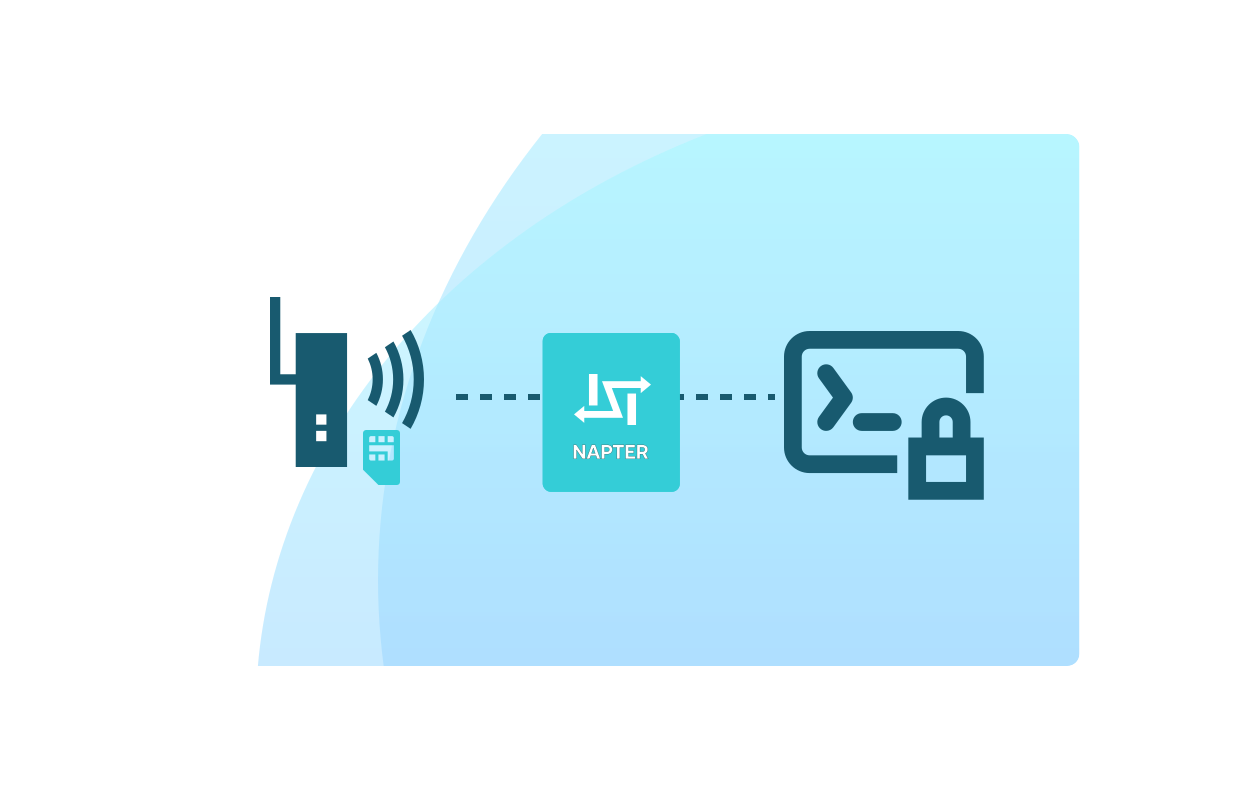
Access devices behind NAT or with closed firewalls to run diagnostics, check logs, or test workflows.
- Temporary session access
- Works with SSH, RDP, VNC, HTTPS
- Ideal for in-field debugging
Service:
On-demand remote access (Soracom Napter)
Prototype IoT applications using cloud-based processing
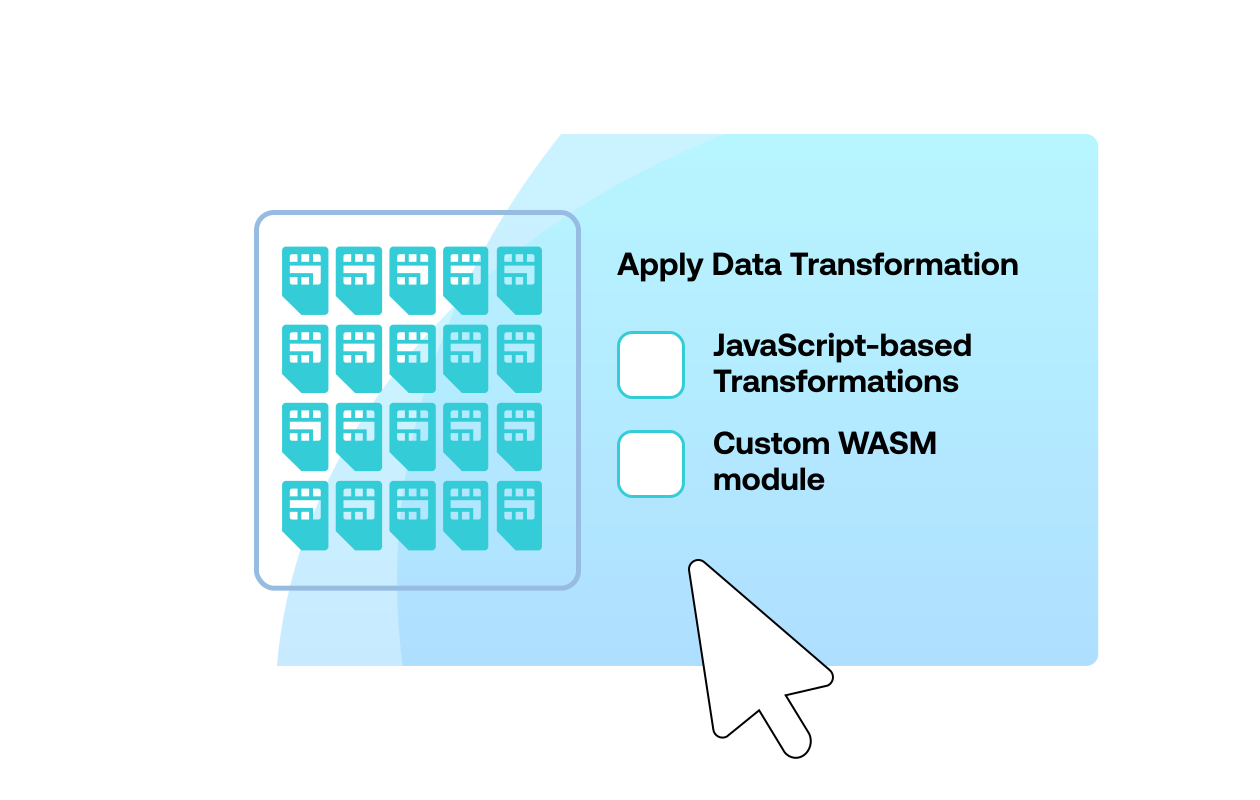
Transform and shape data without modifying device firmware
Developers can write small scripts that adjust payload formatting, filter data, or enrich messages before they reach backend systems—speeding up experimentation while keeping firmware lightweight. (Soracom Orbit)
- Lightweight data transforms
- Works bi-directionally
- Edit logic without firmware changes
Additional tools that support rapid development
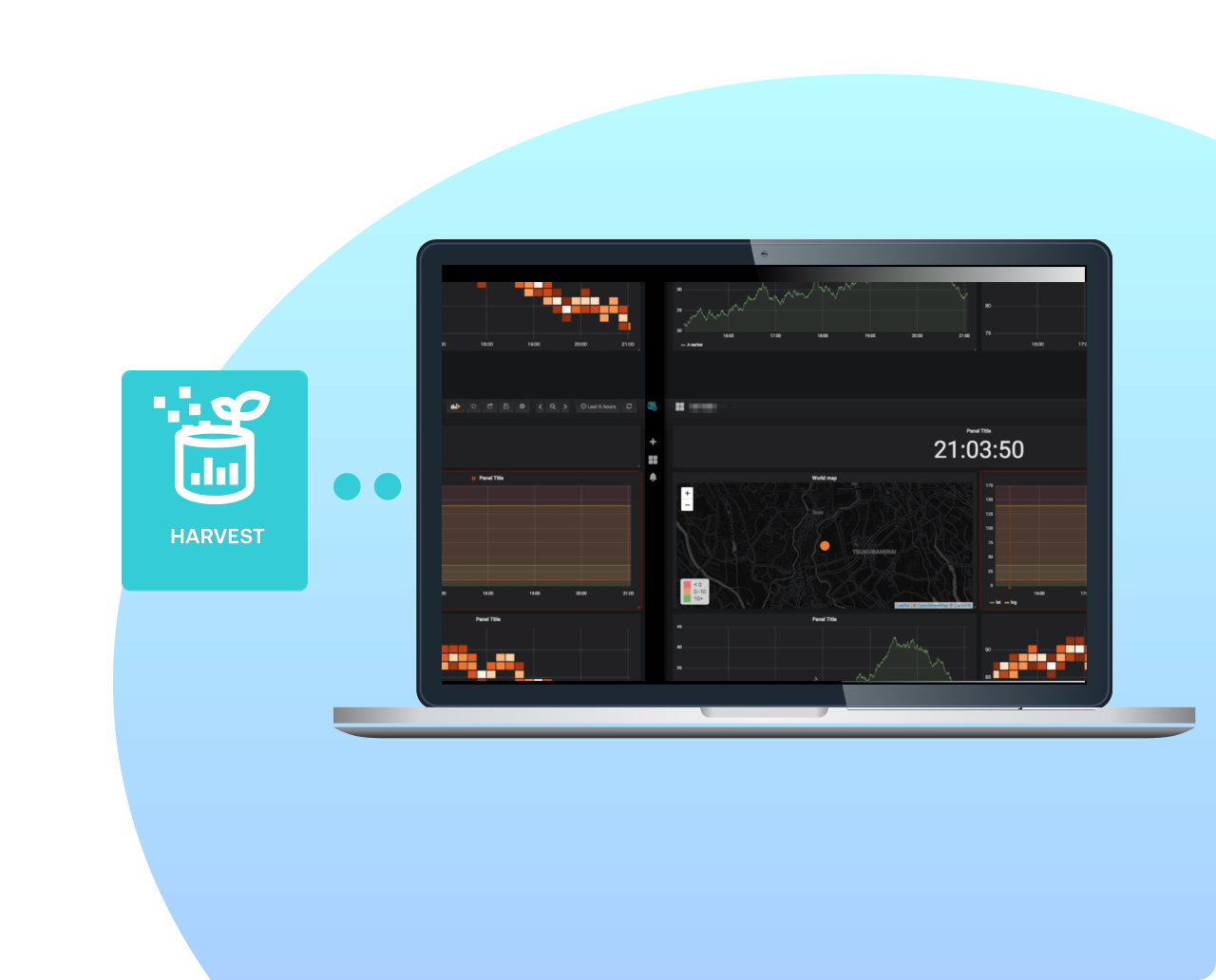
Visualize early device data instantly
Harvest allows developers to collect and visualize test data without provisioning storage or deploying services.
- Quick data validation
- Simple time-series charts
- No database setup

Talk with a Soracom engineer about your development workflow
Get help designing your prototype architecture, selecting the right tools, or speeding up your path from development to production.
Frequently Asked Questions
How do I test cloud connectivity without installing SDKs?
Devices can send simple HTTP, MQTT, TCP, or UDP messages and the platform will handle encryption, authentication, and protocol translation for you (Soracom Beam).
Can I test serverless architectures during development?
Devices can trigger AWS Lambda, Azure Functions, or Google Cloud Functions directly through the platform using lightweight protocols (Soracom Funk).
Can I access devices that are behind firewalls or NAT?
Yes. You can open temporary remote access sessions for SSH, RDP, VNC, or HTTPS to troubleshoot devices in the field (Soracom Napter).
How can I visualize data during early development?
Serverless data collection lets you chart and review telemetry instantly through the console (Soracom Harvest).
How do these tools help transition from development to production?
They reduce prototype-specific code, enforce consistent routing, and provide observability that helps teams refine architectures before scaling.
Can I send test messages directly to cloud services?
Yes. Devices can forward data directly to AWS IoT, Kinesis, Azure Event Hubs, or Google Pub/Sub without custom servers (Soracom Funnel).
How can I debug unexpected device behavior?
You can capture packets, inspect traffic, or review request/response patterns without extra hardware (Soracom Peek).
How do I test different payload formats without changing device firmware?
You can apply lightweight data transformations or filtering at the platform level (Soracom Orbit).
Do these tools work for devices that aren’t on cellular?
Yes. Devices connected via Wi-Fi, Ethernet, or satellite can use many of the same development tools (Soracom Arc + platform services).