Simplify the path from device to cloud
|
Make data ingestion straightforward for every device
Route data flexibly as your architecture evolves
Keep authentication and credentials off devices |

Cloud Integrations and Data Pipelines
Deliver device data reliably to your cloud environments
Streamline how devices connect to cloud services, using lightweight protocols and platform-level routing that eliminates SDKs, reduces overhead, and adapts as your architecture evolves.
Make device-to-cloud communication as simple as possible
Whether you’re ingesting telemetry, forwarding events to cloud functions, or building analytics workloads, you can route, transform, and secure data entirely in the platform.
Cloud Integrations & Data Pipelines help teams send data from devices into AWS, Azure, Google Cloud, and custom endpoints without embedding heavyweight SDKs or maintaining relay servers. These capabilities keep device firmware simple, centralize authentication, and make it easy to adjust destinations as products evolve.

IT-friendly cloud integrations
Route data directly into cloud services using lightweight protocols and platform-managed authentication
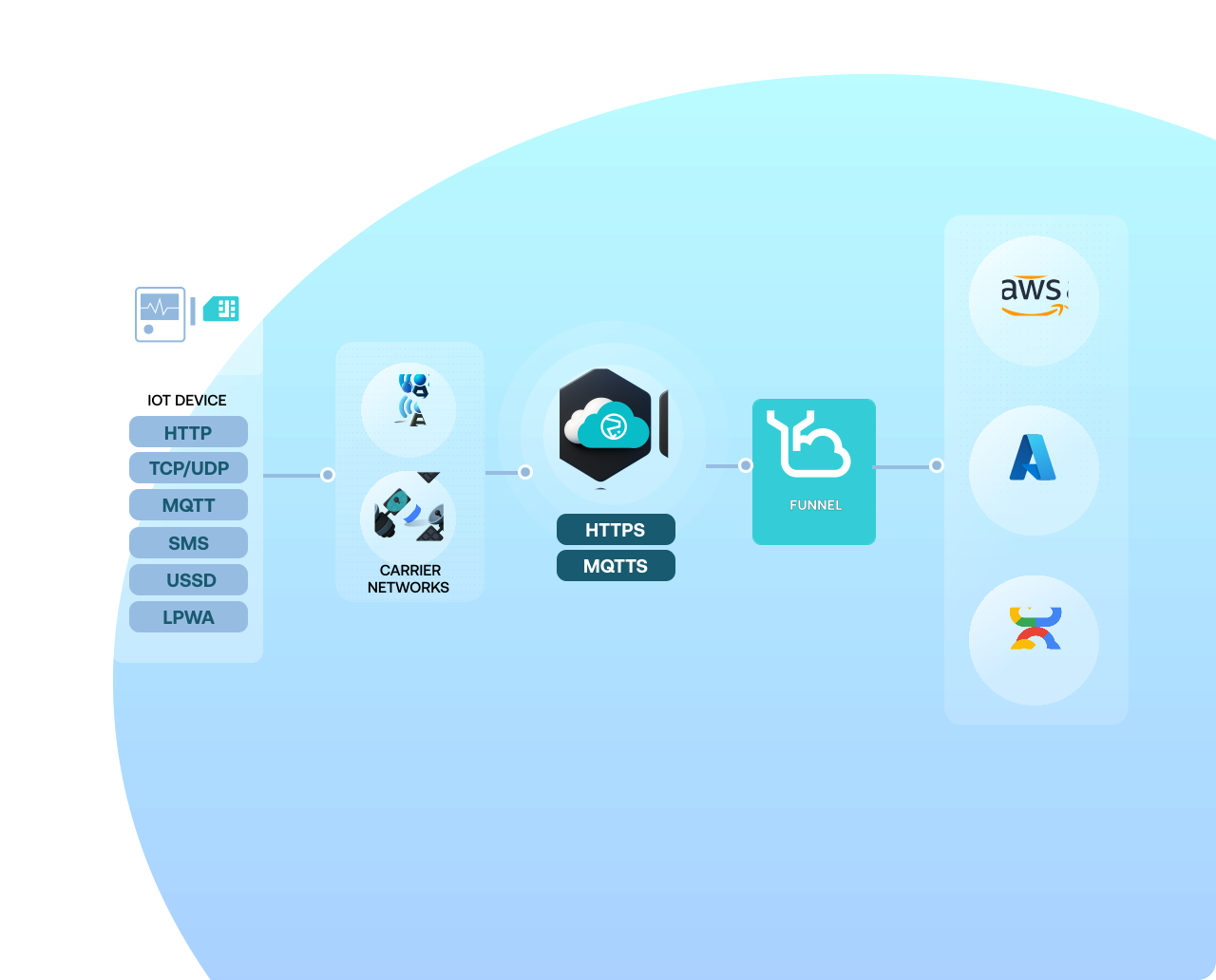
Send data directly into cloud services without device SDKs
Instead of embedding cloud-specific SDKs, certificate stores, or TLS stacks on devices, you can forward data to AWS IoT, Azure Event Hubs, or Google Cloud Pub/Sub by selecting a destination in the console. The platform handles credentials, batching, and secure delivery (Soracom Funnel).
Example:
A sensor manufacturer can forward data into AWS IoT Core without storing certificates or updating firmware when endpoints change.
Bullets:
- Eliminate device SDKs
- Console-level configuration
- Native integration with AWS, Azure, Google Cloud
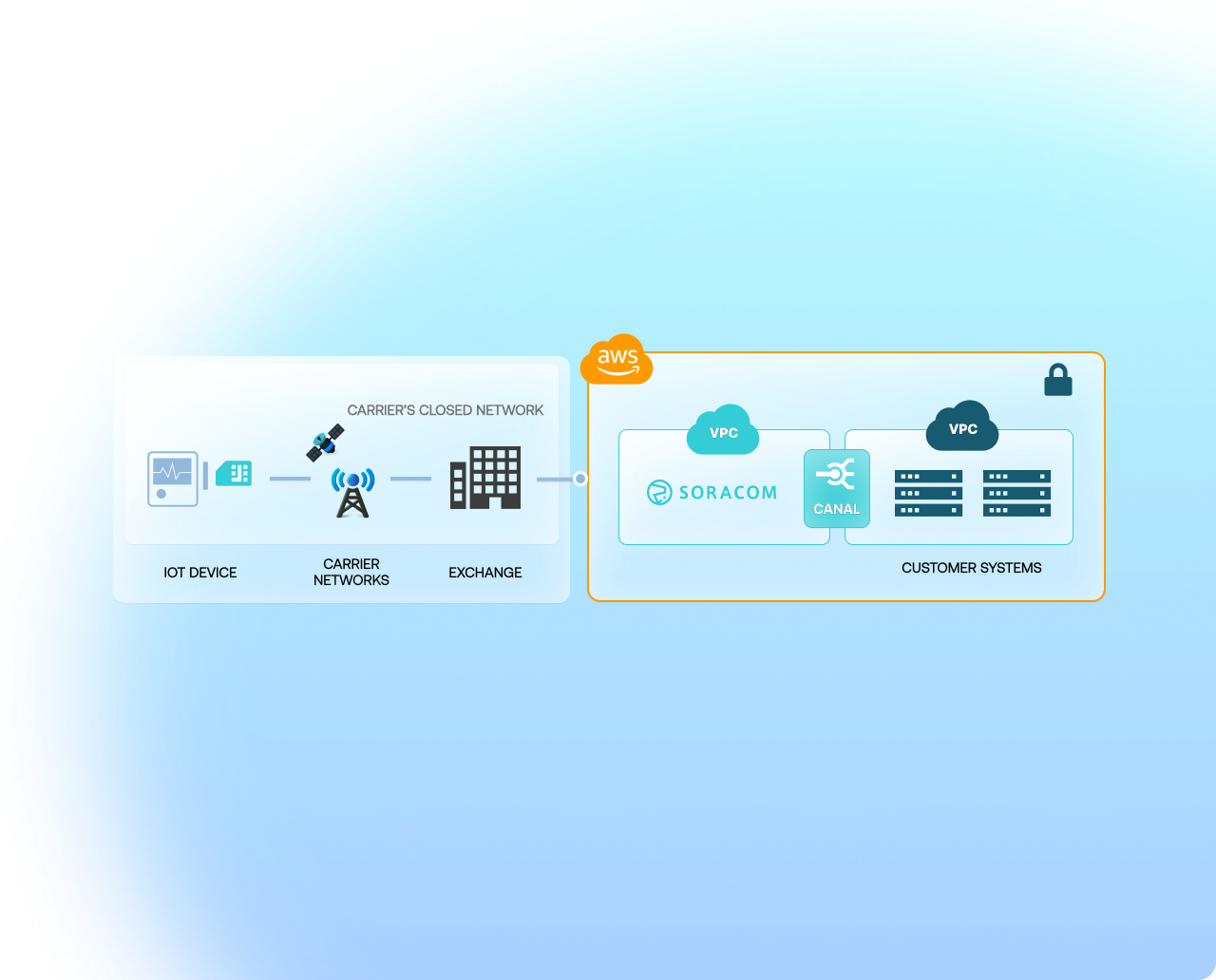
Bring device traffic into AWS without exposing it to the public internet
You can establish a private, non-internet path between your devices and your AWS environment using VPC peering or Transit Gateway connections. This lets you treat device traffic as part of your internal network—secured, isolated, and fully under your routing policies—without building VPN appliances or issuing public endpoints.
With a private connection, your cloud services can receive data from devices as if they were on the same LAN, enabling secure ingestion, microservice communication, and controlled access to backend APIs. This approach works across regions and scales automatically as your fleet grows (Soracom Canal).
- Private routing between Soracom and your AWS VPC
- No public IPs or internet gateways required
- Works with VPC Peering or Transit Gateway
- Scales with your AWS architecture without additional hardware

Offload application logic to cloud functions via lightweight device messages
Offload application logic to cloud functions like AWS Lambda, Azure Functions, or Google Cloud Functions. Devices send lightweight messages, and the platform packages context metadata and delivers the event reliably (Soracom Funk).
Example:
A smart-home product can process commands and run business logic in Lambda, avoiding firmware rewrites whenever backend logic changes. With cloud-side business logic, smart-home products stay simple, lightweight, and secure, keeping core functionality for offline mode. Everything that changes lives in the cloud, not inside device firmware.
- Event-based cloud function triggers
- Works with HTTP, TCP, UDP, SMS
- No server infrastructure required
What teams normally struggle with |
Embedding cloud SDKs in constrained devices Operating relay servers or message brokers Upgrading firmware when cloud destinations change Normalizing inconsistent payloads from mixed devices |
Transform data formats without changing firmware
Simplify device firmware by handling protocol and TLS work in the cloud
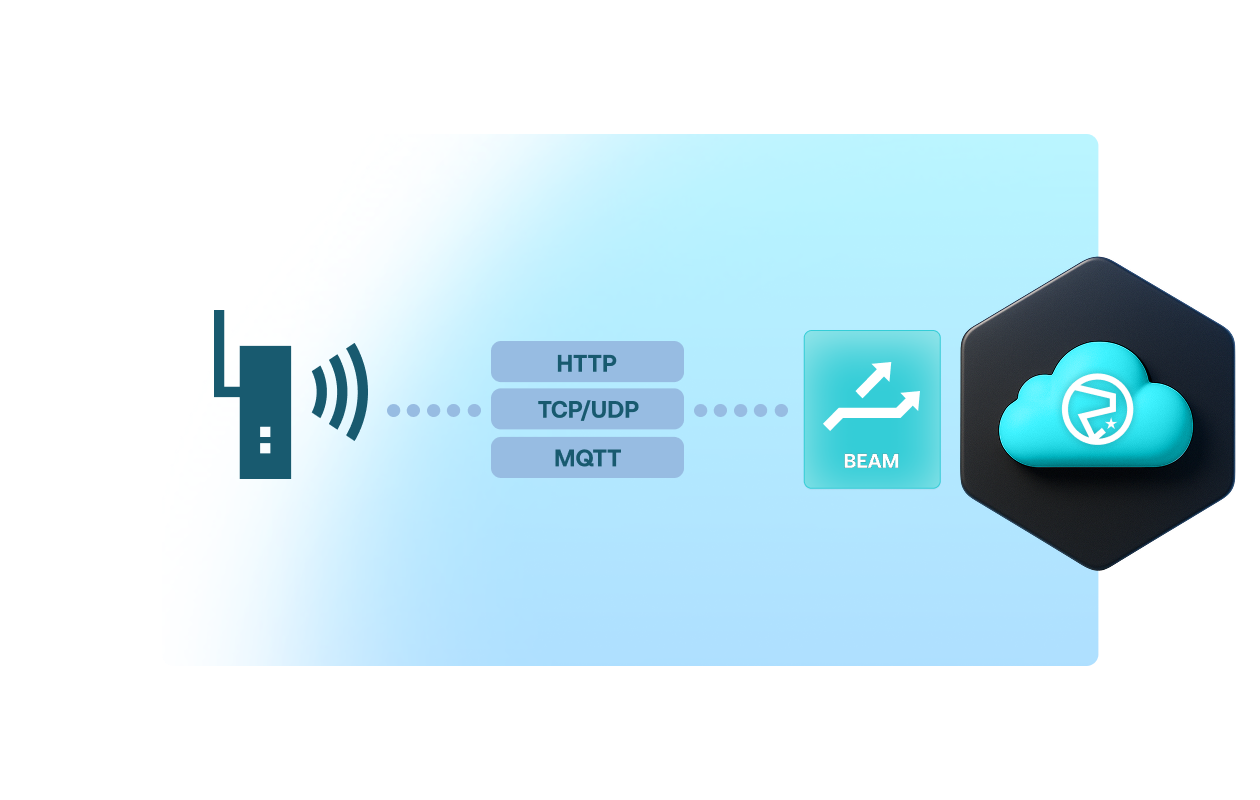
Protocol conversion and TLS offload
Convert HTTP, MQTT, TCP, or UDP while shifting TLS encryption and certificate handling off devices.
- Reduce device power and memory
- Centralize authentication
- Maintain encryption end-to-end
Learn More: Protocol conversion & routing (Soracom Beam)
Standardize and filter payloads in the network instead of on devices
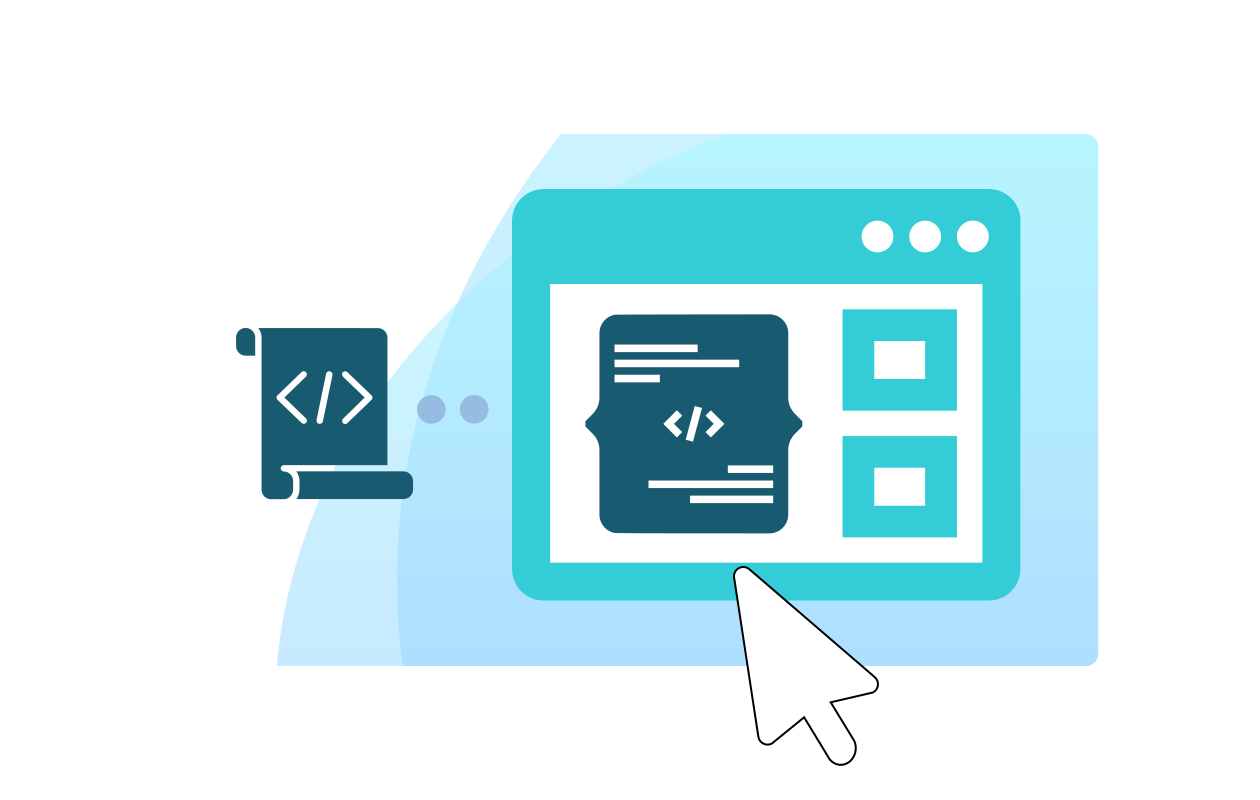
Inline data transformation
Transform payloads in-flight using lightweight programs to normalize or enrich data.
- Convert proprietary formats
- Add metadata
- Clean or filter payloads
Learn More: Inline data processing (Soracom Orbit)
Direct pipelines into cloud-native services

Deliver data into AWS, Azure, and Google Cloud without SDKs or relay servers
Soracom provides a managed pathway for you to send device data straight into your cloud platforms. Instead of embedding SDKs, TLS stacks, or cloud-specific logic into every device, Funnel forwards data on your behalf using the proper authentication, structure, and endpoints. This lowers firmware complexity, reduces integration risk, and ensures cloud changes can be handled centrally without a fleetwide firmware update.
Platform highlights:
- Supports AWS IoT, Amazon Kinesis, Azure Event Hubs, and Google Cloud Pub/Sub.
- Accepts data over simple protocols such as HTTP and MQTT.
- Performs authentication and credential management on the network side.
- Removes the need for custom relay servers or embedded cloud SDKs.
- Enables rapid cloud adoption while standardizing device firmware across product lines.
Additional features that support cloud data workflows
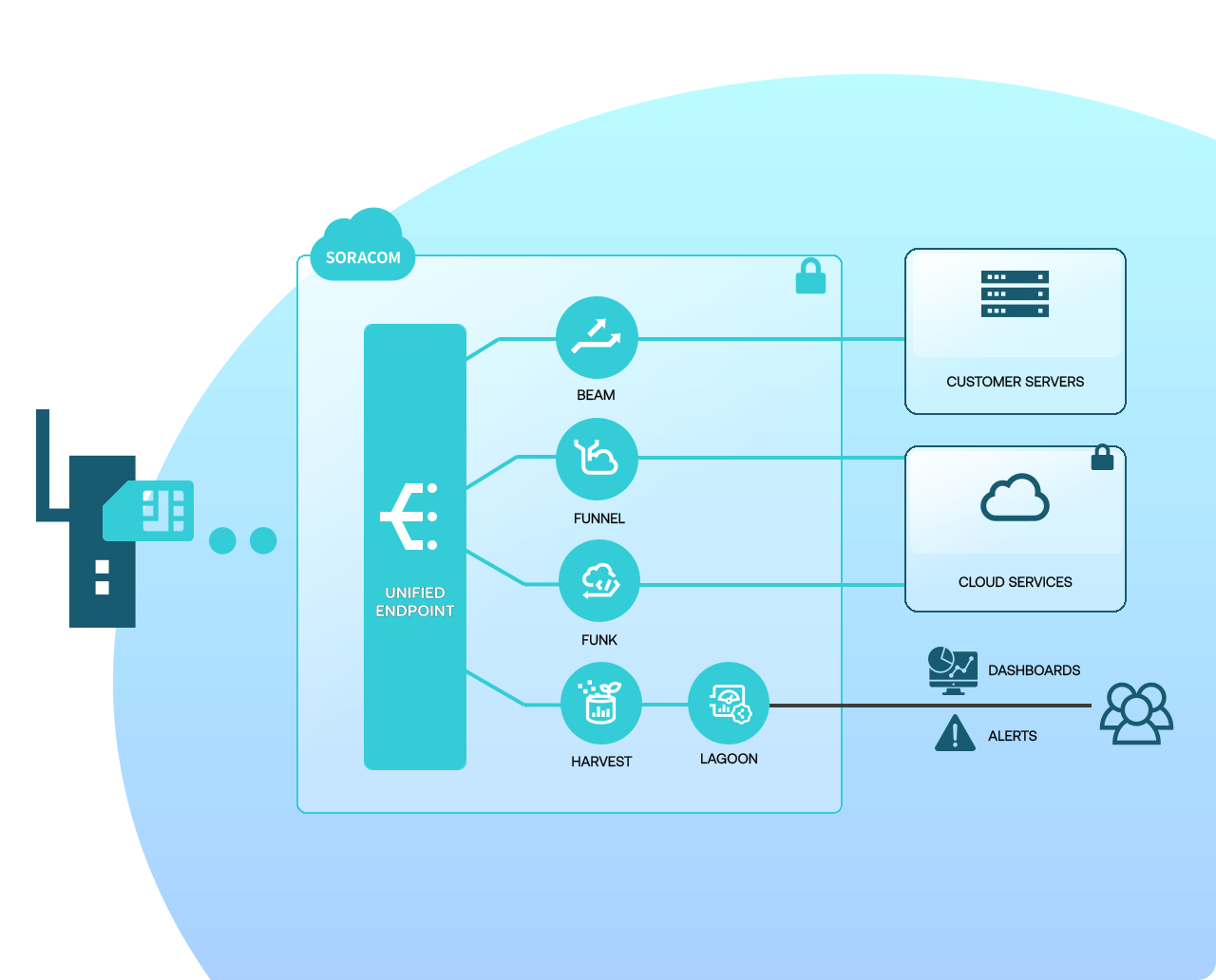
Standardize how devices send data across your fleet
Giving your devices a single, stable endpoint while letting you change downstream processing in the Soracom platform greatly simplifies mixed-device deployments. This reduces configuration complexity and makes it easier to test or roll out new services over time.
Platform highlights:
- Central ingress for data that can be re-routed within Soracom.
- Supports dynamic switching between Beam, Funnel, Funk, Harvest, and others.
- Reduces redundant transmissions and firmware updates.

Talk with a cloud architect about your data routing needs
Discuss your cloud ingestion architecture, data transformation requirements, protocol options, or event-driven pipelines with a Soracom expert.
Frequently Asked Questions
Do devices need AWS/Azure/Google SDKs to send data to cloud services?
No. Devices can send simple HTTP, MQTT, TCP, or UDP messages and the platform handles credentials and secure delivery (Soracom Funnel, Soracom Beam).
Can I run cloud functions directly from device events?
Yes. Device messages can trigger AWS Lambda, Azure Functions, or Google Cloud Functions (Soracom Funk).
What if different devices send inconsistent payload structures?
You can use data transformation modules to convert proprietary or inconsistent formats into standardized ones.
Can I send data to multiple cloud services at once?
Yes. You can fan out traffic to multiple destinations using unified ingress and routing rules.
Can I ingest data into private cloud environments?
Yes. Cloud Integrations work alongside private networking features such as VPC peering and VPN tunnels.
How do I rotate cloud credentials without updating firmware?
ou can manage certificates and tokens in the platform and rotate them centrally without touching devices.
Can I transform or normalize data before it reaches my cloud?
Yes. You can apply transformations, filtering, or enrich payloads using in-flight processing (Soracom Orbit).
Can devices remain simple while still delivering encrypted data?
Yes. TLS and certificate management can be offloaded so devices send lighter messages while maintaining encryption (Soracom Beam).
How do I test new cloud destinations without updating firmware?
You can redirect traffic to new services or environments by updating routing in the console.