Establish trust from the moment a device comes online
|
Authenticate devices using hardware-backed identity
Provision credentials dynamically
Rotate credentials without updating firmware |

Provisioning and Credentialing
Provision devices securely without manual steps or custom firmware
Establish trusted identities, deliver credentials over the air, and onboard devices at scale without adding complexity to your hardware or production line.
Streamline how devices identify themselves and securely join your system
Secure onboarding should not require manual key injection, factory pre-loading, or managing different credential bundles for each hardware SKU. Device Provisioning & Credentialing Features let teams automate trust establishment, rotate credentials safely, and unify onboarding flows across cellular, Wi-Fi, and wired connections—without adding burden to firmware or production workflows.
These capabilities scale from rapid prototyping to global fleet deployment, ensuring every device enters your system with verifiable identity and the right access policies.

Get devices connected and authenticated with minimal effort
Provision identities, credentials, and configuration using secure, OTA workflows
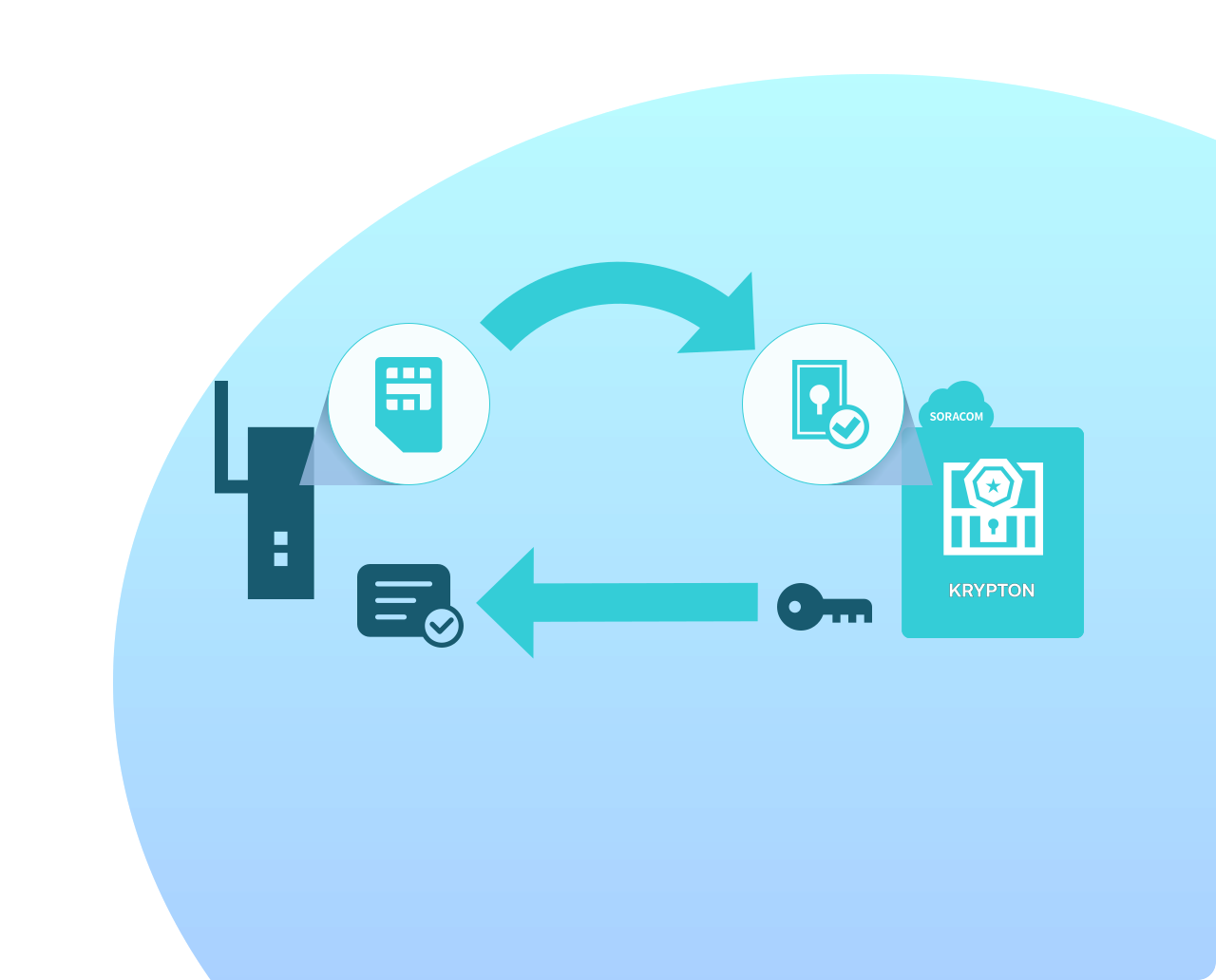
Zero-touch onboarding without preloading credentials
Instead of injecting credentials during manufacturing—or maintaining separate firmware builds for each customer—devices can securely request their initial configuration the first time they connect. This eliminates risky manual steps and reduces production overhead. (Soracom Krypton)
Example:
A hardware manufacturer can use a single firmware image for all customers. When a device powers on for the first time, it securely retrieves that customer’s cloud credentials and connection details.
- No factory key injection
- One firmware image per product line
- OTA delivery of credentials
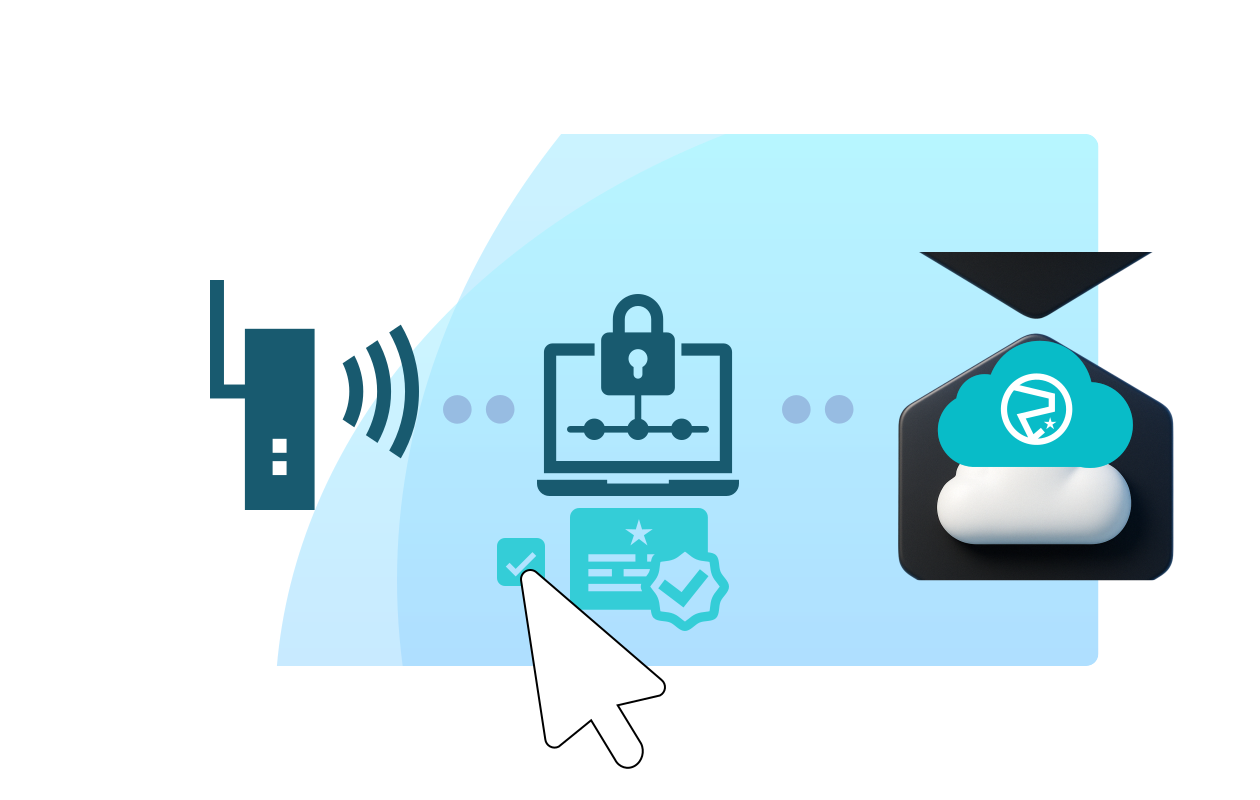
Authenticate devices using SIM-based identity—even over Wi-Fi
Devices can prove who they are using SIM-backed identity without storing shared secrets, passwords, or preloaded certificates. This works across cellular, Wi-Fi, Ethernet, or LPWA, enabling secure trust establishment even when devices aren’t on a mobile network. (Soracom Endorse)
Example:
A Wi-Fi connected device can authenticate using its SIM identity, proving it belongs to a specific fleet without needing preinstalled credentials or a complex authentication service.
- SIM-based identity
- Works on any network type
- Prevents credential reuse
What teams normally struggle with
|
Manual provisioning steps
Credential rotation challenges
Unverified device identity
Fragmented onboarding across networks |
Provision credentials securely at scale
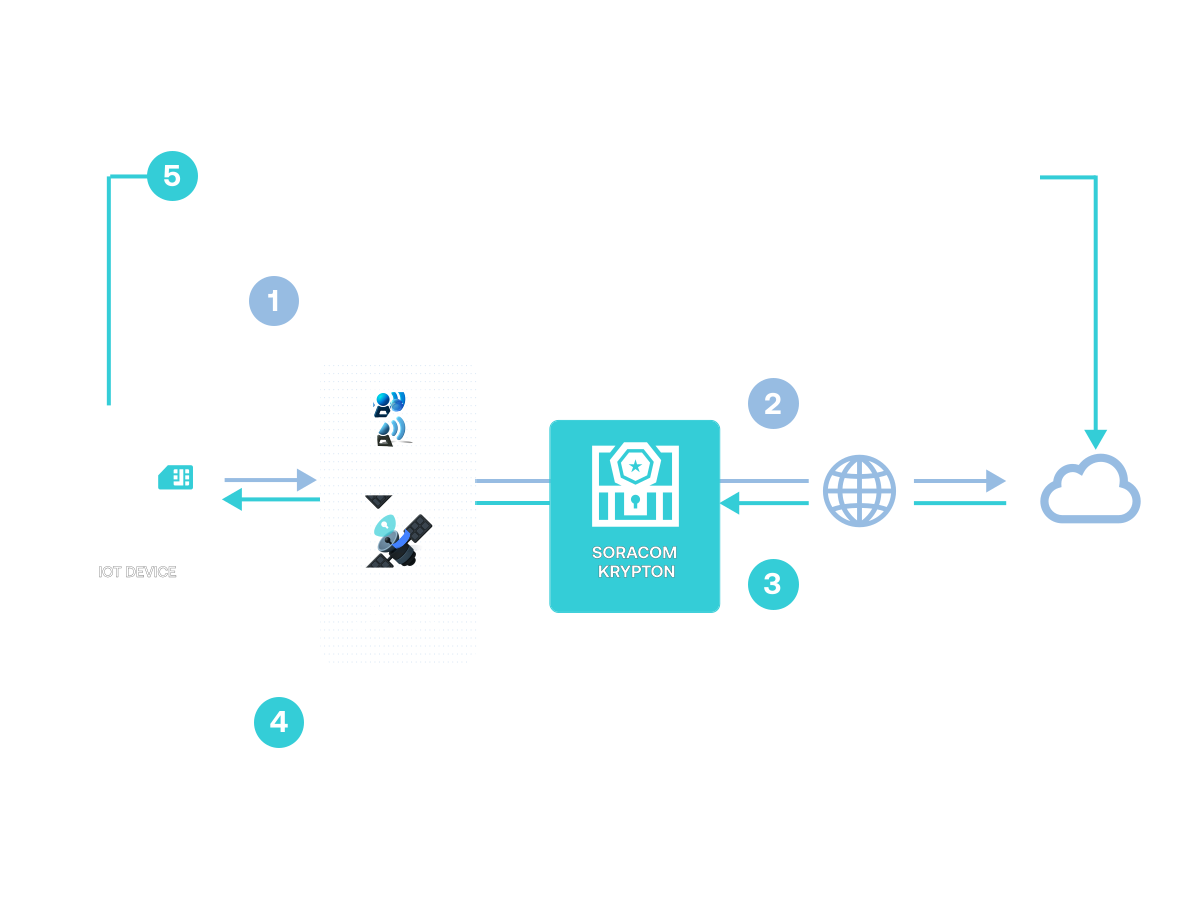
Update access credentials without updating firmware
Rotate keys, credentials, and endpoint settings centrally—even after devices have shipped. This eliminates risky field updates and reduces long-term maintenance effort. (Soracom Krypton)
Bullets:
- Safe credential rotation
- No firmware changes
- Centralized management
On-demand credential delivery over cellular connections
Deliver connection settings, certificates, and cloud keys securely when devices first come online—no factory injection required.
- OTA credential issuance
- Works across network types
- Reduces production complexity
SIM-backed authentication tokens over non-cellular connections

Generate identity tokens tied to SIM credentials, enabling secure authentication even over Wi-Fi or Ethernet.
- Prevents reuse of stolen credentials
- No PKI infrastructure required
- Lightweight and portable
Additional capabilities used in provisioning flows
Reduce device-side logic using cloud-based processing
Process or transform data at the platform level to avoid storing unnecessary logic in device firmware.
- Normalize payload formats
- Insert default settings dynamically
- Keep firmware lightweight
Service: Inline data processing (Soracom Orbit)

Discuss your provisioning and security requirements with an expert
Talk with a Soracom Solutions Architect about onboarding workflows, credential rotation patterns, SIM-based identity, and PKI alternatives.
Frequently Asked Questions
How can I provision credentials without programming them in the factory?
Devices can request their initial credentials securely over the air during first boot. This removes the need for key injection or per-device programming in manufacturing environments (Soracom Krypton).
Can I rotate cloud credentials without updating device firmware?
Yes. Credentials can be updated centrally on the platform and delivered to devices over the air, without requiring firmware changes or remote update workflows (Soracom Krypton).
Can provisioning work with multi-SKU or multi-customer hardware?
Yes. Devices can retrieve customer-specific settings dynamically during first contact, allowing one firmware image to serve many customers (Soracom Krypton).
What if devices need to change cloud endpoints over time?
You can update endpoint settings and route traffic to new services without updating device firmware, reducing operational overhead (Soracom Krypton).
How do these tools align with regulated or security-sensitive environments?
Provisioning workflows leverage secure SIM identifiers, encrypted OTA channels, and managed key rotation, aligning with strong identity requirements common in regulated sectors (Krypton, Endorse).
How do I authenticate devices when they’re not on a cellular network?
You can issue identity tokens based on SIM credentials, allowing devices to authenticate even when connected over Wi-Fi, Ethernet, or LPWA networks (Soracom Endorse).
How do I prevent devices from sharing or reusing the same credentials?
SIM-based identity ensures each device has unique, tamper-resistant credentials that cannot be shared or cloned (Soracom Endorse).
How do I ensure a device belongs to the correct fleet?
Identity tokens tied to SIM credentials verify the IMSI/IMEI combination, ensuring each device is linked to the correct account (Soracom Endorse).
Can I bootstrap devices that are already in the field?
Yes. Devices can request credentials securely at any time, enabling rekeying, reassignments, or migrations without manual intervention (Soracom Krypton).