Sumitomo Rubber Industries, known globally for its Dunlop and Falken tire brands, is at the forefront of automotive innovation. From new mobility solutions to autonomous vehicles, the company’s goal is to make driving safer and more efficient. One persistent challenge they set out to address is under-inflated tires, which reduce fuel efficiency, impair performance, and can lead to dangerous blowouts due to heat buildup.

With 28% of vehicles on the road estimated to have at least one under-inflated tire, the opportunity to improve safety and performance through IoT technology was clear. A remote monitoring solution could not only improve safety for drivers but also reduce maintenance burdens for fleet operators and rental car companies.

The Challenge: Bridging the Gap Between Tire Expertise and Connected Technology

Sumitomo had deep knowledge of tire performance but little experience in cloud data utilization or telecommunications. They needed a partner to help them bring an advanced tire monitoring solution online while ensuring secure, reliable connectivity.

The system also needed to work in real time across a wide variety of vehicles, delivering actionable data to maintenance teams and fleet managers without requiring in-person inspections at every stop.

Car Mechnaic, Tire inspection, Sumitomo Rubber Industries

The Solution: Connected Tire Insights with Soracom Air and Soracom Canal

To bring their Tire Pressure Monitoring System (TPMS) to life, Sumitomo equipped vehicles with IoT sensors capable of tracking tire pressure, temperature, and location. This data is sent via in-vehicle communication systems to the cloud, where it can be accessed on PCs, tablets, and smartphones in real time.

Public testing with commercial and rental fleets demonstrated significant efficiency gains. Maintenance teams could check tire conditions remotely instead of spending hours on manual inspections.

“The service utilizing sensors and cloud computing is a new concept for our customers,” said Mr. Teramoto, one of the project’s engineers. “Through the testing process, we were able to outline how maintenance teams’ workload had been reduced through concrete numerical values. At times, we discovered values that we had not anticipated in advance.”

Sumitomo selected Soracom for its reliable connectivity and robust security. Using Soracom Air, TPMS devices connect to cellular networks with consistent performance. Data security is ensured through Soracom Canal, which provides a private, direct connection between Sumitomo’s AWS-based cloud and the Soracom platform. This setup keeps fleet data off the public internet and allows Sumitomo to control which devices can access its virtual private cloud.

“I would like to use data to further improve our on-site capabilities.”
Anonymous Headshot
Masaki Teramoto
Project Engineer
Sumitomo Rubber Industries

The Outcome: Smarter Maintenance, Safer Roads

Data from TPMS deployments with leased vehicles and Budget rental cars has enabled the creation of algorithms capable of detecting slow leaks and small punctures that would otherwise be missed during visual inspections. These insights help fleets extend tire life, prevent accidents, and improve customer relationships.

“Even though they may not have the speed of a venture company, companies with a large enough fleet can gather their own data and use it to improve their operations,” said Teramoto. “I would like to use the data to further improve our on-site capabilities.”

The TPMS is now part of Sumitomo’s Smart Tire initiative, aimed at placing Dunlop and Falken tires at the center of future automotive innovation, from connected and autonomous vehicles to electric mobility solutions.

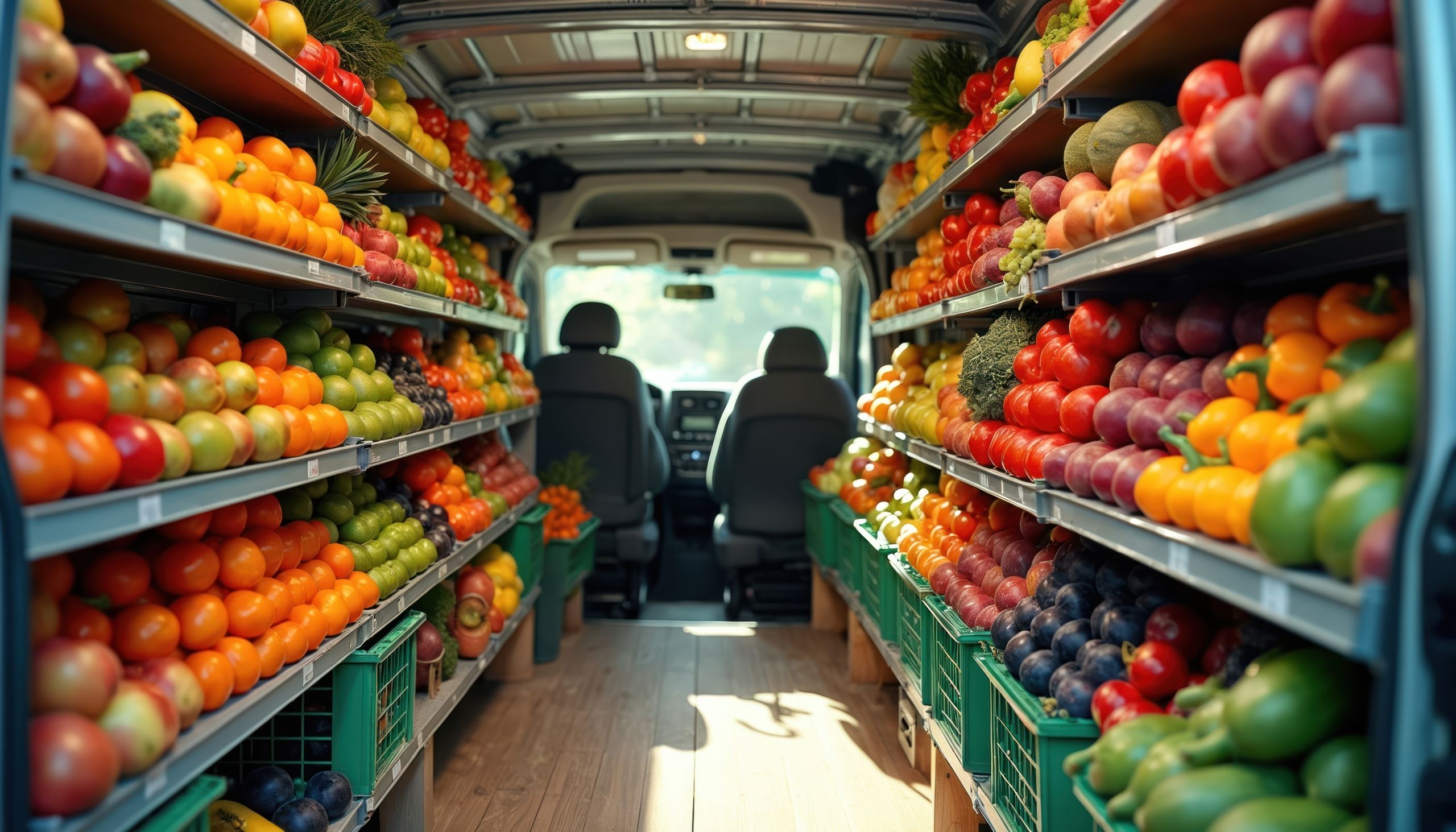
Direct-from-farm delivery

Cookpad Mart is an e-commerce service that connects consumers with fresh ingredients from local farmers and specialty shops. Shoppers place orders through a mobile app, and their purchases are delivered to neighborhood “Mart Stations,” refrigerated lockers designed for same-day pickup. This keeps food fresh while making local produce more accessible.

Unlike traditional grocery delivery services, Cookpad Mart avoids central distribution centers that can degrade quality. By shipping directly from farm or shop to customer, they minimize handling and preserve freshness. This farm-to-fridge approach is a defining feature of their service and sets them apart in the crowded grocery marketplace.

To make this system work, Cookpad had to ensure that every order could be processed accurately from the moment it was placed to the moment it was delivered. That required not only a digital marketplace, but also reliable hardware that farmers and small shops could depend on day after day.

Local market fresh vegetable, garden produce, clean eating and dieting concept

The Challenge: Ensuring label reliability

Cookpad began with a straightforward idea: equip farmers and specialty shops with label printers so they could mark orders clearly before handing them to drivers. In theory, this would streamline the handoff process and ensure that every product arrived with the correct details.

In practice, the system quickly showed its limits. Labels needed to be water-resistant, consistently formatted, and durable enough to survive handling in busy, sometimes outdoor environments. Without this, consumers could receive confusing or inconsistent information on their deliveries.

A first prototype combining a standard printer with an iPad seemed promising, but testing revealed frequent paper jams, device freezes, and unstable connections between devices. These setbacks made it clear that Cookpad needed a more stable, IoT-ready system to support its unique delivery model.

The Solution: IoT-enabled fulfillment

Cookpad partnered with Soracom to build a more resilient solution. By equipping a Raspberry Pi with Soracom Air cellular connectivity, Cookpad created a reliable communications hub that stabilized printer operations and enabled continuous status monitoring. This reduced common issues like jams and connection drops.

To securely transmit order data, Cookpad used Soracom Canal, which provided a private connection between IoT devices and their AWS-hosted backend. If problems were detected, the operations team could use Soracom Gate to access devices remotely, drastically cutting downtime and eliminating the need for on-site intervention.

Beyond solving the printing challenge, Cookpad extended the solution to food safety. By deploying Soracom Beacon sensors and visualizing their data through Soracom Harvest, Cookpad could monitor temperature, humidity, and location in real time, ensuring quality control from farm to Mart Station.

Why Soracom?

Soracom’s platform provided Cookpad with a unified foundation for rapid IoT development. With Soracom’s endpoint functions, Cookpad could link data from multiple services simultaneously, including direct integration with AWS through Soracom Funnel. This seamless interoperability allowed engineers to focus on refining customer and farmer experiences rather than managing infrastructure.

Development speed was another key advantage. Using Soracom, just two engineers (one focused on applications and the other on backend systems) were able to design, test, and deploy a fully functional IoT system in only a week. The efficiency of Soracom’s APIs and management tools made rapid prototyping possible.

For Cookpad, the decision to use Soracom wasn’t just about solving immediate technical hurdles. It provided a scalable, flexible platform that could support continuous innovation. With this foundation in place, Cookpad can evolve its service quickly and confidently as customer needs grow.

Scaling innovation

Cookpad continues to emphasize speed in its hardware development process, with prototypes often produced in as little as a week and rarely taking longer than a month. This allows the team to test, learn, and improve without slowing down day-to-day operations.

Future plans include making it even easier for farmers and specialty shops to participate in the Cookpad Mart ecosystem. By simplifying the hardware and further automating back-end processes, Cookpad hopes to reduce barriers for local producers who may not have prior technical experience.

As Cookpad scales its service into more regions, the company is committed to preserving the freshness and quality that have defined its success. With Soracom as its IoT backbone, Cookpad can expand while maintaining the trust and reliability that keep customers coming back.

About: A more abundant future

Since 2002, Hortau has been pioneering precision agriculture with a focus on optimizing crop yields, conserving water, and reducing environmental impact. Headquartered in the heart of North America’s agricultural regions, the company helps growers maximize the productivity of their land while lowering costs and improving quality.

Hortau’s patented irrigation management system combines IoT connectivity with agronomic expertise, giving growers real-time insight into soil and plant health. By shifting from guesswork to data-driven decisions, farmers are better able to balance water use against crop needs, improving efficiency at every stage of the growing cycle.

As populations rise and arable land remains finite, Hortau’s mission is increasingly urgent: ensuring growers can meet rising demand for food while making responsible use of the world’s most precious natural resources.

"Having grown up on a farm, I understand the complexity of farming and what it takes to grow a profitable crop. After leaving the farm it became clear that to maintain consistent crop health, yield and quality, growers need access to real-time and forecasted information – to anticipate, adjust, manage inputs precisely – and repeat their success year after year, across every acre."
Jocelyn Boudreau, Hortau
Jocelyn Boudreau
CEO and Co-Founder
Hortau

Challenge: The most precious resource

For most people, farming is synonymous with land. But for growers, water is every bit as important. According to the USDA’s 2012 Census of Agriculture, irrigated farms represented just 14% of all U.S. farms, yet accounted for nearly 40% of total U.S. farm sales, a staggering $152 billion in value. Water, in short, is what makes the land produce.

Globally, agriculture consumes up to 70% of freshwater resources, and in produce-heavy states like California, that percentage is even higher. With climate pressures and rising demand straining supply, efficient irrigation has become a critical factor in both economic and political debates. For growers, water management directly influences both profitability and long-term viability.

The real challenge lies in knowing how much water plants actually need. Even with groundwater monitoring, it can be difficult to assess soil conditions at the root level. Overwatering wastes precious resources and can compromise crop quality, while underwatering risks reduced yields or even crop failure. In an industry where margins are slim and risks are high, that margin of error can be devastating.

Solution: Applied IoT for plant-centric irrigation

Hortau’s breakthrough lies in its plant-focused approach. Instead of measuring groundwater or surface irrigation levels, Hortau stations continuously measure soil tension – the precise metric that shows how much effort a plant must expend to access water. This provides growers with a direct window into plant health, allowing them to irrigate based on need rather than estimation.

The system is built around wireless, real-time IoT sensors that transmit data to a secure cloud platform. Farm managers and agronomists can access dashboards that visualize plant stress, soil conditions, and irrigation effectiveness. Alerts and analytics help them fine-tune watering schedules, ensuring crops receive exactly the right amount of water at the right time.

The results speak for themselves. A California pistachio grower using Hortau reduced tree mortality from nearly 30% to almost zero. An onion grower cut water use by 25-30%, while grape and cranberry growers reported measurable improvements in fruit quality. Across diverse crops, Hortau consistently demonstrates that smarter irrigation yields healthier plants and stronger bottom lines.

Why Soracom: Multicarrier coverage and streamlined operations

As one of the earliest adopters of IoT in agriculture, Hortau has worked with nearly every cellular data provider across North America. The company knows firsthand the challenges of rural connectivity, network fragmentation, and inconsistent billing models. Each of these issues slows deployment and adds unnecessary complexity for growers who simply want reliable data from the field.

Soracom’s multicarrier connectivity removes these obstacles by providing a single, global platform. Hortau can pre-provision devices at the factory and ship them anywhere in the U.S. or Canada, confident that they will connect seamlessly. With pooled pricing, Hortau also avoids overage charges, protecting both their margins and their customers from unexpected costs.

Beyond connectivity, Soracom’s cloud-native services support Hortau’s migration to AWS, offering secure, private communication between field devices and cloud applications. Using Soracom Canal, Gate, and custom DNS services, Hortau ensures its network of devices communicates efficiently and securely, enabling continuous data collection and analysis at scale.

Hortau Architecture image

Future Plans: Helping growers across the Americas

Today, Hortau operates thousands of stations across North America, supporting growers of everything from large-scale row crops to high-value specialty crops like berries, nuts, and grapes. The company continues to expand its footprint in the U.S. and Canada, helping farmers adopt data-driven irrigation practices that deliver measurable improvements in both yield and quality.

With operations growing rapidly, Hortau is also beginning to extend its reach into Latin America. These regions face many of the same challenges as North America – limited water supply, rising populations, and increasing demand for sustainable farming practices, making Hortau’s plant-centric model a strong fit.

Looking forward, Hortau remains focused on advancing both technology and adoption. By pairing IoT data with agricultural expertise, Hortau is helping create a farming ecosystem where every drop of water is used wisely and every plant has the opportunity to thrive. For growers across the Americas, that means a more profitable present and a more abundant future.

Smart energy savings for large buildings

Large buildings like airports and shopping centers consume roughly 40% of the world’s energy, often inefficiently. Heating and cooling systems are especially challenging: they are complex to configure, often unaware of actual indoor conditions, and can leave occupants uncomfortable while consuming more energy than necessary.

Enerbrain developed a cloud-driven solution combining IoT hardware, algorithms, and mobile apps to transform building management. The system makes existing HVAC infrastructure smarter, easier to control, and more comfortable for occupants, delivering up to 30% energy savings without requiring expert oversight.

By offering a simple installation process and compatibility with existing building management systems, Enerbrain helps property managers reduce both operating costs and environmental impact.

Together with Soracom Canal, Gate and Beam, we can securely integrate data from our cellular and Sigfox devices into AWS IoT and communicate back to them whenever required for tasks such as troubleshooting and upgrades.”
Anonymous Headshot
Enerbrain Team
Enerbrain

The Connectivity Challenge: Securely managing data growth in different markets

As Enerbrain’s Energy Cloud solution expanded across Europe, it quickly faced new connectivity and data management challenges. Devices in different markets generated growing volumes of environmental data, which had to be transmitted securely from sensors to cloud platforms.

Managing device lifecycles was critical. Each sensor required unique identifiers and consistent integration with customer systems, adding complexity to deployments in multiple countries. At the same time, differing national standards for environmental and building data created the need for a standardized pipeline to combine and analyze disparate data sources smoothly.

Enerbrain needed a solution that would ensure secure connectivity, simplify global device management, and scale easily with its rapid growth.

Solution: Secure IoT data management with Soracom

Enerbrain selected Soracom to connect and manage its IoT devices across multiple countries. Using Soracom Air for cellular connectivity and Soracom Air for Sigfox for low-power devices, the company could unify management of both types of devices under a single platform.

For data integration, Enerbrain relies on Soracom Beam to transmit sensor data directly into AWS IoT. Soracom Canal provides secure VPC peering with AWS, while Soracom Gate ensures private bidirectional communication for device administration and troubleshooting.

Enerbrain also uses Soracom Harvest to collect baseline device metrics, enabling quick visualization and simple API access for diagnostics. This combination of services allows the company to securely manage devices, standardize its data pipeline, and integrate seamlessly with AWS cloud services.

Why Soracom: A single partner for secure, data-driven growth

As a data-driven company, Enerbrain needed a partner that could deliver both connectivity and a suite of cloud-integrated services. Soracom provided exactly that, enabling secure communication, real-time device management, and efficient data visualization.

“Together with Soracom Canal, Gate and Beam, we can securely integrate data from our cellular and Sigfox devices into AWS IoT and communicate back to them whenever required for tasks such as troubleshooting and upgrades,” the team explains.

The pay-as-you-go model made it easy to scale operations efficiently, while Soracom’s platform simplified SIM and device management across multiple countries. With Harvest’s fast visualization capabilities, Enerbrain significantly improved its operational efficiency, reducing time spent on troubleshooting and device oversight.

Future Plans: Improved operational efficiency with cross-data mapping

As Enerbrain continues to expand into new regions, improving operational efficiency remains a top priority. Currently, device states are monitored through Soracom APIs, and the company plans to integrate Harvest APIs for deeper cross-data mapping between products, providers, and business systems.

The next step is closer integration with Soracom Funnel, which will further streamline data processing and simplify code requirements for large-scale deployments. This will allow Enerbrain to scale its data pipeline without adding operational complexity.

Since adopting Soracom, Enerbrain has grown from serving customers in Italy and France to operating across Europe, the Americas, India, the Emirates, and Japan, where it opened a subsidiary in 2018. With Soracom as a long-term partner, Enerbrain is confident in its ability to expand globally while continuing to deliver smarter, more sustainable building solutions.

A Connected Key for Simplified Real Estate Viewings

While real estate portals make it easy for customers to browse listings online, the final step of physically visiting a property often remained the biggest hurdle. Buyers and renters still needed to coordinate with agents, limiting flexibility and adding unnecessary friction. In a fast-paced property market, this scheduling complexity could mean missed opportunities or extended vacancy periods.

For sellers and agents, organizing tours also consumed significant resources. Staff often needed to travel just to unlock doors, even for quick visits. With multiple parties interested in a single property, availability often became the bottleneck between listing and closing. A more efficient and customer-friendly solution was clearly needed.

Linough recognized that improving the viewing experience represented the single greatest opportunity for innovation in real estate. By making access as seamless as browsing an online listing, the company could revolutionize both customer convenience and agent productivity.

"Soracom is an ideal application for Smart Viewing and pay-as-you-go for data communication fit our needs perfectly. I also like the flexibility of the contract where I can subscribe to one SIM for one day. When an IoT system encounters an issue, it can be difficult to identify the cause between the cloud, the connection, and the device. In our case, we can check the communication status of each individual SIM with Soracom’s user console. I also appreciate their kind and courteous support team, seminars and hands-ons demos."
Anonymous Headshot
Mr Shiina
Chief Web Programmer
Linough

Smart Viewing with IoT Locks and Reservation System

Linough responded with Smart Viewing, an IoT-enabled system designed specifically for real estate. At its core is a smart lock that attaches to new or existing property doors, paired with a lightweight tablet gateway that communicates lock commands. Customers reserve their viewing time online, then receive a unique URL that acts as a digital key.

At the scheduled time, the customer can open or close the property door directly from their device, whether smartphone, computer, or even feature phone. For users without modern devices, the system supports voice-triggered commands, ensuring inclusive accessibility. By removing the need for a dedicated app, Smart Viewing reduces setup friction for customers while allowing seamless property access.

For real estate agencies, this meant that staff no longer needed to attend every property visit. Unmanned tours became possible, opening the door (literally) to flexible self-service access. With Smart Viewing, potential buyers could experience properties on their own schedule while agents could focus on higher-value interactions.

Why Soracom

For Smart Viewing to work, Linough needed a connectivity solution that was lightweight, secure, and cost-efficient. Real estate properties are often vacant and may lack Internet infrastructure, making cellular IoT the ideal solution. Because door unlock commands require only a few kilobytes of data, Soracom Air’s pay-as-you-go model fit perfectly, ensuring costs scale precisely with usage.

As Linough’s Chief Web Programmer Mr. Shiina explained, “Soracom is an ideal application for Smart Viewing and pay-as-you-go for data communication fit our needs perfectly. I also like the flexibility of the contract where I can subscribe to one SIM for one day.” This flexibility allowed Linough to prototype quickly and scale deployments without carrying large SIM inventories.

In addition, Soracom’s User Console made it easy to monitor the communication status of individual SIMs, speeding troubleshooting and reducing operational overhead. For deployments requiring extra security, Linough also implemented Soracom Canal, creating private network connections that protect data traffic and reinforce trust. Combined with Soracom APIs for automation, this approach gave Linough confidence in both scale and security.

Future Plans: Smart Access Beyond Real Estate

The success of Smart Viewing earned Linough a prestigious Good Design Award, validating its innovative approach to access management. The company quickly began receiving inquiries about applying the same technology to other use cases, from office meeting rooms to shared spaces.

This led to the launch of a “smart meeting room” service, extending Linough’s access innovation beyond real estate and into broader smart building management. By leveraging the same combination of IoT locks, cloud-based management, and Soracom connectivity, Linough is creating a flexible platform for space access of all types.

Looking ahead, Linough envisions a world where any space can be managed more efficiently through IoT access control. From apartments and offices to hotels and shared facilities, the ability to grant, track, and manage access remotely represents a new standard for convenience and efficiency. With Soracom as a partner, Linough is well positioned to continue unlocking the potential of smart spaces worldwide.

Challenge: Rethinking Retail Network Security

For most retailers, VPNs are the default solution for creating secure backup lines and protecting sensitive point-of-sale (POS) data. However, managing separate VPN connections for each store can quickly become costly and difficult to scale, particularly for chains with dozens of locations.

Hands realized that their reliance on VPNs was not sustainable. Establishing and maintaining a dedicated VPN for each location not only created significant upfront and recurring costs, but also increased administrative overhead when VPNs expired and required recertification.

Beyond costs, VPNs still left potential vulnerabilities. A cellular line connected to a global IP address exposed each device to possible external threats, creating an urgent need for a more secure and manageable alternative.

Solution: A Cellular Alternative to VPNs

Hands chose to replace its backup VPN lines with Soracom Air SIMs across all retail store business terminals. By doing so, each terminal gained secure connectivity to central servers without the complexity of traditional VPN infrastructure.

The company went further by adopting Soracom Canal, creating a closed network that restricted server access to authorized devices only. This not only safeguarded sensitive business data but also gave IT teams better control over which terminals could access specific resources.

The benefits extended beyond security. At Hands’ flagship locations, Soracom connectivity replaced wired LANs, saving significant time and money. Instead of spending months and millions of yen on construction and installation, Soracom allowed them to deploy new terminals in days with minimal upfront investment.

Why Soracom: Security and Simplicity at Scale

For Hands, Soracom offered the perfect balance of flexibility and control. With Air SIMs installed in each terminal, secure connectivity could be established immediately, eliminating the need for ongoing VPN maintenance and renewal.

The Soracom User Console gave IT teams centralized visibility into device connectivity and performance. Adjustments that previously required site visits or complex reconfiguration could now be handled remotely with just a few clicks.

In short, Soracom delivered a streamlined, cost-effective networking solution that addressed both Hands’ operational requirements and its strict security needs, while positioning the retailer for future scalability.

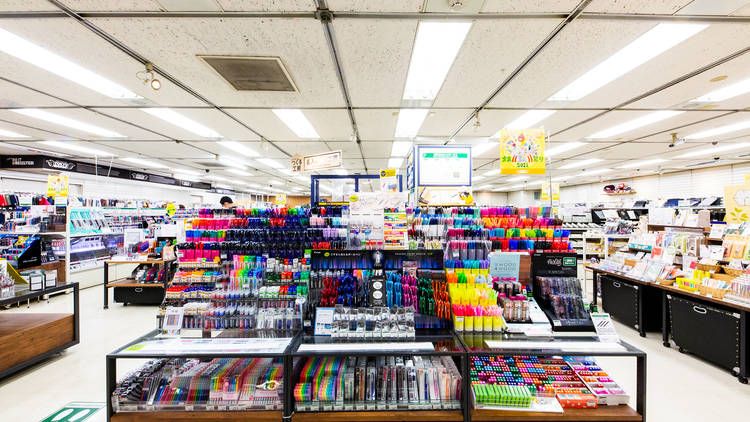
Image courtesy of Time Out, Hands Shibuya

Future Plans: Expanding Secure Retail Connectivity

Hands has already begun extending its Soracom-based system to its Osaka stores and plans to expand the approach nationwide. Over time, the retailer aims to completely eliminate reliance on WANs and LANs, relying instead on cellular IoT for secure, flexible connectivity.

The company has also started to equip its iPad business terminals with Soracom connectivity. By avoiding VPN setup for each new device, Hands saves time for its staff and reduces technical complexity across its IT environment.

Looking forward, Hands plans to leverage Soracom’s authentication and access restriction features to further strengthen application security. With these steps, the company is building a resilient, future-ready network architecture that can keep pace with the rapidly evolving retail industry.