Founded by serial inventor Felix Zhao, Cassia Networks is a creator of connectivity solutions that is on a mission to reimagine what Bluetooth can do. The company that created the world’s first Bluetooth router, Cassia is pushing the boundaries of wireless communication by bringing this ubiquitous consumer protocol into enterprise applications. The company’s products have found their way into everything from factory floor automation to remote patient monitoring, utilizing Bluetooth technology to do away with the need for bulky infrastructure or tethered mobile devices.

“Bluetooth started as a short-range, one-to-one communication protocol for consumer devices,” explains Zhao. “Our vision was to fulfill its original promise: to unite wireless communication not just for consumers, but also for enterprise IoT.”

The Challenge: Deploying Bluetooth at Scale in Modern Workspaces

Bluetooth’s ubiquity makes it attractive for IoT, but traditional implementations have fallen short in more complex environments. Designed for short distances and one-to-one pairing, standard Bluetooth devices struggle to support enterprise needs like persistent connectivity, long-range communication, and large-scale sensor networks.

“In places like hospitals, warehouses, and manufacturing plants, having someone walk around with a phone or tablet to collect data from sensors just doesn’t scale,” says Zhao. “That kind of setup introduces costs, inefficiencies, and risks that enterprises can’t afford.”

Range can be a major constraint. While most consumer Bluetooth operates at 10-30 meters, enterprise applications can cover 10 times that or beyond. Moreover, the traditional pairing model creates unnecessary friction when managing devices at scale.

"Soracom allows us to deploy anywhere - whether it’s a hospital in a city or a remote agricultural facility. Customers don’t have to worry about configuring a network or opening firewall ports. Everything just works."
Felix Zhao, CEO Cassia Networks
Felix Zhao
CEO and Co-Founder
Cassia Networks

The Solution: Cassia’s Enterprise-Grade Bluetooth Gateways

A Cassia Bluetooth gateway is a smart, long-range router that acts more like a Wi-Fi access point than a consumer Bluetooth device. These gateways communicate with dozens of endpoints simultaneously, in real-time, and without requiring human intervention.

“Just like a Wi-Fi router sits in the background and handles traffic, our Bluetooth routers are designed to live on the wall and quietly manage everything,” says Zhao. “The user doesn’t have to do anything.”

One of Cassia’s key innovations is its ability to dramatically increase range and connection density without modifying end devices. Through advanced antenna design, increased receiver sensitivity, and proprietary firmware, Cassia’s gateways can receive signals from standard Bluetooth sensors located up to 1 kilometer away (in optimal conditions) without increasing their transmission power or reducing battery life.

“It’s not just about range,” Zhao emphasizes. “We also eliminated the one-to-one pairing limitation. One gateway can manage a fleet of sensors, stream data in real time, and even host application logic directly on the gateway itself.”

This flexibility is particularly powerful for edge computing scenarios, where customers can run their own applications on the gateway – reducing latency and infrastructure complexity.

Cassia Gateway deployment, bluetooth in a hospital setting

The Role of Soracom: Seamless Cloud Connectivity Without Wi-Fi

To fully decouple Bluetooth sensors from smartphones, PCs, or other mobile gateways, Cassia needed a reliable and secure way to connect its Bluetooth routers to the cloud. That’s where Soracom came in.

With Soracom, Cassia gateways can communicate over a multicarrier cellular network, avoiding the need to rely on local IT teams, Wi-Fi infrastructure, or on-site connectivity.

“Soracom allows us to deploy anywhere – whether it’s a hospital in a city or a remote agricultural facility,” says Zhao. “Customers don’t have to worry about configuring a network or opening firewall ports. Everything just works.”

Soracom’s secure, encrypted tunnels provide a reliable and scalable pathway from Cassia’s gateways to cloud services, enabling remote device management, firmware updates, and data aggregation at scale.

“It’s more than just connectivity,” adds Zhao. “It’s peace of mind for our customers.”

A New Paradigm for Enterprise IoT

Cassia Networks is changing the conversation around Bluetooth. By transforming it into a long-range, multi-device, enterprise-ready communication protocol, Cassia has unlocked a new level of flexibility, affordability, and scalability for IoT deployments. Its gateways are replacing fragile mobile-device pairings with robust, cloud-connected infrastructure.

And with Soracom providing the secure, reliable cellular backbone, Cassia can deploy solutions faster, anywhere in the world, with minimal IT overhead.

“Bluetooth is no longer just for headphones,” says Zhao. “It’s the foundation for the next generation of enterprise IoT.”

Concrete is the most widely used material in the world after water, yet cement manufacturing, a key ingredient in concrete, is one of the largest sources of global CO₂ emissions. If cement production were a country, it would rank as the third-largest emitter behind China and the United States.

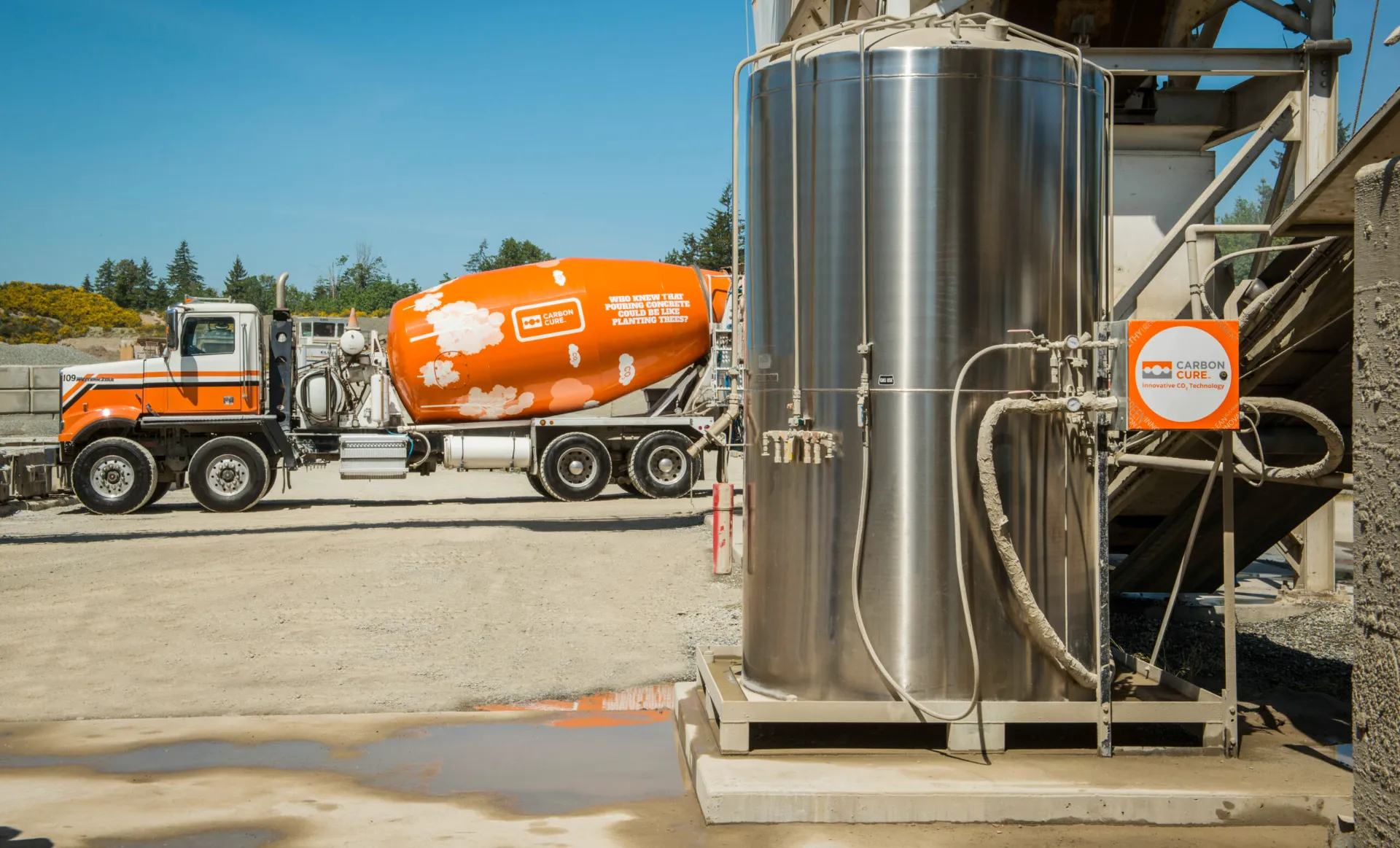
Founded in 2012 in Nova Scotia, CarbonCure Technologies has developed a breakthrough system that injects precise doses of captured CO₂ during concrete manufacturing. The gas mineralizes instantly, becoming permanently embedded in the material. This process not only reduces the carbon footprint but also improves the concrete’s compressive strength, allowing producers to reduce cement usage and further cut emissions.

CarbonCure’s long-term mission is to reduce and remove 500 million metric tons of CO₂ from the atmosphere annually.

CarbonCure Telemetry image

The Challenge: Connecting Hardware Across the Concrete Lifecycle

To date, CarbonCure’s customers have delivered more than 3.5 million truckloads of concrete infused with its technology, avoiding over 226,000 metric tons of CO₂ emissions. Achieving these results requires complete visibility into the concrete lifecycle to identify every opportunity for efficiency.

“This perspective allows CarbonCure to examine the entire process and pipeline of concrete development to identify potential for efficiency in terms of reducing the carbon footprint,” said Brad Vickers, Sr. Director of Engineering.

CarbonCure’s equipment can be retrofitted into an existing plant in a single visit. The CarbonCure Valve Box connects to an onsite CO₂ tank, automatically injecting the correct dose into fresh concrete or reclaimed wash water. The Control Box integrates with plant batching software, providing real-time visibility into the manufacturing process.

“It’s a process that needs continuous innovation and deployment of hardware,” Vickers added.

“[Our Design Partner] NeuronicWorks, had worked with Soracom in the past and pointed us to the company. [They] said that the experience was great.”
Brad Vickers, Carbon Cure
Brad Vickers
Sr. Director of Engineering
CarbonCure

The Solution: Real-Time Telemetry Powered by Soracom Beam

Each CarbonCure installation is built as a distributed wireless system. Field units mounted near mixing equipment control the injection process and gather operational data, which is synced to CarbonCure’s command center in real time.

“We can easily see the status of the device, ensure that everything is working correctly, and monitor injection status,” said Stamadianos. “Seeing how much CO₂ goes into every batch of concrete, we can generate carbon credits. Using the data matched with batching information, we can analyze the mix design for its efficiency.”

To collect this data securely — especially from remote sites without internet access — CarbonCure turned to Soracom.

“Our hardware design partner, NeuronicWorks, had worked with Soracom in the past and pointed us to the company,” said Stamadianos. “I saw that with Soracom Beam, we could easily and readily configure the device to talk with an SSL connection. That made our security solution simpler because we no longer needed to manage certificates. Soracom also gave us the ability to use secure web sockets.”

With Soracom Beam, CarbonCure avoided the complexity of building and maintaining a VPN-based architecture, ensuring secure bidirectional communication between field devices and the cloud while supporting global scalability.

concrete laying, cement, image by Adobe stock

The Outcome: Scaling a World-Changing Technology

More than one million truckloads of concrete have now been delivered using CarbonCure’s system. In April 2021, the company won the NRG COSIA Carbon XPRIZE, a 54-month global competition for breakthrough carbon utilization technologies, and has since been recognized for its safety standards and role in major construction projects such as Amazon HQ2 and the LinkedIn Middlefield Campus.

“There’s a lot of potential to build infrastructure that helps CarbonCure scale past their existing PLC solution and create options to help both smaller and larger concrete producers become more sustainable,” said Stamadianos. “The solution that we have is strong, but we need to keep rolling it out and iterating upon it to fully maximize its potential. It’s about continually solving problems and ensuring that we have the hardware and software infrastructure to keep evolving.”

With Soracom as a connectivity partner, CarbonCure can focus on advancing its technology and expanding its reach to help the concrete industry meet the demands of a sustainable future.

The Opportunity: Stronger, Greener, More Durable Infrastructure

Concrete is the foundation of modern life—but it’s also one of the world’s largest sources of carbon emissions. Increasing structural durability can reduce costly remediation, minimize safety risks, and limit environmental impact.

Toronto-based EXACT Technology offers a data-driven solution that helps construction teams build faster, safer, and more sustainably. By monitoring concrete during its critical curing period, EXACT enables engineers to meet precise temperature specifications that can extend a structure’s lifespan to over a century.

“If you monitor that concrete while it’s being placed for the first seven days, and you keep the temperature within certain constraints, you will get 125 years of a lifespan out of your bridge, dam, building, or tunnel,” said Jordan Korenzvit, CEO and co-founder of EXACT.

“The connectivity is sorted out. Our customers just plug it in. And Soracom only charges us when they use the service.”
Jordan Korenzvit - Exact technology
Jordan Korenzvit
CEO and Co-Founder
EXACT Technology

The Solution: Concrete Insight for a Perfect Cure

EXACT Technology was born from a practical challenge: large-scale projects had no efficient way to monitor thousands of concrete pours with multiple temperature checkpoints. Existing solutions relied on decades-old data loggers and manual site visits to collect readings – costly, slow, and prone to human error.

Korenzvit and co-founder Stacia van Zetten developed a simple prototype that delivered real-time, 15-minute interval temperature data online. The pilot installation proved an immediate success, winning a purchase order for a multi-billion-dollar subway project.

Today, EXACT’s solutions provide:

This real-time visibility helps builders address problems early, reduce costs, improve safety, and maximize project lifespan.

Why Soracom: Reliability, Integrity, Scalability

Global-scale construction projects require industrial-grade connectivity. Early carrier partners failed to deliver – one even went bankrupt, forcing the recall of 100 devices. EXACT needed a partner with stability, coverage, and flexibility.

Soracom met all of those needs:

“With Soracom, we can say from the beginning that we control data communication from beginning to end. Our customers just plug it in. And Soracom only charges us when they use the service. It’s exactly the way we charge our clients,” said Korenzvit.

Concrete Manufacturing

The Outcome: Helping Builders Reduce Costs and Improve Outcomes Worldwide

EXACT now monitors over $20 billion in public and private construction projects, with strong adoption in North America and Australia. A 2021 acquisition of Products Engineering, Inc. brought more than 50 years of precast industry relationships, accelerating U.S. market penetration.

While international expansion has not been a primary focus, demand is emerging organically—and Soracom’s connectivity ensures EXACT can deliver anywhere concrete is poured.

“As we get deeper into the American market, connectivity is key. We need to be present on certain networks, especially in rural areas where cellular access is sparse,” said Korenzvit.

About: Nationwide Sigfox coverage in Central Europe

Founded as the national Sigfox operator for Austria, Liechtenstein, and Switzerland, HELIOT Group delivers reliable low-power, wide-area (LPWA) connectivity through a distributed network of over 800 base stations. Their infrastructure is designed to support the rapidly growing demand for IoT applications, where small sensors and devices need to communicate efficiently and at scale.

Sigfox connectivity offers a unique balance of extremely low energy consumption, long transmission range, and low cost. Devices can transmit small data packets across distances of up to 10km in cities and up to 50km in rural regions. This makes Sigfox an ideal choice for use cases like asset tracking, smart building monitoring, and environmental sensing, applications that don’t require high bandwidth but benefit from wide-area coverage and years-long device battery life.

Heliot’s mission is to make IoT accessible and sustainable. By providing a strong backbone for Sigfox-based solutions, they help innovators, enterprises, and municipalities bring projects to life, whether it’s monitoring air quality in urban areas, tracking assets across borders, or supporting smart agriculture in rural communities.

“The Soracom pay-as-you-go model fits our business case and operational needs perfectly.”
Anonymous Headshot
Gildas Seimbille
Network Operations and Pre-Sales Engineer
Heliot Group

Challenge: Ensuring reliability across borders

Sigfox already connects more than 10 million devices across 65 countries, proving its value as a global IoT standard. But for a regional operator like HELIOT, ensuring service quality at scale presents unique challenges.

One of the most significant issues is Europe’s fragmented telecom market. Many IoT projects require multi-national coverage, yet establishing individual agreements with separate carriers in each country adds unnecessary complexity and cost. For customers, this can translate into deployment delays, administrative hurdles, and uncertainty around reliability.

Heliot also recognized the risk of relying solely on a single type of connectivity. A network outage, even a short one, could disrupt mission-critical applications, lead to lost data, and in some cases raise safety or compliance concerns. The challenge was clear: design a network with world-class reliability while keeping service affordable and straightforward for customers.

Solution: Multi-operator failover for continuous service

Heliot engineered its Sigfox network to include multiple connectivity options at every base station. By supporting several wireless operators simultaneously, the network creates a built-in failover system that ensures service continuity. If one carrier experiences downtime, traffic can automatically switch to another, maintaining seamless coverage for end users.

This approach not only reduces the risk of service interruptions but also strengthens Heliot’s ability to meet demanding service-level expectations. Customers deploying IoT devices for asset tracking, security monitoring, or industrial control can rely on consistent, resilient connectivity without having to manage multiple operator agreements themselves.

To make this possible, Heliot needed a back-end cellular connectivity solution capable of delivering secure, reliable coverage across all three countries they serve. That solution also needed to integrate cost-effectively into their existing service model, which prioritizes efficiency and scalability.

Why Soracom: A partner for seamless IoT scale

Heliot’s extensive experience working with wireless providers made the advantages of Soracom immediately clear. Soracom’s global, multi-carrier coverage gave HELIOT a simple way to unify connectivity across Austria, Liechtenstein, and Switzerland, reducing administrative overhead while enhancing resilience.

Rapid deployment was another critical factor. Soracom’s console and APIs allow Heliot to provision devices instantly, monitor connections in real time, and manage hundreds of SIMs with full transparency and control. For a growing network already spanning more than 225 base stations, these capabilities are essential to delivering best-in-class service.

Perhaps most importantly, Soracom’s pay-as-you-go model aligns perfectly with HELIOT’s business case. Since cellular is used primarily as a failover resource in their architecture, costs are incurred only when needed, eliminating waste while preserving reliability. Together, these advantages make Soracom a trusted partner in building Europe’s most reliable Sigfox network.

Future Plans: Toward 85% coverage and beyond

Over the next two years, HELIOT Group plans to expand Sigfox availability to cover 85% of the population across Austria, Liechtenstein, and Switzerland. This expansion will extend the benefits of affordable, low-power IoT connectivity to more industries, communities, and citizens across the region.

At the same time, Heliot is looking outward. With global demand for Sigfox IoT solutions continuing to rise, the company is exploring opportunities to extend its model into new markets. By combining Sigfox’s proven low-power capabilities with Soracom’s global cellular integration, HELIOT aims to deliver scalable IoT connectivity solutions across borders.

Ultimately, Helio’s vision is to provide the foundation for a smarter, more connected world – helping innovators bring IoT projects to life with reliability, flexibility, and cost-efficiency at scale.

Moving beyond manual processes

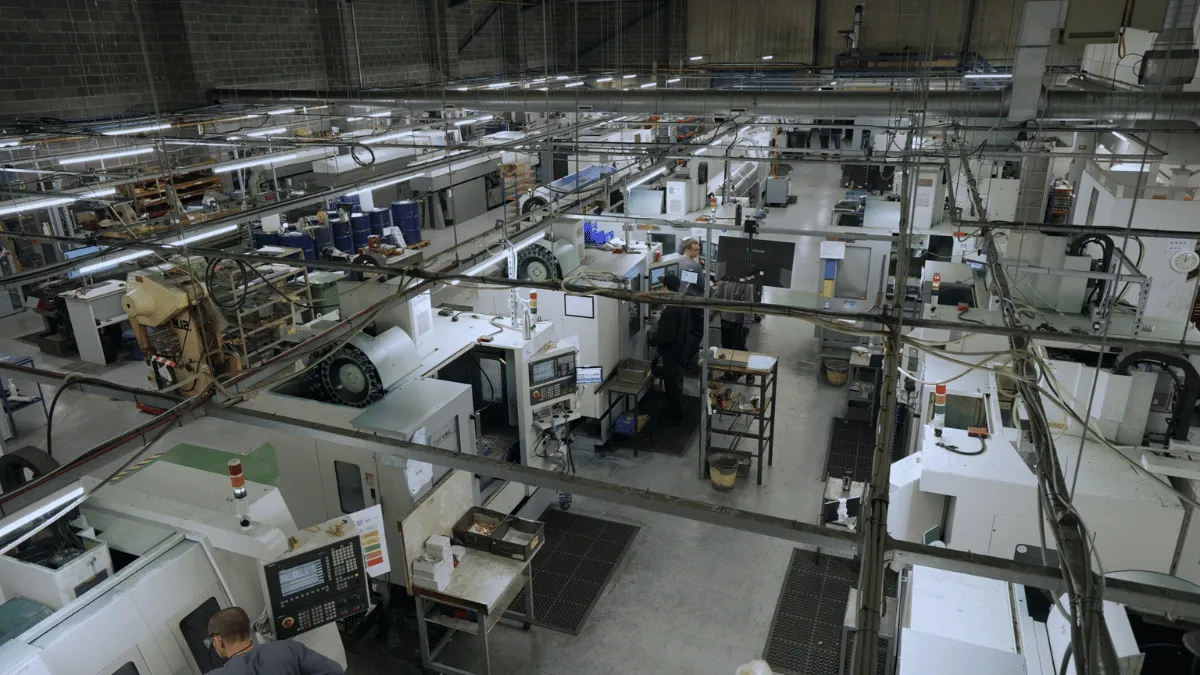
Asahi Glass Co. (AGC), a global leader in glass and chemical manufacturing, has long relied on data to improve its operations. For years, however, the methods for collecting and analyzing that data were highly manual. Supervisors and engineers often used photos, videos, paper logs, and stopwatches to capture workflows on the factory floor.

The data that was gathered typically lived in personal computers at each site. Rather than being stored in a shared environment, insights were often locked away in individual files, usually analyzed in Microsoft Excel. This siloed approach made it difficult to consolidate findings or apply them consistently across teams.

AGC recognized that while they had valuable information, their system for capturing and processing it was holding them back. To drive meaningful improvement, they needed a faster, more scalable way to acquire, analyze, and act on operational data.

Identifying bottlenecks

AGC found that every stage of their improvement process – data acquisition, analysis, and action – required modernization. Data acquisition was too manual, analysis was too time-consuming, and supervisors often struggled to translate findings into effective improvements. The result was a cycle where valuable insights were delayed or never fully realized.

Leadership believed there had to be a better way to consolidate data and deliver insights directly to the people who could use them. The goal was not just to reduce effort, but to create a system where information was instantly available and actionable.

By rethinking their data strategy, AGC aimed to empower engineers and supervisors to spend less time gathering data and more time designing improvements. This would allow their teams to accelerate innovation and improve efficiency across manufacturing lines.

A wearable-driven solution

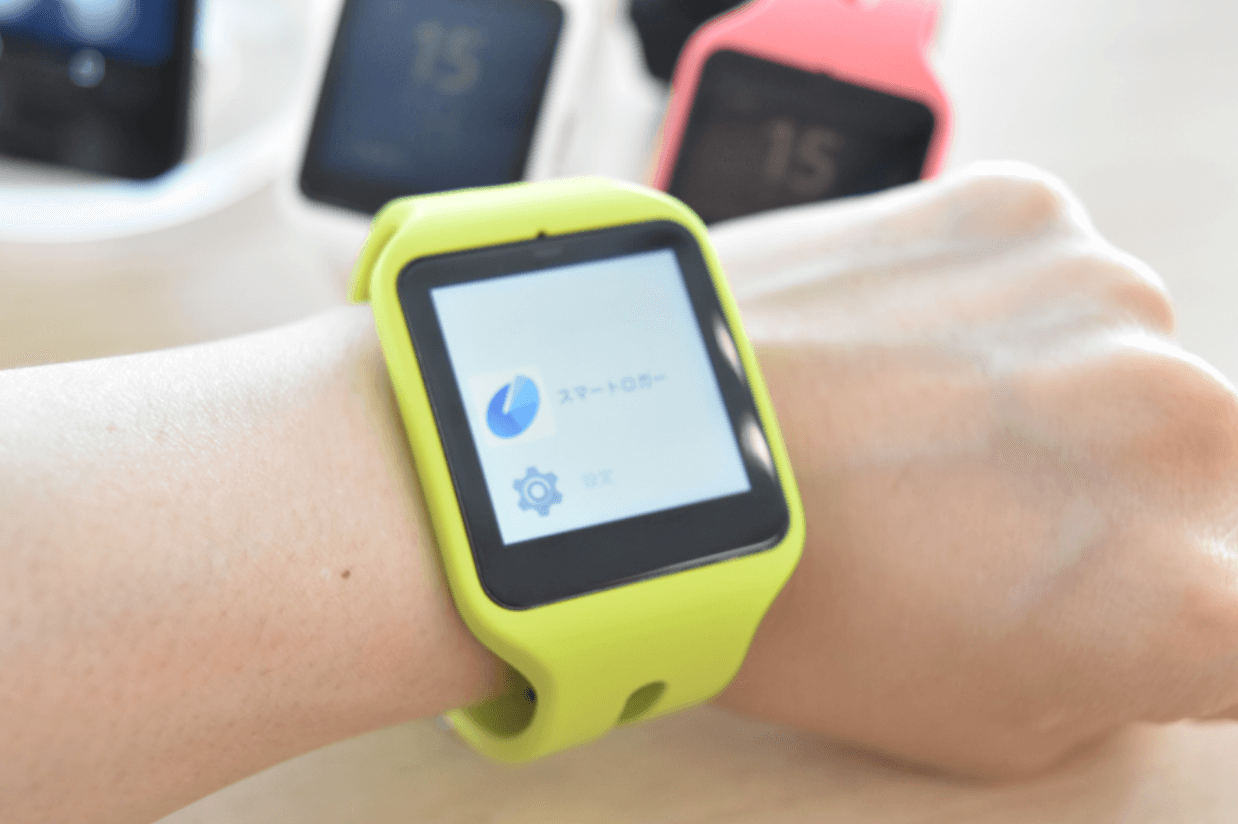
To achieve this, AGC developed a work dynamic analysis solution called Smart Logger in partnership with CEC Corporation. Workers and engineers were equipped with smartphones and IoT-enabled wearable loggers, such as smartwatches and glasses, that could automatically capture workflow data as tasks were performed.

The collected data was transmitted securely via Soracom Air, which allowed each device to connect directly to the cloud. From there, Soracom Beam encrypted transmissions, managed authentication, and routed the information to AGC’s business intelligence (BI) platform for visualization and analysis.

This new approach transformed the process. Data that once required hours of manual collection could now be consolidated instantly in the cloud. Supervisors could view dashboards, spot inefficiencies, and act on insights quickly, while engineers gained more time to focus on developing innovative solutions rather than collecting data.

Why Soracom?

AGC chose Soracom because it provided a connectivity solution that was both easy to deploy and cost-effective. By inserting Soracom Air SIMs directly into smartphones and wearables, AGC was able to connect devices immediately, without the need for complex networking infrastructure. This kept costs low and ensured the system could be rolled out quickly.

With Soracom Beam, AGC gained secure data transfer and flexible cloud integration. Rather than requiring devices to manage authentication themselves, Beam handled encryption and credentialing in the cloud, allowing devices to remain lightweight and efficient. This design reduced both overhead and battery consumption, making wearables more practical in a demanding factory environment.

Another advantage was global reach. With AGC operating factories overseas, Soracom’s international compatibility meant the same connectivity model could be applied across multiple geographies. This consistency simplified deployment and ensured that learnings from one facility could be extended across the company.

Future Plans

AGC believes that adopting IoT and cloud-based analytics is essential for building more reliable, stable, and efficient operations. While manufacturing often involves strict security requirements, AGC sees secure connectivity and cloud platforms as the best way to overcome these barriers and unlock new opportunities.

The company plans to expand its Smart Logger program beyond factories and into office environments. By equipping office workers with wearables, AGC hopes to capture new categories of data, particularly around value-added time, that can be used to improve workflows and productivity.

By continuing to integrate IoT into more aspects of its business, AGC expects to not only streamline existing operations but also foster a culture of continuous innovation. With Soracom providing the connectivity backbone, AGC is positioned to scale securely and efficiently across both manufacturing and office settings.