BinSentry is a smart ag company revolutionizing feed management for animal agriculture. With its proprietary sensor technology, the company enables feed mills and vertical integrators to remotely monitor inventory levels in farm bins and large silos. Its flagship devices, including the explosion-proof Pro Sense HD, use near-infrared time-of-flight sensors and AI-powered image processing to produce accurate 3D volume readings – even in harsh, dusty environments. The result? Real-time, reliable inventory data that keeps animals fed, workers safe, and fleets running efficiently.

“We take about a half million total measurements just to get a single volume inside of a bin,” said Nathan Hoel, Co-Founder and CTO. “And that raw data gets processed using AI to deliver a precise reading back to the mill.”

The Challenge: Reliable, Scalable Connectivity in Remote Areas

To deliver accurate inventory data, BinSentry’s devices must transmit large volumes of sensor readings from rural and remote farm sites – locations often underserved by traditional cellular networks. These areas may only have partial or inconsistent coverage, making it difficult to maintain a stable connection for IoT devices – particularly when those devices must operate in potentially challenging weather conditions.

“In rural areas, it doesn’t matter what the coverage map says. You just need access to multiple carriers. If one signal drops, we can’t afford downtime,” said Hoel. “We need as much carrier overlap as possible.

The challenge is compounded by BinSentry’s device ownership model. Unlike consumer IoT, BinSentry owns and manages its devices end-to-end – from manufacturing and field installation to servicing and redeployment. Devices tested on the assembly line might then sit in inventory or with a technician for weeks or months before deployment. Though the devices are not in use at this time, traditional MVNOs will still charge full data rates.

“We’re managing all these connections, and we build devices that may sit idle for months before deployment,” said Hoel. “But with most carriers, we were paying full price whether we used them or not.”

Even after initial deployment, devices might need to be temporarily taken offline for servicing or refurbishment, before being reinstalled elsewhere. BinSentry needed a connectivity solution that could flex with their operational reality by allowing them to turn connectivity on and off remotely.

“With Soracom, it just works. We don’t have to think about where it’s going or what network it’s on. That peace of mind lets us scale confidently.”

"With Soracom, it just works. We don't have to think about where it's going or what network it's on. That peace of mind lets us scale confidently."
Nathan Hoel
CTO and Co-Founder
BinSentry

The Solution: Flexible, Intelligent IoT Connectivity with Soracom

BinSentry found the ideal partner in Soracom, whose global IoT platform delivered exactly what the company needed: multi-profile SIMs, automatic failover across carriers, and a billing model designed for the realities of industrial IoT.

Unlike traditional cellular providers that lock customers into always-on billing, Soracom allows devices to be activated, suspended, or deactivated on demand. This flexibility has proven crucial to BinSentry’s business model, which requires devices to be tested during manufacturing, paused during inventory or transit, and then reactivated only once installed in the field.

“We were almost paying double what we were actually using, and from an operational and margin standpoint, that was crazy” said Hoel. “When we went to Soracom, not only were they competitive on price, but we were able to turn off everything we weren’t using without having to program it into our own system.”

Additionally, Soracom’s real-time monitoring tools, cloud integrations, and SIM management portal allow the BinSentry team to manage connectivity across tens of thousands of devices without writing custom infrastructure or handling billing manually.

“It was surprising to contrast a group who just doesn’t seem to understand how IoT runs, even though they claim to be selling to IoT, and Soracom, who seems to have built everything up from the ground to work for an IoT company. It was just a night and day difference for us. The billing, the tools, everything was there for us.”

Soracom even helped the team source rugged industrial-grade SIMs that passed microscopic lab testing for durability in extreme temperature fluctuations – a key requirement for devices mounted on hot, sun-exposed feed bins in the summer or sub-zero silos in northern winters.

“They worked with us to source and test industrial SIMs with proper gold plating,” said Hoel. “That level of support was a game-changer.”

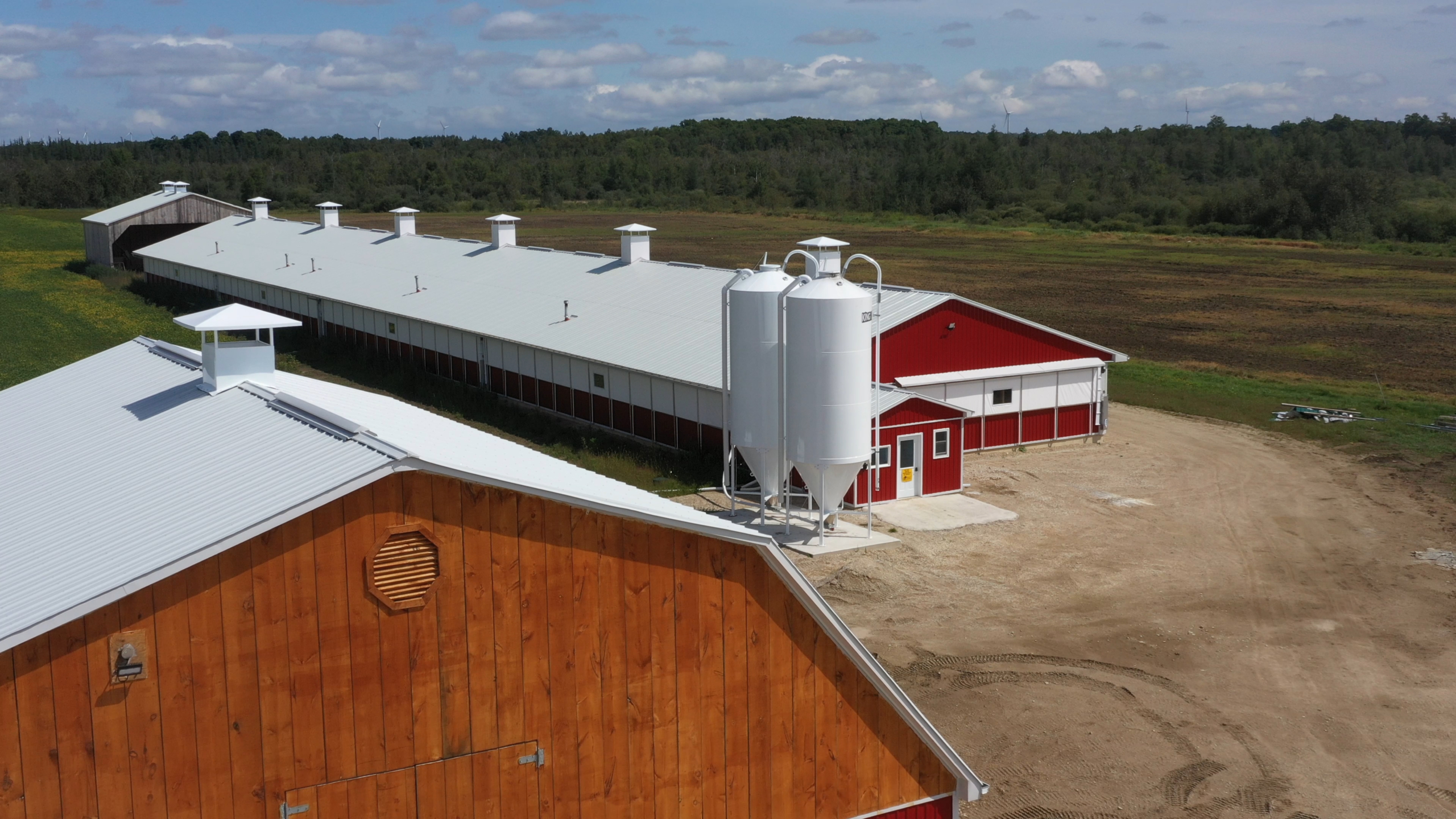
Feed Bins

Results and What’s Ahead for BinSentry

With Soracom, BinSentry has improved device uptime, mediated wasteful data costs, and streamlined global deployment. Their technical team now spends less time troubleshooting connectivity and more time innovating.

“With Soracom, it just works. We don’t have to think about where it’s going or what network it’s on. That peace of mind lets us scale confidently,” said Hoel.

As BinSentry expands its presence beyond North America and develops new sensing applications, it plans to continue building on its success with Soracom as a trusted connectivity partner.

“Soracom is a partner in our business. When there’s a problem, they’re on the call with us solving it. That’s what we need to grow.”

The Opportunity: Protecting Crucial Farming Machinery

Theft of agricultural equipment is on the rise, with British farms seeing a 26% increase in claims from 2017 to 2018 according to NFU Mutual. Isolated locations make rural communities especially vulnerable, and organized crime groups operate a robust international market for stolen tractors, quad bikes, and other high-value machinery.

Loss of a single piece of equipment can cost hundreds of thousands of dollars, with replacement taking months, causing lasting impacts on crop yields and farmer livelihoods.

Go4ioT founder Pascal Lavaur saw an opportunity to address this problem with IoT technology. The result is KHIKO, a programmable anti-theft device capable of detecting suspicious movements and alerting owners via SMS, email, or even voice calls.

“It’s a very sturdy device that’s small enough to hide,” says Lavaur. “If an asset starts to move during the night, KHIKO will start tracking it with GPS. Wireless data connection enables continuous tracking of the asset and recovery.”

While originally designed for agriculture, KHIKO is now used to protect construction machinery, boats, classic cars, camping vehicles, and other commercial assets.

“The ability to manage our devices around the world using a centralized interface, regardless of the connectivity behind it, is a massive benefit.”
Pascal Lavaur
Founder
Go4ioT

The Solution: Practical, Versatile Technology

Lavaur drew on 18 years in commercial battery manufacturing to design a device that can operate for years without maintenance. KHIKO uses the Sigfox global 0G network to send tiny data packets, such as GPS coordinates, over long distances with minimal power, enabling battery life of up to 10 years.

Because Sigfox is not universally available, KHIKO seamlessly switches to 3G or 4G cellular backup when needed. Soracom’s global SIM and integrated management console make it possible to track assets even when they move outside Sigfox coverage areas.

Why Soracom: Coverage, Cloud Integration, and Built-In Tools

“The benefits go much deeper than the connectivity aspects,” says Lavaur. “With Soracom, you can send data to other networks in the same compressed format as Sigfox, then extract it into a usable format for cloud systems.”

This capability allows Go4ioT to focus development on core firmware, monitoring movement, location, and configuration—while Soracom provides the connectivity backbone.

Beyond cellular coverage, Soracom delivers built-in services like Soracom Harvest for data storage and visualization, eliminating the need for Go4ioT to build its own infrastructure. The Soracom Console also manages both Sigfox and cellular devices through a single interface, enabling seamless protocol switching without software rewrites.

Combine Harvester, Farming Equipment

The Outcome: Complexity Made Simple

“KHIKO would have been too complex to build without Soracom,” said Lavaur.

By combining Sigfox and Soracom cellular connectivity, KHIKO offers a highly reliable and low-power theft prevention solution that can be deployed anywhere in the world. This flexibility ensures valuable and mission-critical assets remain protected, delivering greater operational stability, financial security, and peace of mind to users.

The Opportunity: Smarter Storage for Crucial Crops

Every year, one-third of food grown worldwide never gets eaten, representing hundreds of billions of dollars in losses. In the US alone, stored grain spoilage and infestation account for more than $12 billion annually.

Based in Sunnyvale, CA, TeleSense applies cutting-edge IoT technology to this challenge. Their post-harvest monitoring systems help grain handlers, co-ops, merchandisers, and transporters monitor storage conditions in real time, enabling data-driven decisions that extend shelf life and reduce waste.

TeleSense sensor

The Challenge: Bringing Vital Information to Light

Stored grain is highly valuable, but keeping it safe over long periods is notoriously difficult. Hidden deep inside massive silos, grain can rot or attract pests without visible signs until it’s too late.

Traditional monitoring requires manual checks for temperature and moisture – costly, labor-intensive, and providing only intermittent data points. Farmers needed a more scalable, continuous, and reliable way to safeguard their crops.

The Solution: Pulling Data Out of Silos

TeleSense created a suite of hardware and software that continuously monitors storage conditions without requiring fixed connections.

With continuous monitoring, users receive real-time alerts to address issues before spoilage occurs and can make smarter inventory decisions, such as prioritizing which grain to sell first. The result: less waste, lower energy costs, and higher margins per bushel.

TeleSense Sensor

Why Soracom: Affordability, Scalability, and Control

TeleSense chose Soracom to provide reliable connectivity where it’s needed most – in rural storage sites and along transport routes.

The Future: Increased Automation and Enhanced Analytics

With global demand for staple crops rising and arable land finite, improving storage efficiency is critical to feeding a growing population. TeleSense is expanding its platform with new automation features and advanced analytics to deliver even greater visibility and resilience across the global food supply chain.

About: Nationwide Sigfox coverage in Central Europe

Founded as the national Sigfox operator for Austria, Liechtenstein, and Switzerland, HELIOT Group delivers reliable low-power, wide-area (LPWA) connectivity through a distributed network of over 800 base stations. Their infrastructure is designed to support the rapidly growing demand for IoT applications, where small sensors and devices need to communicate efficiently and at scale.

Sigfox connectivity offers a unique balance of extremely low energy consumption, long transmission range, and low cost. Devices can transmit small data packets across distances of up to 10km in cities and up to 50km in rural regions. This makes Sigfox an ideal choice for use cases like asset tracking, smart building monitoring, and environmental sensing, applications that don’t require high bandwidth but benefit from wide-area coverage and years-long device battery life.

Heliot’s mission is to make IoT accessible and sustainable. By providing a strong backbone for Sigfox-based solutions, they help innovators, enterprises, and municipalities bring projects to life, whether it’s monitoring air quality in urban areas, tracking assets across borders, or supporting smart agriculture in rural communities.

“The Soracom pay-as-you-go model fits our business case and operational needs perfectly.”
Anonymous Headshot
Gildas Seimbille
Network Operations and Pre-Sales Engineer
Heliot Group

Challenge: Ensuring reliability across borders

Sigfox already connects more than 10 million devices across 65 countries, proving its value as a global IoT standard. But for a regional operator like HELIOT, ensuring service quality at scale presents unique challenges.

One of the most significant issues is Europe’s fragmented telecom market. Many IoT projects require multi-national coverage, yet establishing individual agreements with separate carriers in each country adds unnecessary complexity and cost. For customers, this can translate into deployment delays, administrative hurdles, and uncertainty around reliability.

Heliot also recognized the risk of relying solely on a single type of connectivity. A network outage, even a short one, could disrupt mission-critical applications, lead to lost data, and in some cases raise safety or compliance concerns. The challenge was clear: design a network with world-class reliability while keeping service affordable and straightforward for customers.

Solution: Multi-operator failover for continuous service

Heliot engineered its Sigfox network to include multiple connectivity options at every base station. By supporting several wireless operators simultaneously, the network creates a built-in failover system that ensures service continuity. If one carrier experiences downtime, traffic can automatically switch to another, maintaining seamless coverage for end users.

This approach not only reduces the risk of service interruptions but also strengthens Heliot’s ability to meet demanding service-level expectations. Customers deploying IoT devices for asset tracking, security monitoring, or industrial control can rely on consistent, resilient connectivity without having to manage multiple operator agreements themselves.

To make this possible, Heliot needed a back-end cellular connectivity solution capable of delivering secure, reliable coverage across all three countries they serve. That solution also needed to integrate cost-effectively into their existing service model, which prioritizes efficiency and scalability.

Why Soracom: A partner for seamless IoT scale

Heliot’s extensive experience working with wireless providers made the advantages of Soracom immediately clear. Soracom’s global, multi-carrier coverage gave HELIOT a simple way to unify connectivity across Austria, Liechtenstein, and Switzerland, reducing administrative overhead while enhancing resilience.

Rapid deployment was another critical factor. Soracom’s console and APIs allow Heliot to provision devices instantly, monitor connections in real time, and manage hundreds of SIMs with full transparency and control. For a growing network already spanning more than 225 base stations, these capabilities are essential to delivering best-in-class service.

Perhaps most importantly, Soracom’s pay-as-you-go model aligns perfectly with HELIOT’s business case. Since cellular is used primarily as a failover resource in their architecture, costs are incurred only when needed, eliminating waste while preserving reliability. Together, these advantages make Soracom a trusted partner in building Europe’s most reliable Sigfox network.

Future Plans: Toward 85% coverage and beyond

Over the next two years, HELIOT Group plans to expand Sigfox availability to cover 85% of the population across Austria, Liechtenstein, and Switzerland. This expansion will extend the benefits of affordable, low-power IoT connectivity to more industries, communities, and citizens across the region.

At the same time, Heliot is looking outward. With global demand for Sigfox IoT solutions continuing to rise, the company is exploring opportunities to extend its model into new markets. By combining Sigfox’s proven low-power capabilities with Soracom’s global cellular integration, HELIOT aims to deliver scalable IoT connectivity solutions across borders.

Ultimately, Helio’s vision is to provide the foundation for a smarter, more connected world – helping innovators bring IoT projects to life with reliability, flexibility, and cost-efficiency at scale.

Direct-from-farm delivery

Cookpad Mart is an e-commerce service that connects consumers with fresh ingredients from local farmers and specialty shops. Shoppers place orders through a mobile app, and their purchases are delivered to neighborhood “Mart Stations,” refrigerated lockers designed for same-day pickup. This keeps food fresh while making local produce more accessible.

Unlike traditional grocery delivery services, Cookpad Mart avoids central distribution centers that can degrade quality. By shipping directly from farm or shop to customer, they minimize handling and preserve freshness. This farm-to-fridge approach is a defining feature of their service and sets them apart in the crowded grocery marketplace.

To make this system work, Cookpad had to ensure that every order could be processed accurately from the moment it was placed to the moment it was delivered. That required not only a digital marketplace, but also reliable hardware that farmers and small shops could depend on day after day.

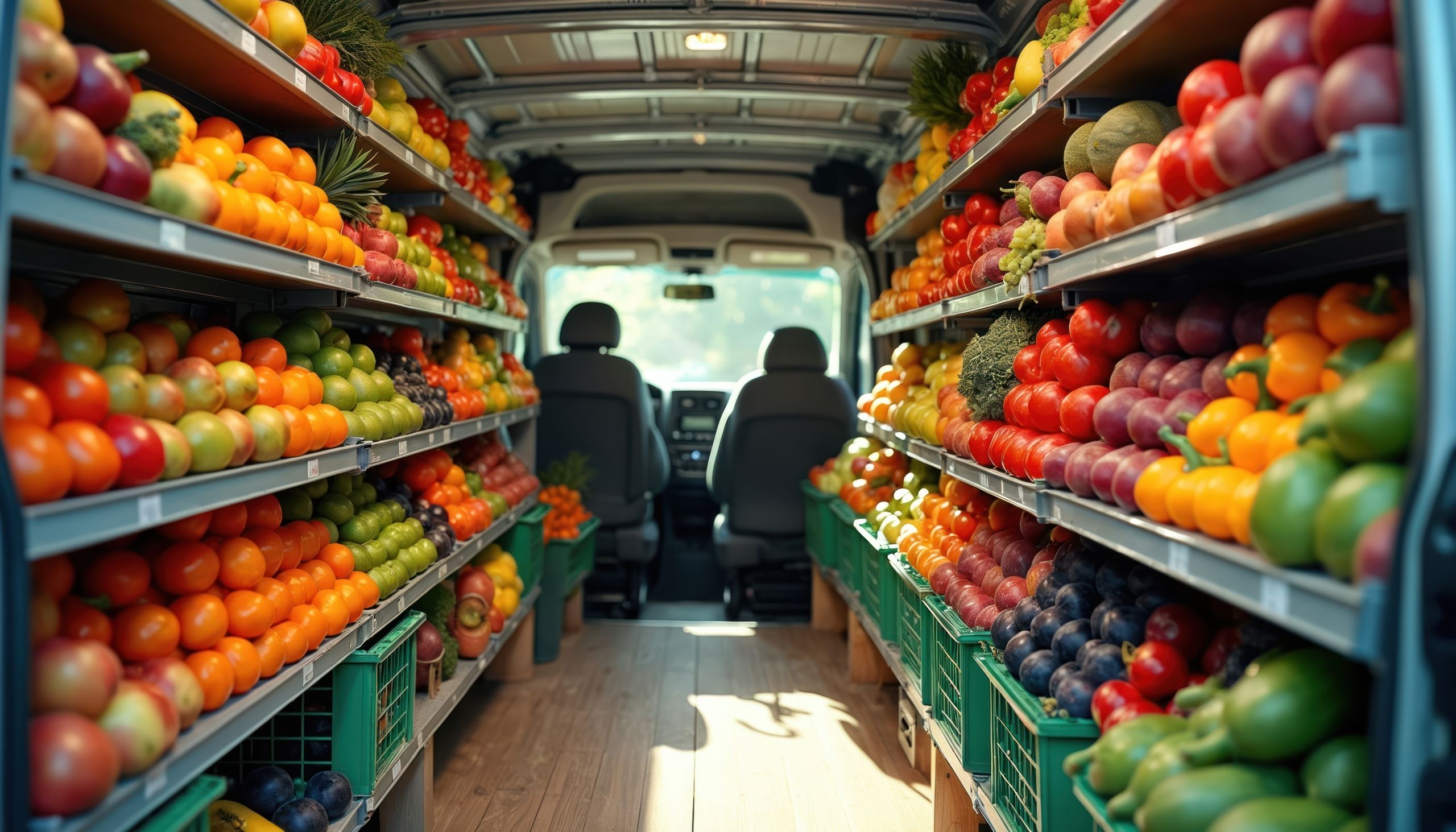
Local market fresh vegetable, garden produce, clean eating and dieting concept

The Challenge: Ensuring label reliability

Cookpad began with a straightforward idea: equip farmers and specialty shops with label printers so they could mark orders clearly before handing them to drivers. In theory, this would streamline the handoff process and ensure that every product arrived with the correct details.

In practice, the system quickly showed its limits. Labels needed to be water-resistant, consistently formatted, and durable enough to survive handling in busy, sometimes outdoor environments. Without this, consumers could receive confusing or inconsistent information on their deliveries.

A first prototype combining a standard printer with an iPad seemed promising, but testing revealed frequent paper jams, device freezes, and unstable connections between devices. These setbacks made it clear that Cookpad needed a more stable, IoT-ready system to support its unique delivery model.

The Solution: IoT-enabled fulfillment

Cookpad partnered with Soracom to build a more resilient solution. By equipping a Raspberry Pi with Soracom Air cellular connectivity, Cookpad created a reliable communications hub that stabilized printer operations and enabled continuous status monitoring. This reduced common issues like jams and connection drops.

To securely transmit order data, Cookpad used Soracom Canal, which provided a private connection between IoT devices and their AWS-hosted backend. If problems were detected, the operations team could use Soracom Gate to access devices remotely, drastically cutting downtime and eliminating the need for on-site intervention.

Beyond solving the printing challenge, Cookpad extended the solution to food safety. By deploying Soracom Beacon sensors and visualizing their data through Soracom Harvest, Cookpad could monitor temperature, humidity, and location in real time, ensuring quality control from farm to Mart Station.

Why Soracom?

Soracom’s platform provided Cookpad with a unified foundation for rapid IoT development. With Soracom’s endpoint functions, Cookpad could link data from multiple services simultaneously, including direct integration with AWS through Soracom Funnel. This seamless interoperability allowed engineers to focus on refining customer and farmer experiences rather than managing infrastructure.

Development speed was another key advantage. Using Soracom, just two engineers (one focused on applications and the other on backend systems) were able to design, test, and deploy a fully functional IoT system in only a week. The efficiency of Soracom’s APIs and management tools made rapid prototyping possible.

For Cookpad, the decision to use Soracom wasn’t just about solving immediate technical hurdles. It provided a scalable, flexible platform that could support continuous innovation. With this foundation in place, Cookpad can evolve its service quickly and confidently as customer needs grow.

Scaling innovation

Cookpad continues to emphasize speed in its hardware development process, with prototypes often produced in as little as a week and rarely taking longer than a month. This allows the team to test, learn, and improve without slowing down day-to-day operations.

Future plans include making it even easier for farmers and specialty shops to participate in the Cookpad Mart ecosystem. By simplifying the hardware and further automating back-end processes, Cookpad hopes to reduce barriers for local producers who may not have prior technical experience.

As Cookpad scales its service into more regions, the company is committed to preserving the freshness and quality that have defined its success. With Soracom as its IoT backbone, Cookpad can expand while maintaining the trust and reliability that keep customers coming back.

About: A more abundant future

Since 2002, Hortau has been pioneering precision agriculture with a focus on optimizing crop yields, conserving water, and reducing environmental impact. Headquartered in the heart of North America’s agricultural regions, the company helps growers maximize the productivity of their land while lowering costs and improving quality.

Hortau’s patented irrigation management system combines IoT connectivity with agronomic expertise, giving growers real-time insight into soil and plant health. By shifting from guesswork to data-driven decisions, farmers are better able to balance water use against crop needs, improving efficiency at every stage of the growing cycle.

As populations rise and arable land remains finite, Hortau’s mission is increasingly urgent: ensuring growers can meet rising demand for food while making responsible use of the world’s most precious natural resources.

"Having grown up on a farm, I understand the complexity of farming and what it takes to grow a profitable crop. After leaving the farm it became clear that to maintain consistent crop health, yield and quality, growers need access to real-time and forecasted information – to anticipate, adjust, manage inputs precisely – and repeat their success year after year, across every acre."
Jocelyn Boudreau, Hortau
Jocelyn Boudreau
CEO and Co-Founder
Hortau

Challenge: The most precious resource

For most people, farming is synonymous with land. But for growers, water is every bit as important. According to the USDA’s 2012 Census of Agriculture, irrigated farms represented just 14% of all U.S. farms, yet accounted for nearly 40% of total U.S. farm sales, a staggering $152 billion in value. Water, in short, is what makes the land produce.

Globally, agriculture consumes up to 70% of freshwater resources, and in produce-heavy states like California, that percentage is even higher. With climate pressures and rising demand straining supply, efficient irrigation has become a critical factor in both economic and political debates. For growers, water management directly influences both profitability and long-term viability.

The real challenge lies in knowing how much water plants actually need. Even with groundwater monitoring, it can be difficult to assess soil conditions at the root level. Overwatering wastes precious resources and can compromise crop quality, while underwatering risks reduced yields or even crop failure. In an industry where margins are slim and risks are high, that margin of error can be devastating.

Solution: Applied IoT for plant-centric irrigation

Hortau’s breakthrough lies in its plant-focused approach. Instead of measuring groundwater or surface irrigation levels, Hortau stations continuously measure soil tension – the precise metric that shows how much effort a plant must expend to access water. This provides growers with a direct window into plant health, allowing them to irrigate based on need rather than estimation.

The system is built around wireless, real-time IoT sensors that transmit data to a secure cloud platform. Farm managers and agronomists can access dashboards that visualize plant stress, soil conditions, and irrigation effectiveness. Alerts and analytics help them fine-tune watering schedules, ensuring crops receive exactly the right amount of water at the right time.

The results speak for themselves. A California pistachio grower using Hortau reduced tree mortality from nearly 30% to almost zero. An onion grower cut water use by 25-30%, while grape and cranberry growers reported measurable improvements in fruit quality. Across diverse crops, Hortau consistently demonstrates that smarter irrigation yields healthier plants and stronger bottom lines.

Why Soracom: Multicarrier coverage and streamlined operations

As one of the earliest adopters of IoT in agriculture, Hortau has worked with nearly every cellular data provider across North America. The company knows firsthand the challenges of rural connectivity, network fragmentation, and inconsistent billing models. Each of these issues slows deployment and adds unnecessary complexity for growers who simply want reliable data from the field.

Soracom’s multicarrier connectivity removes these obstacles by providing a single, global platform. Hortau can pre-provision devices at the factory and ship them anywhere in the U.S. or Canada, confident that they will connect seamlessly. With pooled pricing, Hortau also avoids overage charges, protecting both their margins and their customers from unexpected costs.

Beyond connectivity, Soracom’s cloud-native services support Hortau’s migration to AWS, offering secure, private communication between field devices and cloud applications. Using Soracom Canal, Gate, and custom DNS services, Hortau ensures its network of devices communicates efficiently and securely, enabling continuous data collection and analysis at scale.

Hortau Architecture image

Future Plans: Helping growers across the Americas

Today, Hortau operates thousands of stations across North America, supporting growers of everything from large-scale row crops to high-value specialty crops like berries, nuts, and grapes. The company continues to expand its footprint in the U.S. and Canada, helping farmers adopt data-driven irrigation practices that deliver measurable improvements in both yield and quality.

With operations growing rapidly, Hortau is also beginning to extend its reach into Latin America. These regions face many of the same challenges as North America – limited water supply, rising populations, and increasing demand for sustainable farming practices, making Hortau’s plant-centric model a strong fit.

Looking forward, Hortau remains focused on advancing both technology and adoption. By pairing IoT data with agricultural expertise, Hortau is helping create a farming ecosystem where every drop of water is used wisely and every plant has the opportunity to thrive. For growers across the Americas, that means a more profitable present and a more abundant future.

About: Can trees tell us what they need?

Most precision agriculture solutions rely on soil-level sensors to monitor moisture, nutrients, and field conditions. Saturas, an agtech innovator based in Israel, went deeper – literally – embedding sensors directly into trees to capture data on their real-time water status.

The company’s miniature sensor technology, designed specifically for orchard crops, provided growers with continuous insight into Stem Water Potential (SWP), a scientifically recognized measure of plant stress and a practical tool for irrigation management.

By integrating these readings into a cloud-based decision support system, growers could optimize irrigation in ways that improved plant health, increased yields, and conserved scarce water resources.

Fruit tree

Challenge: Growing more while using less

Fruit and nut orchards represent both an economic powerhouse and a major challenge for water sustainability. In California alone, almonds account for around 10% of the state’s total water use. Faced with high-value but thirsty crops, many growers historically leaned toward overwatering “just to be safe.”

The problem is that this safety margin comes at a cost. Excess irrigation wastes water, increases the risk of runoff-related soil contamination, and can even reduce crop quality by encouraging disease or diluting nutrient concentration.

With limited and imprecise measurement systems, growers lacked the tools they needed to manage irrigation precisely, leading to a cycle of inefficiency at a time when water scarcity and climate pressures made smarter management more urgent than ever.

Solution: Better measurement for better health

Stem Water Potential is often described as the plant equivalent of blood pressure: a direct, reliable indicator of stress. Historically, it could only be measured manually with equipment dating back to the 1960s, an impractical solution for large-scale or continuous monitoring.

Saturas’ StemSense™ sensor solved this challenge by embedding directly into the tree and transmitting continuous SWP readings via cellular IoT. This gave growers something close to a plant scientist in every orchard, offering moment-to-moment visibility into water stress and plant health.

Crucially, the system also supported strategic use of controlled water stress. In almonds, for example, carefully timed moderate stress reduced fungal disease during hull split; in prunes, it encouraged sugar accumulation pre-harvest; in walnuts, it reduced the risk of root disease. These benefits meant growers could not only save water but also improve yield quality and market value.

Why Soracom: Centralized management and cost savings

When Saturas began U.S. field deployments, they initially tried working with a large telecom provider. But issues with billing, SIM management, and overhead quickly became barriers to scaling. One month, usage notifications even ended up routed to the trees themselves.

Switching to Soracom streamlined operations. Soracom’s management console gave the team a single interface to monitor all sites, check data usage, and track SIM status. Just as importantly, Soracom’s pay-as-you-go pricing aligned with real-world agricultural deployments, where seasonal usage patterns vary dramatically.

“Soracom allows us to manage and monitor all our sites on one platform, and check the data usage and activity status of each site in one interface. Furthermore, Soracom’s pay-as-you-go approach reduced our costs dramatically. The model of paying only for the data we use works very well for us.”
Anonymous Headshot
Anat Bujanover
General Manager, California
Saturas

The Bigger Picture: Precision irrigation for a water-scarce world

Although Saturas itself ceased operations in 2023, the challenges it addressed remain more relevant than ever. Orchard crops continue to represent billions in economic value and a disproportionate share of agricultural water use, particularly in regions like California’s Central Valley.

The lessons of Saturas’ approach – direct plant monitoring, continuous cellular data collection, and targeted irrigation management – show how IoT can help agriculture grow more with less. By measuring and managing water stress at the plant level, growers can reduce waste, improve fruit quality, and make better use of every drop of water.

As global agriculture confronts intensifying water scarcity and climate change, precision irrigation powered by IoT connectivity will remain a cornerstone of sustainable farming, helping farmers protect yields, protect resources, and protect the future of food.

About: A 21st century solution to a 21st century problem

Bees are more than just insects; they are essential workers in the global food supply chain. By pollinating crops, they support nearly three-quarters of the foods humans rely on every day. But pesticides, parasites, environmental changes, and climate disruption have placed bee populations at serious risk, putting agriculture itself in jeopardy.

Founded in 2017 within an elite entrepreneurial program at IDC University near Tel Aviv, BeeHero was built by a team with deep expertise across agriculture, engineering, and entrepreneurship. Co-founders include a second-generation beekeeper, a global product manager, a hardware and analytics specialist with intelligence service experience, and a serial entrepreneur. Together, they combined practical agricultural knowledge with advanced technical innovation.

From just a few hives in Israel, BeeHero has grown into a global enterprise with offices in Tel Aviv and Palo Alto, operating tens of thousands of hives across multiple continents. Today, their technology is helping growers, beekeepers, and researchers better protect bees while ensuring higher yields and healthier harvests.

We found ourselves struggling to scale with our previous solutions, so we were very glad to find Soracom. We were able to start testing in field within just 48 hours of contacting Soracom, but more than that, it was clear Soracom put the customer first. In a fast-paced environment with a lot of moving parts, having a partner who feels like part of the team is a huge advantage, and we are very happy to scale together.
Omer Davidi BeeHero
Omer Davidi
CEO
BeeHero

Bees pollinate more than 70% of human food crops, making them vital to agriculture and food security. Yet Colony Collapse Disorder, first identified in 2006, continues to devastate bee populations, with nearly 40% of colonies dying each year. Even surviving colonies often suffer reduced productivity, threatening the farmers and industries that depend on them.

Commercial beekeepers play a frontline role in protecting colonies, but early diagnosis is critical. By the time visible signs of stress appear, the window to act may have already closed. Traditional inspection methods rely heavily on physical visits to each hive, a costly, time-intensive process that limits scale and speed.

The challenge BeeHero set out to solve was not just detecting problems, but doing so early, reliably, and at scale. The solution needed to provide continuous, non-intrusive monitoring, accessible from anywhere, without overwhelming beekeepers with data noise.

Solution New technology, new diagnostics, and new data

BeeHero’s approach combines IoT sensors with advanced analytics to provide beekeepers unprecedented visibility inside their hives. Their low-cost sensors capture over 25 features related to colony health, including brood diseases, mite activity, queen presence, and early signs of collapse. This data powers proprietary algorithms that can predict hive disorders before they escalate.

Because such algorithms require massive amounts of data, BeeHero first partnered with commercial beekeepers managing 25% of Israel’s working bees. They soon expanded to partnerships with three of the largest U.S. beekeepers, building what is now the world’s largest database on pollination and bee health. This dataset enables continuous improvement of BeeHero’s predictive models, making them more accurate and more valuable over time.

The results speak for themselves. Beekeepers using BeeHero report reduced colony mortality, lower operational costs from fewer physical inspections, and healthier hives overall. Growers benefit from improved pollination quality, which translates directly to higher crop yields and better revenue per acre. For bees, the outcome is simple but profound: longer lives, stronger colonies, and better resilience against modern challenges.

Why Soracom: Speed to market, speed to scale

Scaling from dozens of hives to tens of thousands introduced a new challenge: connectivity. Bees travel by truck, hives are installed in fields across hundreds of miles, and cellular coverage is often unpredictable. BeeHero’s first connectivity solutions struggled to keep up, both technically and economically, slowing down deployment.

That changed with Soracom. Using Soracom Air, BeeHero could connect hives reliably across diverse geographies, from California’s Central Valley to remote farmland overseas. Just as importantly, Soracom’s pay-as-you-go model made it easy to keep costs predictable while growing fast.

As CEO and co-founder Omer Davidi explains: “We found ourselves struggling to scale with our previous solutions, so we were very glad to find Soracom. We were able to start testing in field within just 48 hours of contacting Soracom, but more than that, it was clear Soracom put the customer first. In a fast-paced environment with a lot of moving parts, having a partner who feels like part of the team is a huge advantage, and we are very happy to scale together.”

BeeHero deployment

Future Plans: Hero to billions

BeeHero is already monitoring tens of thousands of hives and is on track to cover over 20,000 beehives in the U.S. alone, supporting more than one billion bees worldwide. Their partnerships span commercial beekeepers, growers of crops like almonds and berries, and agricultural researchers working to improve pollination strategies.

The company’s global expansion is anchored in California’s Central Valley, one of the most productive agricultural regions in the world. By ensuring healthy hives and reliable pollination, BeeHero is helping to protect a region that supplies a massive share of the world’s food.

Looking forward, BeeHero’s mission is both simple and ambitious: protect pollinators, safeguard food production, and give beekeepers and growers the tools they need to thrive in the face of environmental and economic uncertainty. By combining IoT innovation with a deep respect for bees, BeeHero is building a future where agriculture and ecology succeed together.

A local team with global impact

Nectar was founded in 2015 by Montréal-based designer and beekeeper Marc-André Roberge. What began as a personal project to support a new generation of urban beekeepers quickly revealed a much larger opportunity. Roberge recognized that the same connected technology that could help hobbyists manage a few hives in the city might also transform the way commercial beekeepers operate across thousands of hives.

Since then, the company has grown into an international player in precision beekeeping. Today, Nectar connects more than 1,500 hives across the US and Canada, equipping beekeepers with purpose-built sensors and analytics tools that dramatically improve visibility into hive health. With over 15 million bees now connected, the company has already demonstrated the ability to reduce operational costs while improving productivity and survival rates.

As demand for pollination continues to increase worldwide, Nectar’s mission has expanded from its local roots to a global vision. By combining field experience with innovative technology, Nectar is positioning itself as a key contributor to food security and agricultural resilience around the world.

“Managing hives often means moving them across huge rural areas where Wi-Fi or wired networks simply aren’t an option. Soracom’s global SIM makes connectivity one less thing for us to worry about, it just works wherever our bees are.”
Anonymous Headshot
Nectar Team
Nectar

Honey bees pollinate nearly a third of the crops humans rely on, from fruits and nuts to vegetables and grains. In economic terms, this pollination represents more than $200 billion USD in value every year. Beyond numbers, bees make possible the growth of nutrient-dense foods that are essential to healthy diets around the world.

Yet for decades, bee populations have been in sharp decline. In North America and Europe, colonies have been dying in large numbers for more than 20 years, with annual losses still estimated at 30% or more. The causes are complex and varied, from pesticides and parasites to climate stress and changing land use, but the result is the same: fewer bees, weaker hives, and reduced pollination capacity.

For commercial beekeepers, this creates both a challenge and an opportunity. Protecting colonies requires early detection of stressors and timely intervention, but traditional monitoring methods rely heavily on manual inspection. This is time-consuming, labor-intensive, and often comes too late to prevent damage. The industry needs new ways to “listen” to hives in real time and respond before small issues become catastrophic losses.

Solution: A new level of communication between beekeeper and hive

Nectar developed its wireless “Beecons” to provide exactly this capability. Installed directly in the hive, these sensors track conditions such as temperature, humidity, movement, and even sound. Data from multiple hives is then collected by solar-powered BeeHubs and transmitted to the cloud, where Nectar’s analytics platform interprets the results.

This constant flow of information gives beekeepers a clear picture of hive activity and health. They can monitor honey production, identify when a queen goes missing, predict swarming behavior, and detect environmental changes that could threaten colony survival. Instead of reacting to problems after they occur, beekeepers gain the ability to prevent them.

More advanced applications extend these benefits even further. By combining real-time sensor data with algorithms developed by experienced beekeepers, Nectar helps users make informed decisions about hive management, seasonal transitions, and crop pollination timing. The result is not only healthier bees but also better yields for growers who depend on them.

Why Soracom: Global cellular IoT made simple

Beekeeping is not confined to small, fixed locations. Commercial operations often manage thousands of hives spread across vast rural areas, sometimes equivalent in size to a small country. To ensure colonies don’t compete with each other, hives are often distributed across wide territories, and during pollination season they may be moved hundreds of miles by truck.

These conditions make traditional connectivity options impractical. Wired infrastructure is rarely available in rural fields, and Wi-Fi coverage is unreliable and difficult to manage across such large areas. Cellular data offers the flexibility and range that beekeepers need, ensuring that hive data flows consistently to the cloud even as hives move from place to place.

With Soracom, Nectar gains access to a multicarrier SIM that automatically connects to the strongest available signal, no matter where a hive is located. And because Soracom’s global SIM works seamlessly across borders, Nectar does not need to negotiate separate contracts for each new market. This combination of simplicity, reliability, and scalability makes it possible for Nectar to focus on protecting bees instead of managing connectivity.

Nectar deployment

Future Plans: Toward smarter, more sustainable beekeeping

The future of agriculture depends heavily on pollination, and the future of pollination depends on healthy bees. As growers demand more reliable pollination services, Nectar is working to expand its hardware and software offerings to meet a wide range of beekeeping needs. Some beekeepers focus on honey production, others on pollination services, and still others on breeding strong colonies. Each of these goals requires different data, and Nectar is building the flexibility to serve them all.

Future hardware releases will give users even greater visibility into hive activity and health, with options to tailor insights to specific goals. This will help beekeepers make more precise management decisions, reduce costs, and protect their investment in bee populations.

Beyond serving individual operations, Nectar also sees an opportunity to strengthen collaboration between beekeepers and growers. By using sensor data as a trusted source of verification, Nectar can help growers confirm pollination quality and optimize crop yields, creating a shared foundation of trust that benefits both sides. Ultimately, this aligns with the company’s mission to create healthier bees, healthier crops, and a healthier planet.

Cellular IoT for water management

Thurston County, located at the southern edge of Washington State’s Puget Sound, is home to 250,000 residents and the state capital, Olympia. Surrounded by lakes, streams, and forest, the county balances the needs of a growing population with the stewardship of valuable natural resources. Outdoor recreation is part of everyday life, with boating, fishing, and other water activities drawing heavily on the county’s 16 lakes, which account for nearly 7% of the land area.

Managing this mix of natural beauty and human activity falls to a relatively small county team responsible for water safety, flood prevention, and environmental monitoring. These responsibilities demand accurate, timely data in order to protect residents and maintain quality of life. Traditional manual inspection methods were time-consuming and expensive, limiting the team’s ability to scale services as demand grew.

To address this, the county began exploring connected solutions that could streamline operations. Cellular IoT emerged as the best path forward, offering real-time visibility into water conditions while reducing reliance on manual site visits. With IoT sensors in place, water management could become more efficient, cost-effective, and transparent for residents.

"The built-in Soracom user console and API made a real difference as the team moved from design and architecture to deployment in field… It would have taken twice as long to get most of our sites up without it."
Nathaniel Kale, Thurston County Water Specialist
Nathaniel Kale
Thurston County Water Resource Specialist
Thurston County, WA

Challenge: A big job for a small team

Thurston County’s water resources staff face a daunting mandate. They are responsible for everything from tracking lake levels and groundwater safety to monitoring rainfall, clearing beaver dams, and setting boating restrictions when needed. These tasks require constant vigilance across nearly 1,000 square miles of terrain, much of it rural and difficult to access.

Without remote monitoring, county staff had to drive to individual sites to gather data or assess conditions, a process that was both time-intensive and costly. With limited resources and a small team, fieldwork could only cover so much ground, leaving gaps in the county’s ability to anticipate hazards like flooding or infrastructure damage.

The challenge was clear: how to create a system that could provide county-wide visibility into water conditions, reduce dependence on manual inspections, and ensure residents had reliable, real-time information about their environment.

Solution: Remote monitoring with cellular telemetry

In 2016, Thurston County launched a network of connected sensors designed to automate water monitoring and reduce staff workload. Using cellular telemetry, the county could gather and transmit data on groundwater, lake, and stream levels without requiring in-person site visits. Staff could then log into a centralized dashboard to see conditions in real time and act quickly when intervention was needed.

The initial deployment included five sites reporting hourly data, with expansion to ten additional sites in the first three years. This provided unprecedented visibility into local conditions, helping the county predict flooding, identify hazardous blockages like beaver dams, and coordinate with other jurisdictions on emergency planning. Data collected from the network was also made publicly available through a web dashboard, improving transparency and keeping residents informed.

For residents, this shift translated into faster updates on conditions and more responsive county services. Those living near lakes or flood-prone areas gained access to timely insights that could help protect their homes and families, while the county reduced both the time and cost required to manage water resources.

Why Soracom: Affordable, knowledgeable, and easy to manage

For a sensor network spread across a large and varied geography, cellular IoT was the clear connectivity choice. Early trials with larger operators, however, revealed challenges: higher-than-expected service costs, limited flexibility, and little meaningful support for IoT-specific deployments. Thurston County needed a partner who could provide both affordable service and practical technical expertise.

Soracom quickly proved to be the right fit. Its multicarrier SIMs ensured reliable coverage even in remote or forested areas, while pricing aligned well with the county’s operational needs. More importantly, Soracom worked closely with the county team to troubleshoot equipment from multiple vendors and ensure devices were configured properly. This level of hands-on support was essential in moving the project from design to live deployment.

The Soracom User Console and API also became valuable tools for ongoing management. As Water Resources Specialist Nathaniel Kale notes, “The ability to see a detailed history of connections and the status of each SIM is extremely useful when trying to debug issues with modems and custom hardware. It would have taken twice as long to get most of our sites up without it.”

Future Plans: County-wide coverage

From its initial five pilot sites, Thurston County’s monitoring network has grown steadily. By mid-2019, the number of connected locations tripled, and the county began working toward coverage at more than 90 sites across the region. Each expansion step provided both staff and residents with greater visibility into water resources and environmental safety.

Looking forward, the county sees the connected monitoring network as a foundation for long-term resilience. As extreme weather events grow more frequent and unpredictable, reliable data will be crucial to protecting residents, infrastructure, and ecosystems. Remote monitoring allows the county to anticipate risks, allocate resources more effectively, and reduce costs associated with manual inspection.

More broadly, Thurston County’s work demonstrates how smaller public sector teams can leverage IoT to make a significant impact. By adopting scalable, affordable cellular solutions, local governments can improve transparency, protect public safety, and deliver smarter services to the communities they serve.