
The SGP.32 Reality Check: Putting the New IoT Remote SIM Provisioning Standard to the Test
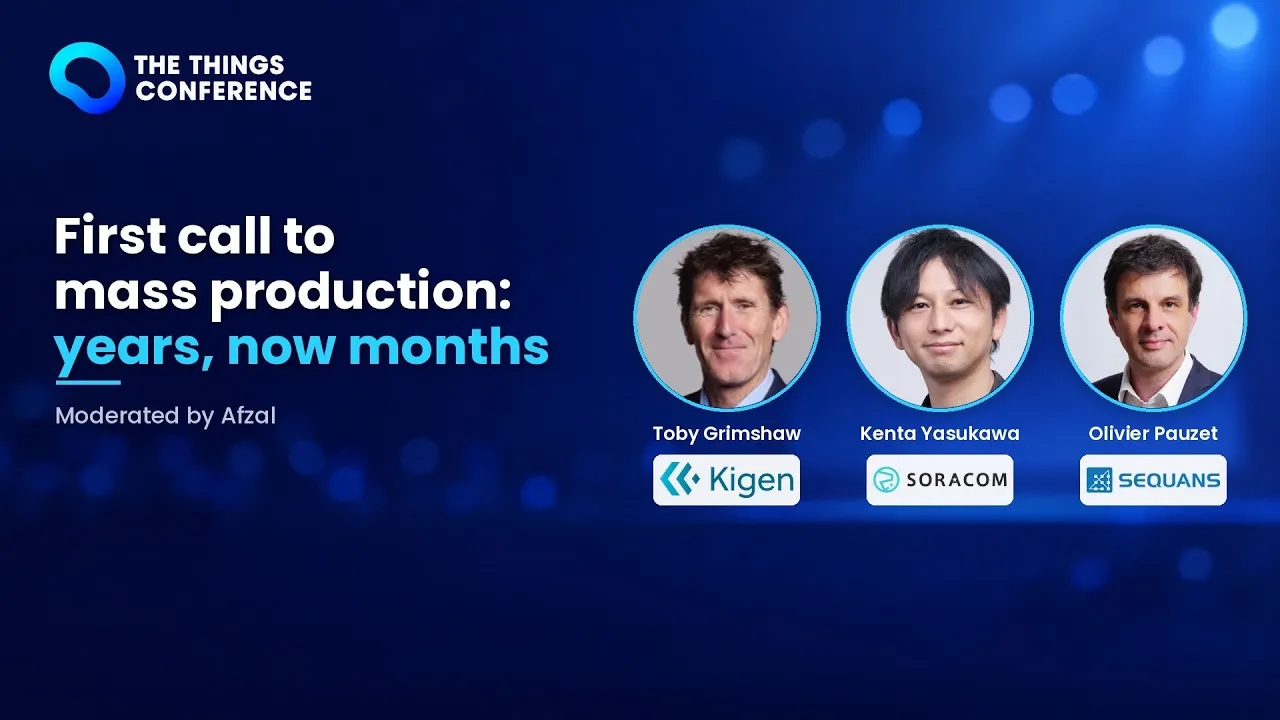
Watch this IoT Stars webinar — featuring Kigen and a live demo on Soracom — to see what SGP.32 actually looks like end-to-end, from downloading profiles to switching connectivity providers in under two minutes.
Speakers


SGP.32 is the GSMA’s new remote SIM provisioning standard built specifically for IoT — eliminating the SMS dependencies and complex network integration of the original M2M spec, and adapting the consumer eSIM model for fleet-scale deployment. But how mature is it really? Can you actually download profiles, switch operators, and manage a fleet today?
In this IoT Stars production, host Laurens Slats runs a live, hands-on reality check. He uses Kigen-issued SIMs and the Kigen eIM platform to test the standard across five different devices — including modules from Murata, Sequans, Nordic, and SG Wireless – with Soracom as one of the connectivity solutions used for the demo. Loïc Bonvarlet from Kigen joins to explain what’s under the hood and where the ecosystem stands today.
The result? Profile downloads completed in about one minute. Provider switches in under two. Energy consumption measured in microwatt-hours. And it worked — seamlessly — across every device tested.
What You’ll Learn
- What SGP.32 actually changes: how the new spec eliminates SMS, removes complex network integration, and introduces the eIM (eSIM IoT Manager) and IPA (IoT Profile Assistant) — and what that means for your device architecture and operational model.
- A live end-to-end demo: profiles downloaded, enabled, and swapped over the air across five different IoT devices, with real measurements for time and energy consumption captured on a Qoitech Otii power profiler.
- The state of the ecosystem: Kigen has 50+ pre-tested cellular modules, GSMA-certified eIM infrastructure, and a growing list of MNO/MVNO partners. Find out what’s working today, what’s still maturing, and what to look for when sourcing eSIMs and digital profiles.
- Practical deployment guidance: profile sizing (typically 20–50 KB), polling intervals, BYOC (“Bring Your Own Connectivity”) patterns, IPAe vs. IPAd trade-offs, and how to think about pricing across hardware, eIM access, and connectivity.
- Where Soracom fits: how Soracom integrates with Kigen’s eIM and IPA stack to deliver SGP.32-compliant profiles to IoT devices, demonstrated live in the session.
Who Is This Webinar For?
This webinar is for IoT developers, hardware engineers, product managers, and decision-makers evaluating eSIM and remote SIM provisioning for cellular IoT deployments. If you’re considering SGP.32 for a fleet, planning to switch connectivity providers without truck rolls, or simply trying to separate what’s real from what’s still slideware in the eSIM space, this session will save you weeks of reading.
Don’t miss your chance to see SGP.32 in action. Learn how Soracom, Kigen, and IoT Stars are removing the friction from getting started with the latest GSMA standard — with practical, tested workflows you can implement today.
Watch Now!


Cloud Native
IoT Connectivity Platform
Soracom built the worlds first cloud-native connectivity management platform, built on AWS. Learn more about going beyond connectivity.