
AGC Corporation
Highlights
Challenge
AGC relied on manual methods like photos, videos, and spreadsheets to collect and analyze manufacturing data, creating inefficiencies and limiting improvement efforts.
Solution
By equipping workers with IoT wearables and smartphones connected via Soracom Air and Soracom Beam, AGC automated data collection, centralized storage, and streamlined analysis in the cloud.
Impact
Supervisors and engineers reduced time spent on data acquisition, unlocked new insights with BI tools, and created faster paths to operational innovation.
Moving beyond manual processes
Asahi Glass Co. (AGC), a global leader in glass and chemical manufacturing, has long relied on data to improve its operations. For years, however, the methods for collecting and analyzing that data were highly manual. Supervisors and engineers often used photos, videos, paper logs, and stopwatches to capture workflows on the factory floor.
The data that was gathered typically lived in personal computers at each site. Rather than being stored in a shared environment, insights were often locked away in individual files, usually analyzed in Microsoft Excel. This siloed approach made it difficult to consolidate findings or apply them consistently across teams.
AGC recognized that while they had valuable information, their system for capturing and processing it was holding them back. To drive meaningful improvement, they needed a faster, more scalable way to acquire, analyze, and act on operational data.

Identifying bottlenecks
AGC found that every stage of their improvement process – data acquisition, analysis, and action – required modernization. Data acquisition was too manual, analysis was too time-consuming, and supervisors often struggled to translate findings into effective improvements. The result was a cycle where valuable insights were delayed or never fully realized.
Leadership believed there had to be a better way to consolidate data and deliver insights directly to the people who could use them. The goal was not just to reduce effort, but to create a system where information was instantly available and actionable.
By rethinking their data strategy, AGC aimed to empower engineers and supervisors to spend less time gathering data and more time designing improvements. This would allow their teams to accelerate innovation and improve efficiency across manufacturing lines.
A wearable-driven solution
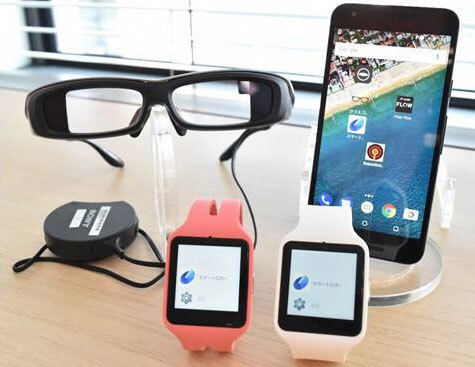
To achieve this, AGC developed a work dynamic analysis solution called Smart Logger in partnership with CEC Corporation. Workers and engineers were equipped with smartphones and IoT-enabled wearable loggers, such as smartwatches and glasses, that could automatically capture workflow data as tasks were performed.
The collected data was transmitted securely via Soracom Air, which allowed each device to connect directly to the cloud. From there, Soracom Beam encrypted transmissions, managed authentication, and routed the information to AGC’s business intelligence (BI) platform for visualization and analysis.
This new approach transformed the process. Data that once required hours of manual collection could now be consolidated instantly in the cloud. Supervisors could view dashboards, spot inefficiencies, and act on insights quickly, while engineers gained more time to focus on developing innovative solutions rather than collecting data.
Why Soracom?
AGC chose Soracom because it provided a connectivity solution that was both easy to deploy and cost-effective. By inserting Soracom Air SIMs directly into smartphones and wearables, AGC was able to connect devices immediately, without the need for complex networking infrastructure. This kept costs low and ensured the system could be rolled out quickly.
With Soracom Beam, AGC gained secure data transfer and flexible cloud integration. Rather than requiring devices to manage authentication themselves, Beam handled encryption and credentialing in the cloud, allowing devices to remain lightweight and efficient. This design reduced both overhead and battery consumption, making wearables more practical in a demanding factory environment.
Another advantage was global reach. With AGC operating factories overseas, Soracom’s international compatibility meant the same connectivity model could be applied across multiple geographies. This consistency simplified deployment and ensured that learnings from one facility could be extended across the company.
Future Plans
AGC believes that adopting IoT and cloud-based analytics is essential for building more reliable, stable, and efficient operations. While manufacturing often involves strict security requirements, AGC sees secure connectivity and cloud platforms as the best way to overcome these barriers and unlock new opportunities.
The company plans to expand its Smart Logger program beyond factories and into office environments. By equipping office workers with wearables, AGC hopes to capture new categories of data, particularly around value-added time, that can be used to improve workflows and productivity.
By continuing to integrate IoT into more aspects of its business, AGC expects to not only streamline existing operations but also foster a culture of continuous innovation. With Soracom providing the connectivity backbone, AGC is positioned to scale securely and efficiently across both manufacturing and office settings.
AGC Corporation – Company Overview
AGC Inc., formerly Asahi Glass Co., Ltd.', is a Japanese global glass manufacturing company, headquartered in Tokyo. It is the largest glass company in the world and one of the core Mitsubishi companies.




Champion in IoT
Connectivity Management
Soracom Named as a Champion for IoT Connectivity Management in 2023 Kaleido Intelligence Connectivity Vendor Hub