
Parco, a popular chain of department stores, wanted to better understand how visitors move through their stores and engage with different areas. By gathering real-time data on customer traffic and location, the retailer could gain valuable insights to support sales and marketing strategies.
To explore these possibilities, Parco launched a pilot project at the Parco Museum. The initiative focused on collecting visitor information using image-sensing technology that could detect and analyze traffic patterns without storing or transmitting personally identifiable data.
This innovative approach gave Parco a new way to capture actionable insights while respecting customer privacy. By linking IoT technology with its existing operations, the retailer set the stage for smarter, data-driven decision-making.
As a competitive retailer, Parco needed a solution that was not only affordable but also highly secure. The company knew that the reliability of its connectivity would directly impact the success of its consumer analysis system.
Because the project involved collecting information derived from images, data protection and compliance were critical. While the system discarded specific images after sensing customer movement, Parco still needed to ensure that any transmitted information remained safe from outside threats.
At the same time, Parco wanted to avoid the limitations and risks associated with Wi-Fi networks, which can be difficult to secure and manage at scale. They needed a solution that offered secure, flexible, and cost-conscious connectivity right out of the box.
To meet these requirements, Parco turned to Soracom. By installing Soracom Air SIM cards into their IoT devices, the company was able to establish secure, cellular-based connectivity without any additional equipment. The ability to connect virtually anywhere gave them the flexibility to deploy quickly across multiple locations.
For transmitting data, Parco used Soracom Beam to handle protocol conversion. By converting HTTP to HTTPS in the cloud, Beam ensured that data could be sent securely to Amazon API Gateway without requiring additional relay servers. This also helped reduce device power consumption and data usage, streamlining the entire process.
Beam’s credential management and custom header functions were especially valuable. These allowed Parco to authenticate access to AWS at scale without requiring an individual authentication key for each device – saving significant time, cost, and operational complexity.
Soracom gave Parco the right combination of affordability, security, and scalability. With Soracom Air, they had reliable connectivity that could easily be deployed and managed across their devices. With Soracom Beam, they gained the ability to encrypt and transmit data securely, all while reducing power and bandwidth demands.
This comprehensive solution allowed Parco to implement authentication and data protection measures without compromising ease of use. Instead of investing in costly infrastructure or managing a complex set of device keys, they were able to manage everything directly in the cloud.
Ultimately, Soracom’s services helped Parco stay competitive while ensuring that their customer analytics project was both secure and cost-effective, a critical balance for a retailer operating in today’s fast-moving market.

Looking ahead, Parco plans to extend its consumer analytics system beyond the initial pilot. Future enhancements include customer tier analysis to better segment visitors and track repeat behaviors, as well as detailed route mapping to understand how customers move through different parts of the store.
By combining IoT data with marketing strategies, Parco hopes to refine promotions, optimize store layouts, and create more personalized shopping experiences. These insights will allow them to strengthen customer engagement while increasing operational efficiency.
With Soracom’s secure connectivity and data management tools, Parco has the flexibility to continue scaling its analytics capabilities and unlock even greater value from real-time customer data.
Safecast was founded in the aftermath of the March 11, 2011 earthquake, tsunami, and subsequent Fukushima Daiichi Nuclear Power Plant meltdown. The organization began as a citizen-led effort to collect and openly share radiation data when trustworthy information was scarce. In the years since, it has grown into a global, volunteer-centered initiative dedicated to open environmental science.
What started as a grassroots project has become the world’s largest open dataset of environmental radiation readings, with coverage spanning multiple continents. Safecast has also expanded its focus to include air quality monitoring, giving communities worldwide greater access to environmental information.
By combining citizen science with open data principles, Safecast empowers individuals to contribute to (and benefit from) an unprecedented, freely available environmental dataset.

The Fukushima disaster highlighted a critical gap in environmental monitoring: the lack of readily available, real-time radiation data. Communities needed accurate, localized information that could be collected and shared continuously, not just intermittently or through official channels.
Building a global sensor network posed significant challenges. Devices needed to be simple enough for volunteers to install themselves, while still capable of transmitting reliable data at all times. Since installations could be anywhere – from city homes to remote rural areas – connectivity had to be robust and accessible even in places without standard internet access.
To succeed, Safecast needed a connectivity solution that balanced ease of deployment, global reach, and centralized manageability, allowing them to focus on data collection and analysis rather than technical overhead.
Safecast developed a distributed sensing network using IoT devices equipped with radiation and air quality sensors. These devices transmit environmental readings in real time, 24 hours a day, 365 days a year, to a global database accessible to the public.
The network is built around volunteer participation. Citizen scientists install and operate devices in their own homes, neighborhoods, and communities, contributing to a growing body of environmental data. This model enables rapid expansion without requiring a large centralized infrastructure.
Thanks to IoT technology, Safecast can now deliver consistent, reliable environmental measurements at scale. Data is gathered and consolidated in one platform, supporting analysis and visualization that helps individuals, communities, and researchers alike.
For Safecast, one of the greatest technical hurdles was making devices simple enough for volunteers to deploy, while ensuring they could reliably connect from anywhere. As Safecast Co-Founder and Japan Director Pieter Franken explained, “one major challenge to developing this device was maintaining its simplicity while enabling it to get online even in places with no obvious Internet access. We chose to use Soracom Air for its ability to communicate over the mobile grid.”
By using Soracom Air SIM cards, Safecast ensures that devices can connect securely and seamlessly in diverse environments without requiring complex setup. Volunteers can focus on contributing data, while Soracom provides the infrastructure for reliable communication.
As Franken noted, “The outstanding User Console replaces what used to be various complex services we outsourced separately with a single integrated platform where we can manage devices and SIMs.” This integration has streamlined operations, reduced costs, and made it possible for Safecast to scale their network globally.
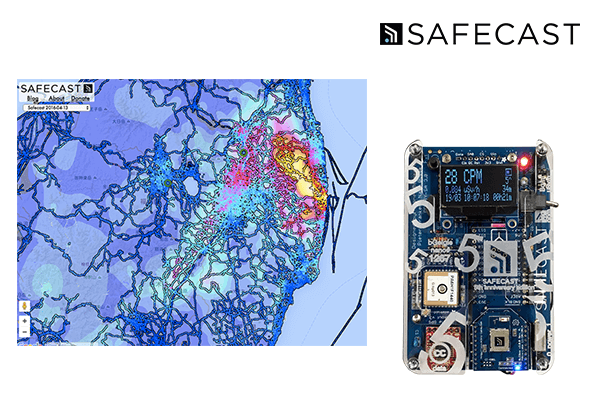
Safecast remains committed to empowering communities with accurate, real-time environmental data. By continuing to grow its network of radiation and air quality sensors, the organization can broaden its coverage and provide even more valuable insights to people around the world.
Future efforts will likely focus on expanding the diversity of data collected and strengthening the tools available to volunteers and researchers. The emphasis on simplicity and openness ensures that anyone, anywhere, can participate in data collection.
With Soracom’s global connectivity and management capabilities, Safecast is well-positioned to keep scaling its operations, helping citizens, governments, and researchers access the environmental information they need to protect communities and the planet.
IHI Corporation is a world-leading provider of heavy-industry equipment, from aerospace systems to industrial machinery. Its power generation business supports the entire lifecycle of gas turbine power plants, ensuring efficiency and reliability from installation through decades of operation.
Because these facilities are often located in remote areas, IHI has been innovating in monitoring and support for decades. Its first remote monitoring system, launched in 1995, relied on secure, proprietary wireline connections to deliver one-way diagnostic data. These links provided a constant flow of information to IHI engineers for real-time turbine analysis and preventive maintenance.
As gas turbine installations expanded worldwide, IHI continued developing ways to enhance its remote monitoring services and meet the growing need for secure, responsive maintenance solutions.

While remote monitoring could detect issues, on-site adjustments were still required when maintenance alerts were triggered. Sending teams of engineers to distant facilities introduced delays and raised costs, especially for sites in hard-to-reach locations.
To increase responsiveness and improve customer support, IHI wanted the ability to make secure, real-time adjustments remotely. Yet power plants represent critical infrastructure, and opening a pathway for external access over the public internet was considered too risky.
The challenge was clear: IHI needed a secure, reliable, and cost-efficient way to enable two-way connectivity with customer systems without exposing sensitive data or systems to external threats.
IHI turned to Soracom to create a connectivity solution that balanced flexibility and security. Using Soracom Air, gateways at each power plant can connect directly to IHI headquarters in Toyosu, Japan, regardless of where the facility is located.
When monitoring systems flag a maintenance requirement, IHI uses Soracom Gate to establish a secure, private networking channel between headquarters and the customer site. This on-demand connection enables real-time remote adjustments to turbine equipment, bypassing the public internet and minimizing the risk of unauthorized access.
Because adjustments are needed only occasionally, Soracom’s pay-as-you-go model proved to be a perfect fit. It eliminated the expense of full-time data connections while giving IHI the flexibility to spin up secure sessions only when necessary. With Soracom’s global SIMs, IHI also avoids negotiating local connectivity contracts, ensuring consistent service worldwide.
By integrating Soracom Air and Soracom Gate, IHI achieved a remote management solution that enhances customer satisfaction and lowers operating costs. Power plants can now remain at peak efficiency with minimal downtime, even in challenging or remote environments.
An in-house software application built on the Soracom API allows IHI engineers to make secure adjustments without requiring advanced technical knowledge. Routine fixes can be handled remotely, and urgent issues can be addressed immediately, even while teams are traveling to the site. This flexibility has reduced unnecessary site visits, accelerated response times, and improved plant reliability.
For IHI’s customers, the benefits are clear: enhanced performance, lower maintenance costs, and the assurance of secure, professional oversight at all times.

Looking ahead, IHI plans to continue expanding its portfolio of gas turbine power plants worldwide, particularly in emerging markets. With installations increasingly located in remote or hard-to-reach regions, the ability to remotely monitor and manage facilities will be central to delivering long-term customer value.
IHI will continue to strengthen its service offerings across the full power plant lifecycle. Remote maintenance will increasingly complement real-time diagnostics, providing a seamless support system that helps customers maximize performance while minimizing operational risks.
With Soracom’s global connectivity and secure networking, IHI is well positioned to keep delivering advanced support services wherever its customers need them most.
Large buildings like airports and shopping centers consume roughly 40% of the world’s energy, often inefficiently. Heating and cooling systems are especially challenging: they are complex to configure, often unaware of actual indoor conditions, and can leave occupants uncomfortable while consuming more energy than necessary.
Enerbrain developed a cloud-driven solution combining IoT hardware, algorithms, and mobile apps to transform building management. The system makes existing HVAC infrastructure smarter, easier to control, and more comfortable for occupants, delivering up to 30% energy savings without requiring expert oversight.
By offering a simple installation process and compatibility with existing building management systems, Enerbrain helps property managers reduce both operating costs and environmental impact.
As Enerbrain’s Energy Cloud solution expanded across Europe, it quickly faced new connectivity and data management challenges. Devices in different markets generated growing volumes of environmental data, which had to be transmitted securely from sensors to cloud platforms.
Managing device lifecycles was critical. Each sensor required unique identifiers and consistent integration with customer systems, adding complexity to deployments in multiple countries. At the same time, differing national standards for environmental and building data created the need for a standardized pipeline to combine and analyze disparate data sources smoothly.
Enerbrain needed a solution that would ensure secure connectivity, simplify global device management, and scale easily with its rapid growth.
Enerbrain selected Soracom to connect and manage its IoT devices across multiple countries. Using Soracom Air for cellular connectivity and Soracom Air for Sigfox for low-power devices, the company could unify management of both types of devices under a single platform.
For data integration, Enerbrain relies on Soracom Beam to transmit sensor data directly into AWS IoT. Soracom Canal provides secure VPC peering with AWS, while Soracom Gate ensures private bidirectional communication for device administration and troubleshooting.
Enerbrain also uses Soracom Harvest to collect baseline device metrics, enabling quick visualization and simple API access for diagnostics. This combination of services allows the company to securely manage devices, standardize its data pipeline, and integrate seamlessly with AWS cloud services.
As a data-driven company, Enerbrain needed a partner that could deliver both connectivity and a suite of cloud-integrated services. Soracom provided exactly that, enabling secure communication, real-time device management, and efficient data visualization.
“Together with Soracom Canal, Gate and Beam, we can securely integrate data from our cellular and Sigfox devices into AWS IoT and communicate back to them whenever required for tasks such as troubleshooting and upgrades,” the team explains.
The pay-as-you-go model made it easy to scale operations efficiently, while Soracom’s platform simplified SIM and device management across multiple countries. With Harvest’s fast visualization capabilities, Enerbrain significantly improved its operational efficiency, reducing time spent on troubleshooting and device oversight.
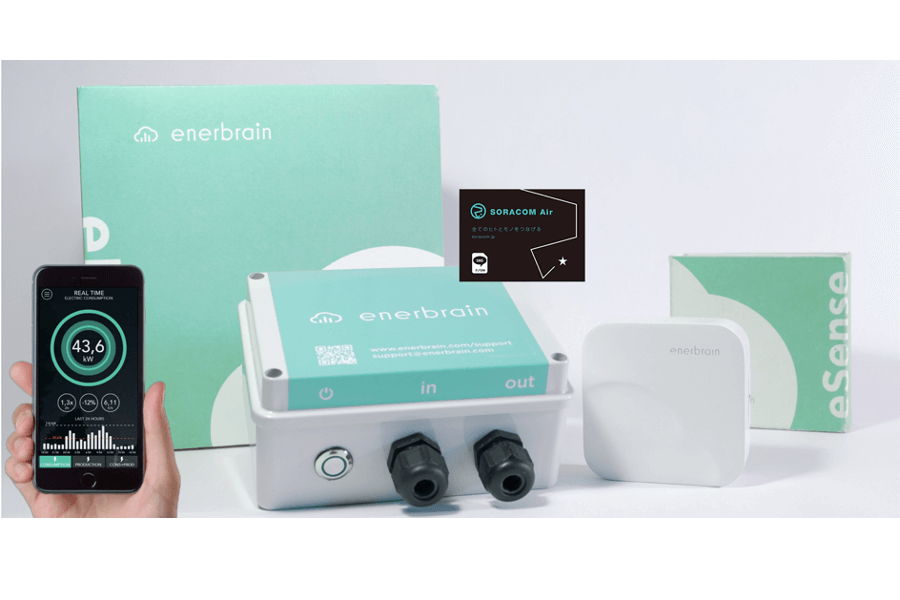
As Enerbrain continues to expand into new regions, improving operational efficiency remains a top priority. Currently, device states are monitored through Soracom APIs, and the company plans to integrate Harvest APIs for deeper cross-data mapping between products, providers, and business systems.
The next step is closer integration with Soracom Funnel, which will further streamline data processing and simplify code requirements for large-scale deployments. This will allow Enerbrain to scale its data pipeline without adding operational complexity.
Since adopting Soracom, Enerbrain has grown from serving customers in Italy and France to operating across Europe, the Americas, India, the Emirates, and Japan, where it opened a subsidiary in 2018. With Soracom as a long-term partner, Enerbrain is confident in its ability to expand globally while continuing to deliver smarter, more sustainable building solutions.
Photosynth was founded in 2014 with the vision of transforming traditional craftsmanship into connected experiences. Their flagship product, Akerun, brings digital innovation to something as fundamental as a door lock. By enabling smartphone-based access control, Akerun allows users to unlock and lock doors with a tap, while also offering features like temporary digital keys, usage logs, and shared access.
Unlike many smart lock systems that require a complete hardware replacement, Akerun is designed to attach directly to existing doors, making it both practical and accessible. The accompanying mobile app seamlessly integrates with email and social media, giving users simple tools to manage who can come and go. For many, Akerun acts as a “robot concierge” that makes everyday entry and exit more convenient.
With adoption quickly expanding in both residential and commercial spaces, Photosynth recognized that the smart lock could be more than a gadget, it could be a platform for reimagining property access. From apartments to offices to hotels, Akerun has redefined how people think about door locks in the digital age.
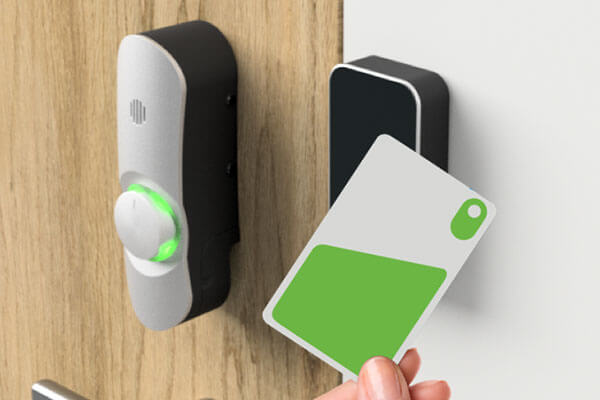
As demand for Akerun grew, Photosynth faced several challenges. First, in 2015, not all customers used smartphones. Roughly 35% still relied on feature phones, which limited access to Akerun’s Bluetooth-based model. Supporting users that range from older demographics to corporations with standardized feature phone fleets was key to making the service more inclusive.
At the same time, customers wanted more flexibility. Many expressed frustration when they forgot to lock their door, couldn’t confirm its status remotely, or needed to let someone inside without being physically present. These requests highlighted the need for Internet-based control, not just Bluetooth.
Finally, Photosynth saw barriers to adoption in requiring users to install a dedicated app for one-off situations, like hotel stays or temporary access. The team knew that if Akerun was going to scale, it had to become easier to use across different devices and scenarios without additional setup burdens.
To meet these needs, Photosynth introduced Akerun Remote, an IoT gateway with built-in 3G connectivity. This device connects to the main Akerun lock via Bluetooth, while end users interact with it through a web browser. By bridging Internet and Bluetooth connections, Akerun Remote enables lock control not only from smartphones but also from feature phones, laptops, and other connected devices — all without requiring an app download.
Connectivity is powered by Soracom Air SIMs, which provide secure, reliable mobile networking for every Akerun Remote. Soracom’s cloud-native platform makes it easy for Photosynth to deploy connectivity at scale, while real-time management tools let engineers track and group SIMs, monitor usage, and troubleshoot directly from the command line.
With Soracom handling connectivity, Photosynth can focus on delivering value to end users. By simplifying setup, enabling remote access, and ensuring secure connections to the cloud, Akerun Remote removes barriers to adoption and makes smart locks practical for a wider audience.
For Photosynth, choosing Soracom came down to flexibility, speed, and cost transparency. Unlike traditional telecom providers that require large upfront SIM orders and long lead times, Soracom allows Photosynth to order only what they need, when they need it, with new SIMs arriving in just a few days. This reduces inventory costs and makes it easy to scale as demand grows.
Soracom’s pay-as-you-go pricing ensures that Photosynth pays only for actual usage, a critical advantage for designing sustainable connected services. Clear cost structures also help Photosynth forecast expenses and confidently expand into new markets.
Equally important, Soracom’s platform is developer-friendly. Engineers can manage SIMs directly via API or command line, making integration with existing workflows seamless. Combined with AWS-backed infrastructure for robust security, Photosynth has found in Soracom a partner who understands both the technical and business needs of scaling IoT solutions.

For Photosynth, the future of smart locks goes far beyond replacing keys. With IoT connectivity, locks become data-rich devices capable of integrating into wider smart home and building systems. Imagine doors that automatically trigger lights, appliances, or HVAC systems based on entry and exit events. These possibilities open the door (literally) to entirely new experiences.
At the same time, reliability is critical. In emergencies, a lock must perform flawlessly. This responsibility drives Photosynth to work closely with Soracom to ensure that connectivity and control are both secure and resilient. For a product tied so closely to safety, dependable partners are essential.
As Photosynth expands globally, they face new challenges in adapting Akerun to localized lock standards. With Soracom’s own global footprint and expertise in cross-market IoT deployments, Photosynth is confident they can overcome these barriers. Together, the two companies are laying the foundation for a world where access is smarter, safer, and more connected.
Anaxeos, a brand created by the Finnish high-tech company Sense of Intelligence Ltd, set out with an ambitious mission: to improve the lives of one million dogs by 2023. The company believes that digitization, IoT, and AI can serve not only humans, but also our closest companions, giving pet owners new insights into their dogs’ health and well-being.
Wearable technology for pets has grown rapidly in recent years, from GPS trackers to activity sensors. Anaxeos builds on this momentum by developing solutions that combine IoT data with cloud-based analytics, helping owners better understand their dogs’ needs and behaviors. By making the invisible visible, Anaxeos strengthens the bond between people and their pets.
The company’s innovation has not gone unnoticed. In 2017, Anaxeos was recognized as the Best IoT Startup in Finland and nominated as one of the Best IoT Startups in the Nordic region, demonstrating early validation of its vision and approach
Designing wearable IoT solutions for dogs comes with unique challenges. Devices must be lightweight, durable, water-resistant, and comfortable enough for animals to wear throughout daily activities. At the same time, they need to look stylish and appealing to owners who view these products as both functional and lifestyle accessories.
Beyond physical design, connectivity and data security present additional hurdles. Pet wearables must reliably capture and transmit data such as activity levels, heart rate, and location. This requires dependable wireless communication and secure data exchange to ensure accuracy and privacy.
Balancing usability, comfort, and technical performance is a complex task. To deliver a solution that meets all three requirements, Anaxeos needed both strong design expertise and a trusted connectivity partner who could help manage data transmission seamlessly at scale.

Anaxeos’ wearable solution integrates multiple sensors to monitor activity, heart rate, and GPS location in real time. Data is captured from the dog, transmitted via cellular IoT connectivity, and analyzed in the cloud using AI and machine learning. This combination delivers actionable insights that owners can access through an intuitive app with a conversational interface.
With cellular connectivity at its core, the system ensures that data flows securely and reliably no matter where dogs and owners are. Whether monitoring daily exercise goals, tracking vital signs, or pinpointing location, Anaxeos gives owners peace of mind and a deeper connection to their pets.
To power this vision globally, Anaxeos turned to Soracom. As CEO Toni Koutu explains, Soracom’s eSIM capability and real-time management tools allow Anaxeos to scale across borders while keeping costs under control. Just as importantly, Soracom shares a startup-friendly mindset, providing support and flexibility that align with Anaxeos’ values and growth goals.
The construction industry has long struggled with stagnant productivity, particularly in earthwork operations. With nearly one-third of skilled workers expected to retire within the next decade, SITECH Japan recognized that technology would be essential to closing the labor gap.
Government agencies like Japan’s Ministry of Land, Infrastructure and Transport began encouraging “full use of ICT” to improve efficiency and make construction more attractive to future generations. SITECH responded by seeking out solutions that could enhance productivity at the ground level without disrupting existing workflows.
Yet, one of the biggest hurdles was connectivity. Hundreds of machines on-site required real-time data transfer, but conventional SIMs were costly, slow to provision, and often unreliable in remote or rugged locations where many projects take place. SITECH needed an agile, scalable, and resilient solution that could keep construction projects on track.
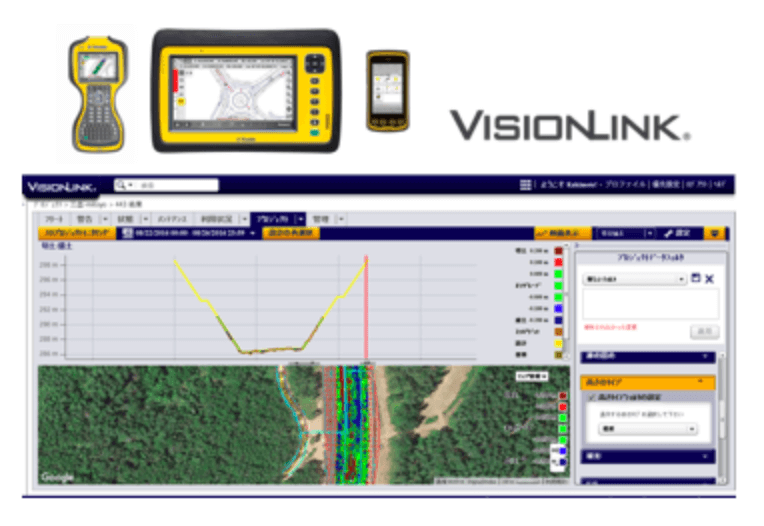
To transform construction sites into connected environments, SITECH Japan integrated IoT-enabled sensors and displays into heavy machinery like excavators. These devices measure angles, GPS positions, and operational data, transmitting it in real time to SITECH’s cloud-based Trimble Connected Community platform (VISIONLINK).
Through VISIONLINK, supervisors gain unprecedented visibility into machinery performance and site progress. They can monitor excavation depth, track asset usage, and receive automated safety alerts. This level of oversight helps reduce delays, optimize workflows, and improve safety across worksites.
To make this ecosystem viable, SITECH turned to Soracom Air, which provided cellular IoT connectivity that was fast to deploy and reliable even in challenging environments. This ensured that every piece of machinery, regardless of location, could be seamlessly integrated into SITECH’s digital construction framework.
SITECH Japan found in Soracom a partner that understood the demands of IoT at scale. Traditional SIMs took up to 10 business days to provision, but with Soracom, SITECH could activate Air SIMs instantly via the Soracom User Console. This agility eliminated costly SIM inventories and allowed them to respond quickly to new projects or sudden client needs.
Equally valuable was Soracom’s flexibility in managing data transmission. Using the console, SITECH could adjust speeds on demand – choosing low-speed connections for transmitting GPS and machine logs, or high-speed connections for large 3D design files – without physically swapping SIMs. This reduced labor, minimized downtime, and simplified troubleshooting.
With Soracom’s cloud-integrated management tools, SITECH now operates with greater efficiency, ensuring their IoT-enabled construction sites deliver the productivity gains needed to address Japan’s labor challenges.

SITECH Japan is committed to expanding its role in shaping the future of construction. With government initiatives mandating ICT adoption in 30% of machinery, SITECH plans to manage over 100,000 connected terminals within the next three years.
The company is exploring advanced IoT use cases such as autonomous piloting systems, construction navigation, and data-driven maintenance solutions. By continuously analyzing data from connected machinery, SITECH will further streamline workflows, improve safety, and accelerate project delivery.
Through IoT innovation, SITECH Japan is helping ensure that construction remains not only productive but also an attractive and sustainable career path for future generations.
Wine is particularly sensitive to environmental changes, and even slight deviations in temperature, humidity, or light exposure can affect its quality. For wineries and distributors, ensuring that bottles are stored and transported under ideal conditions is essential not only for product quality but also for brand reputation.
The challenge lies in the complexity of the global supply chain. A single shipment of wine may travel across multiple countries, distributors, and retailers before reaching the end consumer. Each handoff represents a potential point of failure, making real-time monitoring and secure data transfer mission-critical.
For ISTMOS, creating a truly effective quality assurance system meant enabling every stakeholder, whether a local distributor or an international retailer, to access and trust consistent data across the entire supply chain. That required an IoT solution capable of delivering reliable connectivity worldwide.

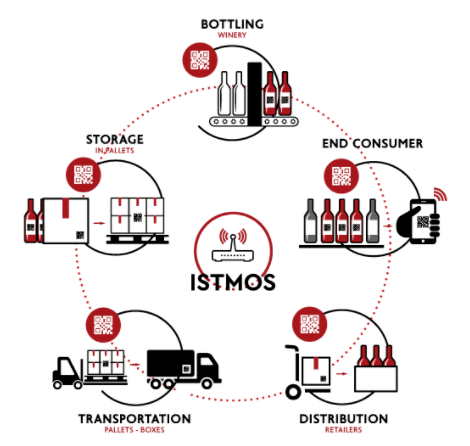
To address this challenge, ISTMOS designed a system that integrates IoT gateways, environmental sensors, and a customizable decision support platform. These gateways continuously measure and record temperature, humidity, and luminosity, triggering alerts whenever conditions deviate from safe thresholds.
Each gateway is connected through Soracom Air SIMs, providing a secure cellular link that works across borders and networks. Once collected, sensor data is transmitted to the ISTMOS platform via Soracom Beam, which securely relays information while preserving critical metadata such as timestamps, device IDs, and geographic location.
With this system in place, wineries, distributors, and retailers gain continuous visibility into product conditions. From the moment a bottle leaves the vineyard until it reaches the consumer, ISTMOS ensures that any issue is detected early and addressed before it impacts quality.
For ISTMOS, data integrity and system reliability are non-negotiable. By leveraging Soracom Air, the company can easily provision and manage SIM cards, ensuring that new devices can be deployed quickly without complex setup. The global reach of Soracom’s network also allows ISTMOS to scale its solution internationally with confidence.
Meanwhile, Soracom Beam streamlines the process of securely transmitting IoT data from devices to the cloud. This not only reduces development overhead but also ensures that sensitive information travels safely, giving stakeholders peace of mind.
The combination of Soracom’s connectivity and management tools allows ISTMOS to operate efficiently at scale, reducing operational overhead while focusing on delivering a reliable, AI-supported monitoring solution for the global wine supply chain.
As a growing startup, ISTMOS continues to innovate by expanding its system capabilities and exploring additional Soracom services. With interest in extending beyond wine into other high-value goods, the company sees enormous potential for IoT-enabled supply chain management.
Future plans include testing services such as Soracom Endorse for authentication, Soracom Funnel for direct cloud integration, and Soracom Gate for building secure private networks. By incorporating these tools, ISTMOS aims to further enhance transparency, scalability, and security across its platform.
With Soracom as a trusted partner, ISTMOS is well positioned to scale its solution across industries and ensure that products sensitive to environmental conditions maintain quality throughout their journey.
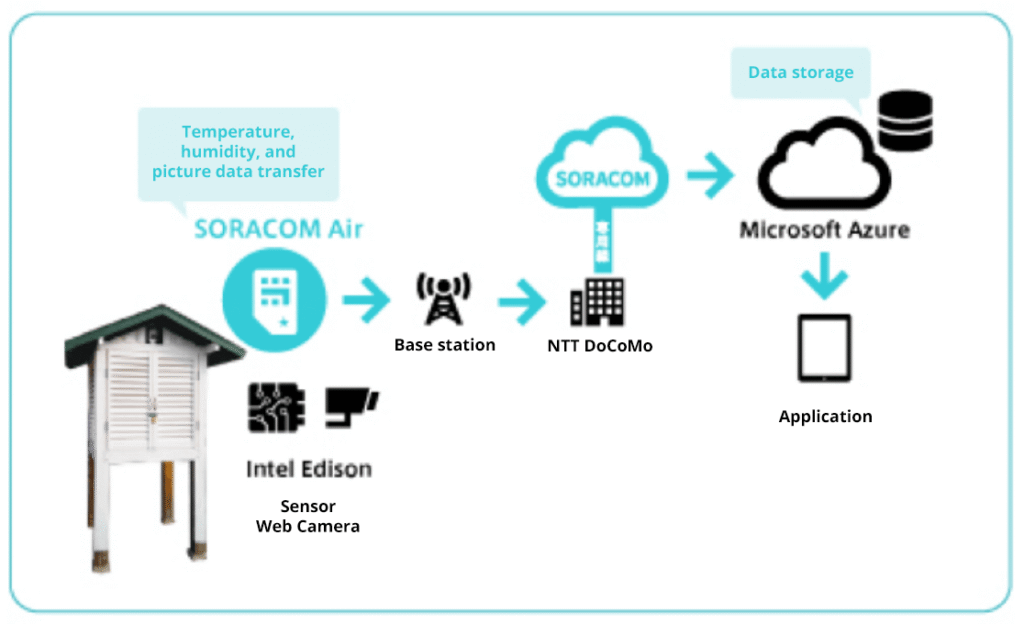
For many schools and universities, adopting connected teaching tools is an appealing way to modernize education. Uchida Yoko’s Internet 100 Boxes, which house IoT sensors and cameras to measure factors like temperature and humidity, offered a way to bring real-time data directly into the classroom as part of the curriculum.
However, deploying these systems at scale came with challenges. Many facilities were concerned about the cost of laying out dedicated network infrastructure, particularly in outdoor or remote areas where wiring would be impractical or costly. At the same time, manually tracking thousands of devices to ensure proper operation would be inefficient and expensive.
These barriers threatened to slow the adoption of a system that could otherwise transform teaching and provide students with a direct connection to real-world data.

To overcome these challenges, Uchida Yoko turned to cellular IoT connectivity. By equipping each Internet 100 Box with Soracom Air SIMs, the company could bypass the need for costly new infrastructure while ensuring reliable data transmission from sensors and cameras across a wide geographic range.
The cellular approach also gave schools flexibility: whether installed in a remote outdoor location or an urban campus, the devices could connect immediately without additional setup. This made scaling the solution far simpler and reduced the burden on school IT teams.
Equally important, Soracom’s pay-as-you-go pricing structure ensured that the project would remain affordable as it grew, keeping long-term operational costs under control while supporting thousands of deployed sensors.
Soracom’s platform provided Uchida Yoko with the ability to fine-tune connectivity to match their needs. Since most sensor data is lightweight, Soracom’s adjustable data speeds helped minimize costs without sacrificing performance.
In addition, the Soracom User Console allowed Uchida Yoko to remotely monitor the communication status of each sensor and camera. If an issue arose, they could quickly determine whether it was caused by the hardware, the network, or the device itself. This ability to isolate and address problems remotely reduced downtime and kept classrooms running smoothly.
By combining flexible connectivity with strong management tools, Soracom gave Uchida Yoko confidence in scaling their IoT-powered teaching materials nationwide.
Looking ahead, Uchida Yoko plans to expand its investment in IoT-powered education. By leveraging real-time data, they aim to give students richer, hands-on learning experiences that connect theory with practice.
Their vision is to transform classrooms into dynamic environments where environmental conditions, IoT technology, and interactive lessons combine to create a more engaging way of learning. With Soracom as a partner, Uchida Yoko is well positioned to lead this shift toward smarter, data-driven education.
Fujitec Co., Ltd. is a global manufacturer specializing in elevators and escalators, with solutions spanning design, installation, maintenance, and operations. Their products are installed in office buildings, hotels, condominiums, and commercial properties across Japan and overseas.
Maintenance is critical for safety and legally required in all markets. Traditionally, this has meant regular on-site inspections, but Fujitec sought to modernize maintenance with IoT technology. By collecting and analyzing operational data remotely, they aimed to enhance safety, reduce costs, and respond to issues faster.
This vision marked a significant evolution in how elevators and escalators could be monitored, moving from reactive and manual maintenance toward proactive, data-driven service.

Fujitec recognized strong demand for remote monitoring but faced practical barriers to scaling globally. Cellular connectivity had proven effective in similar IoT applications abroad, yet managing separate contracts in every country posed logistical and financial challenges.
Elevators and escalators are often deployed in diverse geographies, from dense cities to remote areas. Ensuring reliable connectivity in each location while keeping infrastructure simple was essential.
Ultimately, Fujitec needed an IoT solution that was both globally scalable and quick to implement, avoiding the delays and costs of laying new networks or creating local server environments.
Fujitec integrated IoT connectivity directly into their elevator systems during manufacturing, ensuring that devices could securely transmit operational data without requiring additional site infrastructure.
They began with a prototype that used IoT sensors to monitor key environmental conditions like temperature and humidity. Data was transmitted via Soracom Air SIM cards, then routed through Soracom’s cellular platform to Amazon Web Services (AWS).
This approach allowed Fujitec to complete their prototype in just two weeks, proving the value of a solution that combined connected hardware, secure cloud integration, and Soracom’s flexible platform.
With Soracom, Fujitec avoided the complexity of managing multiple regional carriers. Soracom Air SIMs provided seamless cellular connectivity worldwide, allowing the same system design to work across markets.
Soracom’s integration with cloud platforms ensured that sensor data reached AWS securely and reliably. By using Soracom’s management console, Fujitec could also monitor device connectivity and performance across their fleet.
The result was a system that not only delivered preventive maintenance insights but also enabled faster response when issues arose, creating tangible improvements in safety and customer experience.

Fujitec sees three major opportunities for IoT in manufacturing: separating data acquisition from analysis across global operations, enabling automatic data collection without manual oversight, and connecting “offline” devices like standalone elevators into broader predictive maintenance systems.
By combining IoT with AI and machine learning, Fujitec aims to deliver even greater security, convenience, and value to customers. Remote monitoring of elevators is just the beginning; the company envisions a future where predictive analysis becomes standard in industrial equipment.
Fujitec emphasizes that the best way forward is experimentation, testing new IoT solutions, engaging with cloud platforms, and partnering with experts like Soracom. Even small steps, they believe, can lead to meaningful innovation across the industry.