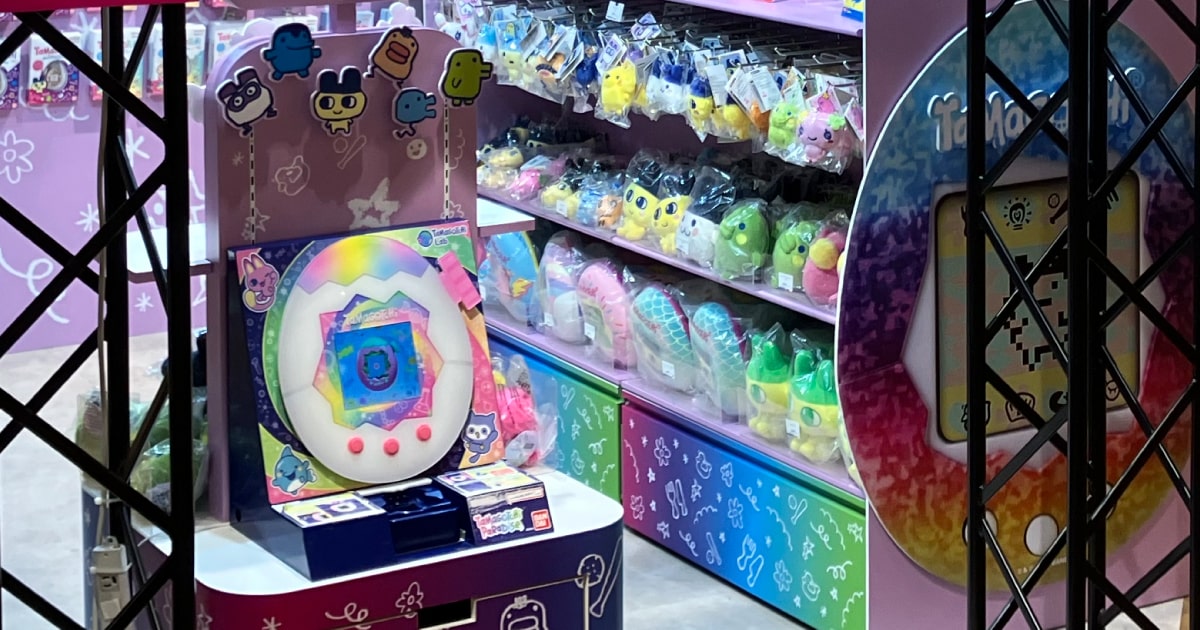


With the launch of Tamagotchi Paradise, entertainment giant Bandai set out to bring a new level of connected play to fans worldwide. The device supports nine languages and is available across Japan, North America, Europe, and Asia. To complement the new release, Bandai developed Lab Tama, a large in-store terminal that lets users link their Tamagotchi to the system for exclusive content and activities.
When players place their Tamagotchi Paradise device into the Lab Tama tray, the system connects instantly – unlocking region-specific downloads, limited-edition items, and unique in-store interactions. These terminals are installed in toy stores, department stores, and electronics retailers across Japan and beyond, acting as both a digital playground and a promotional platform.
In past deployments, updating in-store terminals required physical media and manual updates by staff, a process that proved both time-consuming and costly. For this global rollout, Bandai needed a secure, flexible way to distribute content remotely, update systems automatically, and monitor performance from a central location.
Bandai’s goal was to make Tamagotchi’s “connected play” truly worldwide. However, the company faced a major challenge: ensuring that each Lab Tama terminal could communicate securely and reliably across diverse retail environments.
Because the devices were being deployed in multiple countries, Bandai needed a connectivity solution that worked seamlessly across regions without relying on local Wi-Fi networks or complex configurations. They also needed to synchronize updates by region and campaign, ensuring that marketing content and gameplay experiences aligned perfectly with local events and product launches.
Operational visibility was another priority. Bandai wanted the ability to monitor connection status, view usage data, and analyze performance metrics in real time to plan maintenance, optimize content, and understand player behavior at each store location.
To meet these goals, Bandai integrated Soracom IoT SIMs into the Lab Tama terminal, enabling stable, secure communication regardless of installation location. Using Soracom’s global cellular coverage, the terminals now connect automatically without relying on local infrastructure.
Each terminal communicates regularly with the Soracom platform to check for new content. When updates are available, the device securely downloads promotional videos, software updates, or campaign-specific features directly from Soracom-hosted storage. This automated process ensures that content is always up to date and tailored to each region’s needs.
Soracom’s management console and APIs allow Bandai’s development team to centrally monitor connectivity, data usage, and device operation history. This remote visibility helps engineers diagnose issues quickly and ensures consistent performance across all global deployments.

For Bandai, Soracom offered more than just global connectivity. The combination of reliable network access, device management, and automated data delivery gave the company a flexible platform for future innovation.
By leveraging Soracom’s services instead of developing a new system from scratch, Bandai accelerated development timelines and reduced the complexity of deploying and maintaining hundreds of terminals across regions. The Soracom IoT SIM’s compatibility and scalability made it easy to expand the project globally without changing infrastructure.
The result was a fast, secure, and cost-efficient deployment that gave Bandai new tools for both customer engagement and data-driven business intelligence.
The new Lab Tama experience has transformed in-store engagement for Tamagotchi fans. Shoppers can now interact with their devices, unlock new items, and enjoy dynamic promotional content that refreshes automatically based on region and campaign.
At the same time, Bandai gains valuable real-time insights from aggregated usage data, including how often terminals are used, which content is most popular, and when maintenance may be required. This feedback loop informs everything from product development to marketing strategy, helping the company continuously refine the customer experience.
“By being able to distribute content regularly, Lab Tama has become a product fans can enjoy for a long time,” said Chisato Aoyagi, planning and Development Team, Toy Department, Bandai, Co.LTD. “Soracom makes it easy to deliver new experiences to stores around the world.”

Bandai continues to expand the global deployment of Lab Tama terminals, with support for language-specific content distribution and region-tailored campaigns. Future collaborations will extend beyond the toy industry, including a partnership with NEXCO East Japan, which will bring limited-edition Tamagotchi content to Lab Tama terminals installed in highway service areas starting in summer 2025.
As the Tamagotchi universe grows, Bandai aims to strengthen its brand through cross-industry collaborations and digital experiences that connect fans in new and meaningful ways. With Soracom powering its IoT infrastructure, the company is well positioned to deliver fresh content, collect valuable insights, and continue innovating the world of connected play.
Senzary is an industrial IoT solution provider helping enterprises unlock actionable data from physical infrastructure quickly, securely, and without disrupting existing systems. Its cloud-native platform, IoTLOGIQ, is designed to streamline operations like predictive maintenance, compliance monitoring, and air quality tracking using wireless gateways and modular integrations that scale across the enterprise.

“We’re not just another point solution,” said Eric Schummer, Senzary CEO. “We’re building what I call the ERP of IoT – an operating system that brings visibility and control across departments.”
By focusing on rapid deployment, seamless integration with legacy protocols, and a horizontal platform architecture, Senzary helps organizations go from pilot to production without vendor lock-in or internal resistance within weeks, rather than months.
Whether they be Fortune 500 manufacturers or complex infrastructure operators like airports, modern enterprises face two main challenges when launching a successful IoT project:
The Internal Challenge: IT Delays. The most common obstacles tend to be internal security processes, as even sensitive needs such as monitoring dust emissions for regulatory compliance or tracking vibrations to prevent equipment failure must pass rigorous scrutiny. Internal security procedures may force teams into long queues for security reviews and firewall approvals. “One of the biggest obstacles is the layers within large companies,” said Schummer. “Projects can lose all sense of urgency while waiting for IT clearance.”
The External Challenge: Coverage Inconsistencies. Of course, the world at large poses its own challenges. Companies with a national footprint will find that no single mobile carrier offers uniform coverage for their entire operational area, to say nothing of those operations that cross international borders. One area may favor Verizon, while another is exclusively covered by AT&T or T-Mobile. Managing multiple carrier relationships – and bills – can lead to all sorts of logistical fragmentation that can undermine the scalability of any cellular-connected deployment.

To address these challenges, Senzary partnered with Soracom, whose global IoT platform delivers multi-carrier connectivity, remote SIM management, and enterprise-grade networking features. Together, Senzary and Soracom enable a uniquely flexible deployment strategy.
Step One: Rapid Pilot, No IT Required
To bypass IT delays, Senzary deploys smart gateways equipped with Soracom SIMs. These devices operate fully outside the customer’s internal network, connecting instantly to the strongest local carrier – without the need for local contracts or tech intervention.
“Our first conversation with a Fortune 500 client isn’t about network diagrams,” said Schummer. “It’s about solving their immediate pain point. We tell them, ‘We can get you visibility on that critical asset next week, without a six-month IT review.’ Once they see it working, scaling the solution becomes a business decision, not an IT debate.”
Step Two: Seamless Failover for Business Continuity
After a pilot proves successful, that same secure cellular connection can be repurposed as a resilient backup link. If the customer’s primary network ever goes down, the gateway automatically fails over to the Soracom connection, ensuring uninterrupted access to mission-critical telemetry.
This entire solution is delivered as an end-to-end managed service, built on a foundation of security. All data passes through Soracom’s Virtual Private Gateway (VPG), securely encrypted and isolated from the public internet and ensuring enterprise-grade protection.
By pairing Soracom’s flexible, secure connectivity with Senzary’s turnkey platform, enterprises can now deploy IIoT solutions on their own terms – starting fast, proving value early, and expanding with confidence. This dual-role model allows customers to both innovate quickly and protect operations long term, all without sacrificing control or complicating procurement.
“When we’ve had issues, the Soracom technical team has been there,” said Schummer. “I don’t think of Soracom as a vendor. I think of you as part of my business.”
Senzary is now scaling deployments across cement plants, airports, municipal systems, and manufacturing facilities – each one starting with a single urgent need and evolving into a smart, connected operation.
“Predictive maintenance may be the first need, but what happens when the rest of the company wants in?” said Schummer. “That’s where our platform really shines.
Commercial kitchens are busy, high-pressure environments where food preparation, inventory control, equipment maintenance, and staff coordination happen all at once. Small inefficiencies can quickly translate into wasted food, increased costs, and potential health risks. According to the National Restaurant Association, 92% of restaurateurs list food costs as a top concern, with about a half-pound of food wasted per meal served. Poor air quality, equipment downtime, and lack of data visibility further complicate operations.
Recognizing the need to digitize outdated “pen and paper” processes, SmartKitchen developed a suite of IoT-enabled solutions to track performance, improve safety, reduce waste, and extend the lifespan of costly kitchen equipment. Their offerings include:
“Our goal is to make the busy day of the kitchen staff easier by automating routines,” said Matti Verkasalo, CEO of SmartKitchen.

For SmartKitchen, the challenge was to securely connect a large and diverse fleet of IoT devices in kitchens around the world. They needed reliable, multi-carrier connectivity for uninterrupted service, as well as a secure way to protect sensitive operational data.
As Verkasalo explains, “We are particularly proud to have developed a complete software stack from embedded firmware to cloud server, focusing on the food industry. We use three different wireless technologies in IoT solution measurements, and the IoT devices are designed and manufactured by SmartKitchen. All collected data is processed and analyzed in SmartKitchen’s own cloud service with guaranteed data protection. It’s unique that we don’t rely on 3rd party software or hardware.”
SmartKitchen partnered with Soracom to meet their connectivity needs, deploying Soracom Air SIM cards in every mobile device and gateway. This ensures devices automatically connect to the most reliable available network, backed by Soracom’s global multi-carrier infrastructure.
“From the very beginning, Soracom provided good help and advice in getting started,” said Verkasalo. “During our three-year journey with Soracom, we have always received fast and professional support.”
Security was just as important as connectivity. SmartKitchen uses Soracom Virtual Private Gateway (VPG) to isolate devices from the public internet, enabling secure, bi-directional communication strictly between deployed devices and SmartKitchen’s servers.
“Implementation of VPG was quick and has resulted in significant business benefits,” said Verkasalo. “There have been no communication interruptions, which is very important to our customers.”
With Soracom’s connectivity and private networking in place, SmartKitchen has been able to expand into many of Europe’s top hotels and restaurants while adding new features such as POS integrations. Customer feedback continues to drive innovation, ensuring their solutions stay ahead of the industry’s needs.
“With Soracom’s SIM cards, we can easily expand our operations to new countries,” said Verkasalo. “We want to be at the forefront and offer our customers the latest reliable technology. We are currently expanding our distributor network, especially in Central and Western Europe.”
In 2018, credit and debit cards overtook cash as the most common form of payment worldwide, a trend accelerated by the Covid-19 pandemic. Across markets like the US, UK, Australia, and Canada, cashless payments have more than doubled, with the UK seeing a drop in cash transactions from nearly half in 2019 to just 17% in 2020.
For merchants, this shift places electronic payments and point-of-sale (POS) systems at the center of retail operations. The global payment processing market is projected to surpass $147 billion by 2027, creating demand for secure, adaptable, and complete payment solutions.
Modern retailers need more than a credit card terminal – they require end-to-end systems that integrate seamlessly with their existing operations and can adapt to industry-specific demands.
Aurora Payments identified a growing need for payment solutions that combine ease of use with robust backend support, all while maintaining security for sensitive customer data. The challenge lay in designing a platform flexible enough to serve multiple verticals, from traditional retail to industry-specific operations, while meeting strict compliance requirements.
“Our aim is to be best-in-class for vertical markets, bringing to them a solution that actually will help them run their business and do more than just payments,“ said Derek Maxwell, Head of Enterprise Data and Automation at Aurora Payments. “Where it used to be credit card terminals that did payments, now the expectation of those merchants who run those businesses is that you’re going to bring to them a more complete solution.”
Aurora Payments offers a full suite of hardware and software, from simple POS systems to advanced eCommerce platforms, ACH, and check processing capabilities. Recent initiatives focus on partnering with developers to create tailored, vertical-specific systems that can integrate with existing infrastructure and scale as the business grows.
When it came to connectivity, Aurora Payments sought a partner that could deliver reliable performance, global coverage, and industry-leading security. Soracom’s Virtual Private Gateway (VPG) met all three needs.
By configuring Soracom VPG with two fixed global IP addresses, Aurora Payments ensured that upstream payment processors could verify the source of any incoming traffic. Only traffic originating from these IPs is accepted, with all others denied – a critical safeguard for payment security.
“When dealing with people’s money, security is a must,” said Maxwell. “Soracom provides that extra layer of security we need to keep our customers’ data from falling into the wrong hands.”

Today, Aurora Payments serves over 23,000 merchants across the United States, processing approximately $10 billion in transactions annually. With Soracom’s secure, scalable connectivity in place, the company is positioned to continue expanding into new verticals and markets, delivering comprehensive payment solutions that help modern retailers thrive in a cashless economy.
For most retailers, VPNs are the default solution for creating secure backup lines and protecting sensitive point-of-sale (POS) data. However, managing separate VPN connections for each store can quickly become costly and difficult to scale, particularly for chains with dozens of locations.
Hands realized that their reliance on VPNs was not sustainable. Establishing and maintaining a dedicated VPN for each location not only created significant upfront and recurring costs, but also increased administrative overhead when VPNs expired and required recertification.
Beyond costs, VPNs still left potential vulnerabilities. A cellular line connected to a global IP address exposed each device to possible external threats, creating an urgent need for a more secure and manageable alternative.

Hands chose to replace its backup VPN lines with Soracom Air SIMs across all retail store business terminals. By doing so, each terminal gained secure connectivity to central servers without the complexity of traditional VPN infrastructure.
The company went further by adopting Soracom Canal, creating a closed network that restricted server access to authorized devices only. This not only safeguarded sensitive business data but also gave IT teams better control over which terminals could access specific resources.
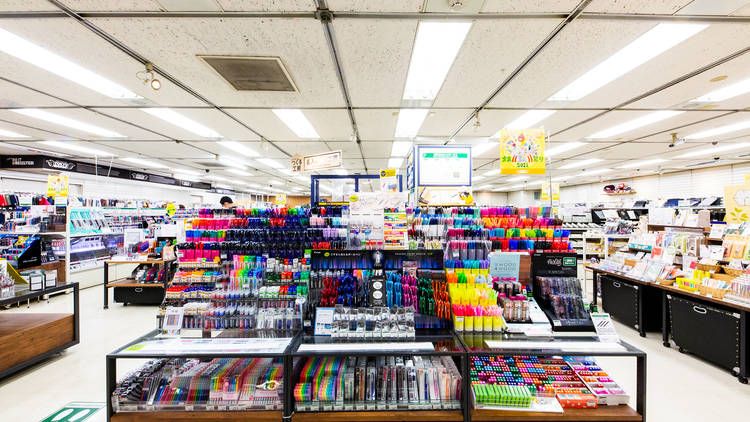
The benefits extended beyond security. At Hands’ flagship locations, Soracom connectivity replaced wired LANs, saving significant time and money. Instead of spending months and millions of yen on construction and installation, Soracom allowed them to deploy new terminals in days with minimal upfront investment.
For Hands, Soracom offered the perfect balance of flexibility and control. With Air SIMs installed in each terminal, secure connectivity could be established immediately, eliminating the need for ongoing VPN maintenance and renewal.
The Soracom User Console gave IT teams centralized visibility into device connectivity and performance. Adjustments that previously required site visits or complex reconfiguration could now be handled remotely with just a few clicks.
In short, Soracom delivered a streamlined, cost-effective networking solution that addressed both Hands’ operational requirements and its strict security needs, while positioning the retailer for future scalability.

Hands has already begun extending its Soracom-based system to its Osaka stores and plans to expand the approach nationwide. Over time, the retailer aims to completely eliminate reliance on WANs and LANs, relying instead on cellular IoT for secure, flexible connectivity.
The company has also started to equip its iPad business terminals with Soracom connectivity. By avoiding VPN setup for each new device, Hands saves time for its staff and reduces technical complexity across its IT environment.
Looking forward, Hands plans to leverage Soracom’s authentication and access restriction features to further strengthen application security. With these steps, the company is building a resilient, future-ready network architecture that can keep pace with the rapidly evolving retail industry.