

Founded by serial inventor Felix Zhao, Cassia Networks is a creator of connectivity solutions that is on a mission to reimagine what Bluetooth can do. The company that created the world’s first Bluetooth router, Cassia is pushing the boundaries of wireless communication by bringing this ubiquitous consumer protocol into enterprise applications. The company’s products have found their way into everything from factory floor automation to remote patient monitoring, utilizing Bluetooth technology to do away with the need for bulky infrastructure or tethered mobile devices.

“Bluetooth started as a short-range, one-to-one communication protocol for consumer devices,” explains Zhao. “Our vision was to fulfill its original promise: to unite wireless communication not just for consumers, but also for enterprise IoT.”

The Challenge: Deploying Bluetooth at Scale in Modern Workspaces

Bluetooth’s ubiquity makes it attractive for IoT, but traditional implementations have fallen short in more complex environments. Designed for short distances and one-to-one pairing, standard Bluetooth devices struggle to support enterprise needs like persistent connectivity, long-range communication, and large-scale sensor networks.

“In places like hospitals, warehouses, and manufacturing plants, having someone walk around with a phone or tablet to collect data from sensors just doesn’t scale,” says Zhao. “That kind of setup introduces costs, inefficiencies, and risks that enterprises can’t afford.”

Range can be a major constraint. While most consumer Bluetooth operates at 10-30 meters, enterprise applications can cover 10 times that or beyond. Moreover, the traditional pairing model creates unnecessary friction when managing devices at scale.

"Soracom allows us to deploy anywhere - whether it’s a hospital in a city or a remote agricultural facility. Customers don’t have to worry about configuring a network or opening firewall ports. Everything just works."
Felix Zhao, CEO Cassia Networks
Felix Zhao
CEO and Co-Founder
Cassia Networks

The Solution: Cassia’s Enterprise-Grade Bluetooth Gateways

A Cassia Bluetooth gateway is a smart, long-range router that acts more like a Wi-Fi access point than a consumer Bluetooth device. These gateways communicate with dozens of endpoints simultaneously, in real-time, and without requiring human intervention.

“Just like a Wi-Fi router sits in the background and handles traffic, our Bluetooth routers are designed to live on the wall and quietly manage everything,” says Zhao. “The user doesn’t have to do anything.”

One of Cassia’s key innovations is its ability to dramatically increase range and connection density without modifying end devices. Through advanced antenna design, increased receiver sensitivity, and proprietary firmware, Cassia’s gateways can receive signals from standard Bluetooth sensors located up to 1 kilometer away (in optimal conditions) without increasing their transmission power or reducing battery life.

“It’s not just about range,” Zhao emphasizes. “We also eliminated the one-to-one pairing limitation. One gateway can manage a fleet of sensors, stream data in real time, and even host application logic directly on the gateway itself.”

This flexibility is particularly powerful for edge computing scenarios, where customers can run their own applications on the gateway – reducing latency and infrastructure complexity.

Cassia Gateway deployment, bluetooth in a hospital setting

The Role of Soracom: Seamless Cloud Connectivity Without Wi-Fi

To fully decouple Bluetooth sensors from smartphones, PCs, or other mobile gateways, Cassia needed a reliable and secure way to connect its Bluetooth routers to the cloud. That’s where Soracom came in.

With Soracom, Cassia gateways can communicate over a multicarrier cellular network, avoiding the need to rely on local IT teams, Wi-Fi infrastructure, or on-site connectivity.

“Soracom allows us to deploy anywhere – whether it’s a hospital in a city or a remote agricultural facility,” says Zhao. “Customers don’t have to worry about configuring a network or opening firewall ports. Everything just works.”

Soracom’s secure, encrypted tunnels provide a reliable and scalable pathway from Cassia’s gateways to cloud services, enabling remote device management, firmware updates, and data aggregation at scale.

“It’s more than just connectivity,” adds Zhao. “It’s peace of mind for our customers.”

A New Paradigm for Enterprise IoT

Cassia Networks is changing the conversation around Bluetooth. By transforming it into a long-range, multi-device, enterprise-ready communication protocol, Cassia has unlocked a new level of flexibility, affordability, and scalability for IoT deployments. Its gateways are replacing fragile mobile-device pairings with robust, cloud-connected infrastructure.

And with Soracom providing the secure, reliable cellular backbone, Cassia can deploy solutions faster, anywhere in the world, with minimal IT overhead.

“Bluetooth is no longer just for headphones,” says Zhao. “It’s the foundation for the next generation of enterprise IoT.”

Cellular IoT for water management

Thurston County, located at the southern edge of Washington State’s Puget Sound, is home to 250,000 residents and the state capital, Olympia. Surrounded by lakes, streams, and forest, the county balances the needs of a growing population with the stewardship of valuable natural resources. Outdoor recreation is part of everyday life, with boating, fishing, and other water activities drawing heavily on the county’s 16 lakes, which account for nearly 7% of the land area.

Managing this mix of natural beauty and human activity falls to a relatively small county team responsible for water safety, flood prevention, and environmental monitoring. These responsibilities demand accurate, timely data in order to protect residents and maintain quality of life. Traditional manual inspection methods were time-consuming and expensive, limiting the team’s ability to scale services as demand grew.

To address this, the county began exploring connected solutions that could streamline operations. Cellular IoT emerged as the best path forward, offering real-time visibility into water conditions while reducing reliance on manual site visits. With IoT sensors in place, water management could become more efficient, cost-effective, and transparent for residents.

"The built-in Soracom user console and API made a real difference as the team moved from design and architecture to deployment in field… It would have taken twice as long to get most of our sites up without it."
Nathaniel Kale, Thurston County Water Specialist
Nathaniel Kale
Thurston County Water Resource Specialist
Thurston County, WA

Challenge: A big job for a small team

Thurston County’s water resources staff face a daunting mandate. They are responsible for everything from tracking lake levels and groundwater safety to monitoring rainfall, clearing beaver dams, and setting boating restrictions when needed. These tasks require constant vigilance across nearly 1,000 square miles of terrain, much of it rural and difficult to access.

Without remote monitoring, county staff had to drive to individual sites to gather data or assess conditions, a process that was both time-intensive and costly. With limited resources and a small team, fieldwork could only cover so much ground, leaving gaps in the county’s ability to anticipate hazards like flooding or infrastructure damage.

The challenge was clear: how to create a system that could provide county-wide visibility into water conditions, reduce dependence on manual inspections, and ensure residents had reliable, real-time information about their environment.

Solution: Remote monitoring with cellular telemetry

In 2016, Thurston County launched a network of connected sensors designed to automate water monitoring and reduce staff workload. Using cellular telemetry, the county could gather and transmit data on groundwater, lake, and stream levels without requiring in-person site visits. Staff could then log into a centralized dashboard to see conditions in real time and act quickly when intervention was needed.

The initial deployment included five sites reporting hourly data, with expansion to ten additional sites in the first three years. This provided unprecedented visibility into local conditions, helping the county predict flooding, identify hazardous blockages like beaver dams, and coordinate with other jurisdictions on emergency planning. Data collected from the network was also made publicly available through a web dashboard, improving transparency and keeping residents informed.

For residents, this shift translated into faster updates on conditions and more responsive county services. Those living near lakes or flood-prone areas gained access to timely insights that could help protect their homes and families, while the county reduced both the time and cost required to manage water resources.

Why Soracom: Affordable, knowledgeable, and easy to manage

For a sensor network spread across a large and varied geography, cellular IoT was the clear connectivity choice. Early trials with larger operators, however, revealed challenges: higher-than-expected service costs, limited flexibility, and little meaningful support for IoT-specific deployments. Thurston County needed a partner who could provide both affordable service and practical technical expertise.

Soracom quickly proved to be the right fit. Its multicarrier SIMs ensured reliable coverage even in remote or forested areas, while pricing aligned well with the county’s operational needs. More importantly, Soracom worked closely with the county team to troubleshoot equipment from multiple vendors and ensure devices were configured properly. This level of hands-on support was essential in moving the project from design to live deployment.

The Soracom User Console and API also became valuable tools for ongoing management. As Water Resources Specialist Nathaniel Kale notes, “The ability to see a detailed history of connections and the status of each SIM is extremely useful when trying to debug issues with modems and custom hardware. It would have taken twice as long to get most of our sites up without it.”

Future Plans: County-wide coverage

From its initial five pilot sites, Thurston County’s monitoring network has grown steadily. By mid-2019, the number of connected locations tripled, and the county began working toward coverage at more than 90 sites across the region. Each expansion step provided both staff and residents with greater visibility into water resources and environmental safety.

Looking forward, the county sees the connected monitoring network as a foundation for long-term resilience. As extreme weather events grow more frequent and unpredictable, reliable data will be crucial to protecting residents, infrastructure, and ecosystems. Remote monitoring allows the county to anticipate risks, allocate resources more effectively, and reduce costs associated with manual inspection.

More broadly, Thurston County’s work demonstrates how smaller public sector teams can leverage IoT to make a significant impact. By adopting scalable, affordable cellular solutions, local governments can improve transparency, protect public safety, and deliver smarter services to the communities they serve.

International volunteer-centered organization

Safecast was founded in the aftermath of the March 11, 2011 earthquake, tsunami, and subsequent Fukushima Daiichi Nuclear Power Plant meltdown. The organization began as a citizen-led effort to collect and openly share radiation data when trustworthy information was scarce. In the years since, it has grown into a global, volunteer-centered initiative dedicated to open environmental science.

What started as a grassroots project has become the world’s largest open dataset of environmental radiation readings, with coverage spanning multiple continents. Safecast has also expanded its focus to include air quality monitoring, giving communities worldwide greater access to environmental information.

By combining citizen science with open data principles, Safecast empowers individuals to contribute to (and benefit from) an unprecedented, freely available environmental dataset.

“The outstanding [Soracom] User Console replaces what used to be various complex services we outsourced separately with a single integrated platform where we can manage devices and SIMs.”
Anonymous Headshot
Pieter Franken
Co-Founder and Japan Director
Safecast

The Connectivity Challenge: A need for real-time, reliable data

The Fukushima disaster highlighted a critical gap in environmental monitoring: the lack of readily available, real-time radiation data. Communities needed accurate, localized information that could be collected and shared continuously, not just intermittently or through official channels.

Building a global sensor network posed significant challenges. Devices needed to be simple enough for volunteers to install themselves, while still capable of transmitting reliable data at all times. Since installations could be anywhere – from city homes to remote rural areas – connectivity had to be robust and accessible even in places without standard internet access.

To succeed, Safecast needed a connectivity solution that balanced ease of deployment, global reach, and centralized manageability, allowing them to focus on data collection and analysis rather than technical overhead.

Solution: A citizen science network powered by IoT sensors

Safecast developed a distributed sensing network using IoT devices equipped with radiation and air quality sensors. These devices transmit environmental readings in real time, 24 hours a day, 365 days a year, to a global database accessible to the public.

The network is built around volunteer participation. Citizen scientists install and operate devices in their own homes, neighborhoods, and communities, contributing to a growing body of environmental data. This model enables rapid expansion without requiring a large centralized infrastructure.

Thanks to IoT technology, Safecast can now deliver consistent, reliable environmental measurements at scale. Data is gathered and consolidated in one platform, supporting analysis and visualization that helps individuals, communities, and researchers alike.

Why Soracom: Simple, scalable, and globally available connectivity

For Safecast, one of the greatest technical hurdles was making devices simple enough for volunteers to deploy, while ensuring they could reliably connect from anywhere. As Safecast Co-Founder and Japan Director Pieter Franken explained, one major challenge to developing this device was maintaining its simplicity while enabling it to get online even in places with no obvious Internet access. We chose to use Soracom Air for its ability to communicate over the mobile grid.”

By using Soracom Air SIM cards, Safecast ensures that devices can connect securely and seamlessly in diverse environments without requiring complex setup. Volunteers can focus on contributing data, while Soracom provides the infrastructure for reliable communication.

As Franken noted, “The outstanding User Console replaces what used to be various complex services we outsourced separately with a single integrated platform where we can manage devices and SIMs.” This integration has streamlined operations, reduced costs, and made it possible for Safecast to scale their network globally.

Safecast devices

Future Plans: Expanding reach and impact through open science

Safecast remains committed to empowering communities with accurate, real-time environmental data. By continuing to grow its network of radiation and air quality sensors, the organization can broaden its coverage and provide even more valuable insights to people around the world.

Future efforts will likely focus on expanding the diversity of data collected and strengthening the tools available to volunteers and researchers. The emphasis on simplicity and openness ensures that anyone, anywhere, can participate in data collection.

With Soracom’s global connectivity and management capabilities, Safecast is well-positioned to keep scaling its operations, helping citizens, governments, and researchers access the environmental information they need to protect communities and the planet.

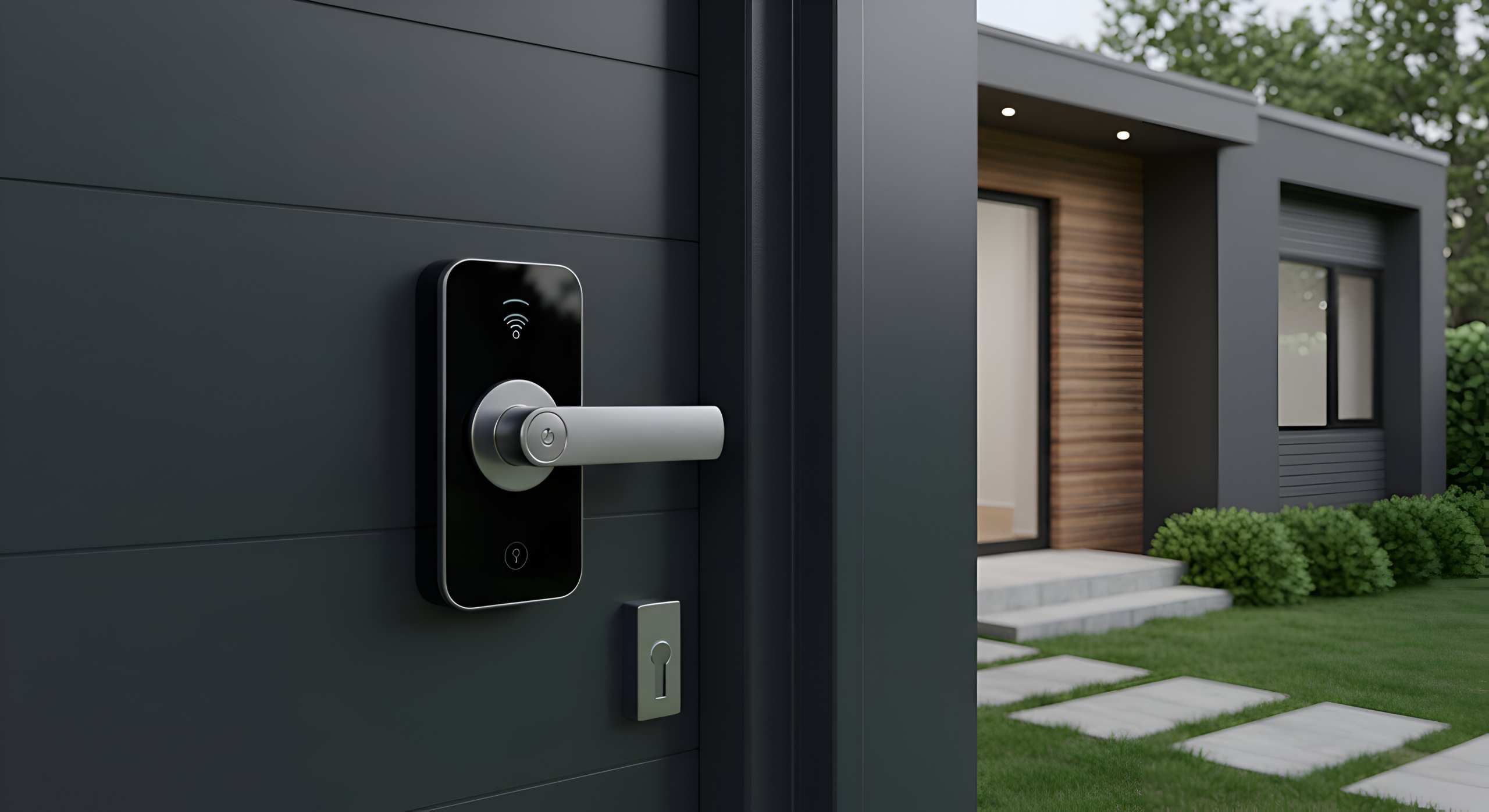
Photosynth was founded in 2014 with the vision of transforming traditional craftsmanship into connected experiences. Their flagship product, Akerun, brings digital innovation to something as fundamental as a door lock. By enabling smartphone-based access control, Akerun allows users to unlock and lock doors with a tap, while also offering features like temporary digital keys, usage logs, and shared access.

Unlike many smart lock systems that require a complete hardware replacement, Akerun is designed to attach directly to existing doors, making it both practical and accessible. The accompanying mobile app seamlessly integrates with email and social media, giving users simple tools to manage who can come and go. For many, Akerun acts as a “robot concierge” that makes everyday entry and exit more convenient.

With adoption quickly expanding in both residential and commercial spaces, Photosynth recognized that the smart lock could be more than a gadget, it could be a platform for reimagining property access. From apartments to offices to hotels, Akerun has redefined how people think about door locks in the digital age.

Photosynth

Challenge: Providing access to locked listings remotely

As demand for Akerun grew, Photosynth faced several challenges. First, in 2015, not all customers used smartphones. Roughly 35% still relied on feature phones, which limited access to Akerun’s Bluetooth-based model. Supporting users that range from older demographics to corporations with standardized feature phone fleets was key to making the service more inclusive.

At the same time, customers wanted more flexibility. Many expressed frustration when they forgot to lock their door, couldn’t confirm its status remotely, or needed to let someone inside without being physically present. These requests highlighted the need for Internet-based control, not just Bluetooth.

Finally, Photosynth saw barriers to adoption in requiring users to install a dedicated app for one-off situations, like hotel stays or temporary access. The team knew that if Akerun was going to scale, it had to become easier to use across different devices and scenarios without additional setup burdens.

Solution: Cellular connectivity that goes wherever its needed

To meet these needs, Photosynth introduced Akerun Remote, an IoT gateway with built-in 3G connectivity. This device connects to the main Akerun lock via Bluetooth, while end users interact with it through a web browser. By bridging Internet and Bluetooth connections, Akerun Remote enables lock control not only from smartphones but also from feature phones, laptops, and other connected devices — all without requiring an app download.

Connectivity is powered by Soracom Air SIMs, which provide secure, reliable mobile networking for every Akerun Remote. Soracom’s cloud-native platform makes it easy for Photosynth to deploy connectivity at scale, while real-time management tools let engineers track and group SIMs, monitor usage, and troubleshoot directly from the command line.

With Soracom handling connectivity, Photosynth can focus on delivering value to end users. By simplifying setup, enabling remote access, and ensuring secure connections to the cloud, Akerun Remote removes barriers to adoption and makes smart locks practical for a wider audience.

Why Soracom: A connectivity that helps them grow

For Photosynth, choosing Soracom came down to flexibility, speed, and cost transparency. Unlike traditional telecom providers that require large upfront SIM orders and long lead times, Soracom allows Photosynth to order only what they need, when they need it, with new SIMs arriving in just a few days. This reduces inventory costs and makes it easy to scale as demand grows.

Soracom’s pay-as-you-go pricing ensures that Photosynth pays only for actual usage, a critical advantage for designing sustainable connected services. Clear cost structures also help Photosynth forecast expenses and confidently expand into new markets.

Equally important, Soracom’s platform is developer-friendly. Engineers can manage SIMs directly via API or command line, making integration with existing workflows seamless. Combined with AWS-backed infrastructure for robust security, Photosynth has found in Soracom a partner who understands both the technical and business needs of scaling IoT solutions.

Photosynth

Future Plans – Centrally managed remote maintenance at a global scale

For Photosynth, the future of smart locks goes far beyond replacing keys. With IoT connectivity, locks become data-rich devices capable of integrating into wider smart home and building systems. Imagine doors that automatically trigger lights, appliances, or HVAC systems based on entry and exit events. These possibilities open the door (literally) to entirely new experiences.

At the same time, reliability is critical. In emergencies, a lock must perform flawlessly. This responsibility drives Photosynth to work closely with Soracom to ensure that connectivity and control are both secure and resilient. For a product tied so closely to safety, dependable partners are essential.

As Photosynth expands globally, they face new challenges in adapting Akerun to localized lock standards. With Soracom’s own global footprint and expertise in cross-market IoT deployments, Photosynth is confident they can overcome these barriers. Together, the two companies are laying the foundation for a world where access is smarter, safer, and more connected.