
Lamplight Logistics is a software-first IoT provider specializing in Real-Time Location Systems (RTLS). By creating a “blue dot experience” for industrial assets, Lamplight helps enterprises track everything from high-value automotive components to sensitive pharmaceutical shipments. Their platform is designed to be tech-agnostic, merging various data streams (Bluetooth, UWB, and even machine vision) into a single source of truth for the enterprise.
“Success is far beyond the dashboard,” says Kurt Nehrenz, CEO and Co-Founder of Lamplight Logistics. “It’s about hydration of existing business systems. We want to fill that ‘current location’ field in a customer’s SAP or ERP automatically, making their daily workflows more effective without adding another portal to log into.”
In the world of RTLS, the “where” is only as good as the “how.” For Lamplight, the primary obstacles to scaling their solutions were threefold:
To overcome these hurdles, Lamplight partnered with Soracom and Cassia Networks to provide a secure, cellular-first backbone for deploying enterprise-grade Bluetooth gateways. This approach transformed their deployment model into a true plug-and-play experience, allowing them to bypass the customer’s internal network entirely. “Our goal is minimal effort,” explains Nehrenz. “We ship gateways and say, ‘Please plug these in. Game done.’ Soracom ensures that as long as they can see the sky, they’re going to work.”
Advanced Management and “Game-Changing” Diagnostics Beyond global reach, the Soracom platform provides the granular control necessary to maintain high-fidelity RTLS streams. Lamplight leverages Soracom Napter and Soracom Peek as “game changers” for their remote service model.
Cloud-Native Integration This entire suite is delivered as a managed service built on AWS infrastructure, allowing Lamplight to route telemetry directly into their private cloud environment. This ensures that sensitive asset data remains encrypted and isolated from the public internet while allowing the team to use Soracom’s APIs to monitor data usage and signal health in real-time. By leveraging this native integration, Lamplight can reliably execute complex commands, such as triggering a specific Bluetooth tag to start blinking via a cloud-to-device command, with near-zero latency.

Eliminating Infrastructure Friction Soracom allows Lamplight to bypass the “IT negotiation” phase by using cellular-backed gateways. Instead of waiting months for corporate Wi-Fi access, they can achieve Day 1 deployment with plug-and-play hardware that connects to the cloud the moment it is powered on.
Global Continuity and Scalability Soracom’s multi-carrier coverage eliminates “dark spots” as assets move across borders or through remote facilities. This reliable connectivity, managed through a single cloud console, allows Lamplight to troubleshoot and scale their SIM fleet globally without the need for expensive on-site maintenance.
Optimized Asset Intelligence By offloading security and protocol conversion to the Soracom network, Lamplight significantly extends the battery life of its field sensors. This ensures high-fidelity data flows directly into client ERP systems (like SAP), shifting the focus from simple tracking to automated business outcomes.
By pairing a flexible software stack with Cassia’s gateways and Soracom’s reliable global connectivity, Lamplight has turned RTLS into a predictable, high-ROI business tool. They have successfully eliminated the “dark spots” in automotive supply chains, where losing custom-molded pallets or sequence racks previously resulted in massive capital losses.
“No more dark spots,” says Nehrenz. “People are going to expect to know where their things are. It’s going to be mandated rather than a nice-to-have before too long, and Soracom provides the trusted connection that makes our stuff work.”

Moving forward, Lamplight is focused on evolving RTLS from a “nice-to-have” into a mandatory operational standard. By deepening its integration with Soracom’s Connectivity APIs, Lamplight aims to embed real-time network diagnostics and automated billing alerts directly into its UI, creating a single pane of glass for both asset and network health.
The next phase of the partnership centers on “Anti-Tamper” security, leveraging IMEI locking and Virtual Private Gateways (VPGs) to ensure field hardware remains dedicated strictly to mission-critical data. As Kurt Nehrenz notes, the goal isn’t just “tech for tech’s sake,” but rather “getting as close to the dollars as possible” by uncovering the hidden ROI found in total supply chain awareness. Whether via advanced Bluetooth standards or Satellite IoT (NTN), Lamplight’s mission remains the same: eliminating every remaining dark spot in the global supply chain.
VizioSense was created with a clear mission: to prove that AI and privacy can coexist. The company builds intelligent vision sensors that process video locally on-device, sending only anonymized data to the cloud.
From the start, VizioSense focused on helping customers understand real-world activity – the flow of people, vehicles, and goods – without the surveillance concerns common in camera-based systems. Their product lineup includes:
These self-learning sensors combine computer vision, AI, and embedded autonomy to provide real-time analytics while minimizing bandwidth and maintenance demands.
Deploying vision-based sensors outdoors introduces a host of connectivity challenges. Many installation sites lack access to fixed internet infrastructure, while Wi-Fi is often too unreliable ( and too insecure) for commercial deployments.
VizioSense needed a secure, always-on wireless connection that could transmit small packets of anonymized data in real time, across distributed urban and industrial environments. Each device had to operate autonomously and maintain uptime, even in remote or high-traffic areas.
With projects scaling across Europe and beyond, the company also needed a connectivity solution that could easily manage large device fleets without adding operational overhead.
VizioSense built its privacy-first sensors to process all video data locally, transmitting only anonymized counts or analytics. To keep that data flowing reliably, sensors connect via Soracom 4G cellular connectivity instead of Wi-Fi.
Soracom’s SIMs offer instant compatibility with VizioSense hardware and simplified global deployment, providing secure coverage in more than 160 countries. Through the Soracom API, the VizioSense team integrated connectivity management directly into their own systems, automatically monitoring data usage and alerting teams when thresholds were exceeded.
The Soracom User Console further streamlined operations by displaying live device status and connection history, allowing engineers to diagnose and resolve issues in minutes rather than hours.
VizioSense’s partnership with Soracom was built on shared principles of transparency and efficiency. Soracom’s flexible data plans and straightforward pricing allowed VizioSense to align costs with actual usage – an essential feature when managing thousands of lightweight, low-data IoT devices.
With Soracom handling connectivity across regions, VizioSense could focus on what they do best: refining their edge AI algorithms and expanding their solution portfolio.
VizioSense’s collaboration with Soracom is already powering complex smart-city initiatives.
In Greece, VizioCount sensors have been deployed for a large-scale mobility study at the Port of Piraeus, analyzing pedestrian and vehicle patterns to help city planners improve accessibility and safety.
Elsewhere, the VizioCrowd solution is helping municipalities manage public beaches more efficiently, using real-time crowd density data to optimize lifeguard staffing, enhance public safety, and improve sustainability.
Across these projects, Soracom’s reliable connectivity has enabled faster deployments, simplified device management, and ensured data integrity in distributed environments.

Looking ahead, VizioSense plans to expand its product portfolio with smaller, indoor sensors for retail, offices, and smart buildings, bridging the gap between public and private environments.
On a global scale, the company aims to make ethical, privacy-preserving sensing technology accessible to all regions, proving that intelligent analytics and data protection can go hand in hand.
Senzary is an industrial IoT solution provider helping enterprises unlock actionable data from physical infrastructure quickly, securely, and without disrupting existing systems. Its cloud-native platform, IoTLOGIQ, is designed to streamline operations like predictive maintenance, compliance monitoring, and air quality tracking using wireless gateways and modular integrations that scale across the enterprise.
“We’re not just another point solution,” said Eric Schummer, Senzary CEO. “We’re building what I call the ERP of IoT – an operating system that brings visibility and control across departments.”
By focusing on rapid deployment, seamless integration with legacy protocols, and a horizontal platform architecture, Senzary helps organizations go from pilot to production without vendor lock-in or internal resistance within weeks, rather than months.
Whether they be Fortune 500 manufacturers or complex infrastructure operators like airports, modern enterprises face two main challenges when launching a successful IoT project:
The Internal Challenge: IT Delays. The most common obstacles tend to be internal security processes, as even sensitive needs such as monitoring dust emissions for regulatory compliance or tracking vibrations to prevent equipment failure must pass rigorous scrutiny. Internal security procedures may force teams into long queues for security reviews and firewall approvals. “One of the biggest obstacles is the layers within large companies,” said Schummer. “Projects can lose all sense of urgency while waiting for IT clearance.”
The External Challenge: Coverage Inconsistencies. Of course, the world at large poses its own challenges. Companies with a national footprint will find that no single mobile carrier offers uniform coverage for their entire operational area, to say nothing of those operations that cross international borders. One area may favor Verizon, while another is exclusively covered by AT&T or T-Mobile. Managing multiple carrier relationships – and bills – can lead to all sorts of logistical fragmentation that can undermine the scalability of any cellular-connected deployment.

To address these challenges, Senzary partnered with Soracom, whose global IoT platform delivers multi-carrier connectivity, remote SIM management, and enterprise-grade networking features. Together, Senzary and Soracom enable a uniquely flexible deployment strategy.
Step One: Rapid Pilot, No IT Required
To bypass IT delays, Senzary deploys smart gateways equipped with Soracom SIMs. These devices operate fully outside the customer’s internal network, connecting instantly to the strongest local carrier – without the need for local contracts or tech intervention.
“Our first conversation with a Fortune 500 client isn’t about network diagrams,” said Schummer. “It’s about solving their immediate pain point. We tell them, ‘We can get you visibility on that critical asset next week, without a six-month IT review.’ Once they see it working, scaling the solution becomes a business decision, not an IT debate.”
Step Two: Seamless Failover for Business Continuity
After a pilot proves successful, that same secure cellular connection can be repurposed as a resilient backup link. If the customer’s primary network ever goes down, the gateway automatically fails over to the Soracom connection, ensuring uninterrupted access to mission-critical telemetry.
This entire solution is delivered as an end-to-end managed service, built on a foundation of security. All data passes through Soracom’s Virtual Private Gateway (VPG), securely encrypted and isolated from the public internet and ensuring enterprise-grade protection.
By pairing Soracom’s flexible, secure connectivity with Senzary’s turnkey platform, enterprises can now deploy IIoT solutions on their own terms – starting fast, proving value early, and expanding with confidence. This dual-role model allows customers to both innovate quickly and protect operations long term, all without sacrificing control or complicating procurement.
“When we’ve had issues, the Soracom technical team has been there,” said Schummer. “I don’t think of Soracom as a vendor. I think of you as part of my business.”
Senzary is now scaling deployments across cement plants, airports, municipal systems, and manufacturing facilities – each one starting with a single urgent need and evolving into a smart, connected operation.
“Predictive maintenance may be the first need, but what happens when the rest of the company wants in?” said Schummer. “That’s where our platform really shines.
Founded by serial inventor Felix Zhao, Cassia Networks is a creator of connectivity solutions that is on a mission to reimagine what Bluetooth can do. The company that created the world’s first Bluetooth router, Cassia is pushing the boundaries of wireless communication by bringing this ubiquitous consumer protocol into enterprise applications. The company’s products have found their way into everything from factory floor automation to remote patient monitoring, utilizing Bluetooth technology to do away with the need for bulky infrastructure or tethered mobile devices.
“Bluetooth started as a short-range, one-to-one communication protocol for consumer devices,” explains Zhao. “Our vision was to fulfill its original promise: to unite wireless communication not just for consumers, but also for enterprise IoT.”
Bluetooth’s ubiquity makes it attractive for IoT, but traditional implementations have fallen short in more complex environments. Designed for short distances and one-to-one pairing, standard Bluetooth devices struggle to support enterprise needs like persistent connectivity, long-range communication, and large-scale sensor networks.
“In places like hospitals, warehouses, and manufacturing plants, having someone walk around with a phone or tablet to collect data from sensors just doesn’t scale,” says Zhao. “That kind of setup introduces costs, inefficiencies, and risks that enterprises can’t afford.”
Range can be a major constraint. While most consumer Bluetooth operates at 10-30 meters, enterprise applications can cover 10 times that or beyond. Moreover, the traditional pairing model creates unnecessary friction when managing devices at scale.
A Cassia Bluetooth gateway is a smart, long-range router that acts more like a Wi-Fi access point than a consumer Bluetooth device. These gateways communicate with dozens of endpoints simultaneously, in real-time, and without requiring human intervention.
“Just like a Wi-Fi router sits in the background and handles traffic, our Bluetooth routers are designed to live on the wall and quietly manage everything,” says Zhao. “The user doesn’t have to do anything.”
One of Cassia’s key innovations is its ability to dramatically increase range and connection density without modifying end devices. Through advanced antenna design, increased receiver sensitivity, and proprietary firmware, Cassia’s gateways can receive signals from standard Bluetooth sensors located up to 1 kilometer away (in optimal conditions) without increasing their transmission power or reducing battery life.
“It’s not just about range,” Zhao emphasizes. “We also eliminated the one-to-one pairing limitation. One gateway can manage a fleet of sensors, stream data in real time, and even host application logic directly on the gateway itself.”
This flexibility is particularly powerful for edge computing scenarios, where customers can run their own applications on the gateway – reducing latency and infrastructure complexity.

To fully decouple Bluetooth sensors from smartphones, PCs, or other mobile gateways, Cassia needed a reliable and secure way to connect its Bluetooth routers to the cloud. That’s where Soracom came in.
With Soracom, Cassia gateways can communicate over a multicarrier cellular network, avoiding the need to rely on local IT teams, Wi-Fi infrastructure, or on-site connectivity.
“Soracom allows us to deploy anywhere – whether it’s a hospital in a city or a remote agricultural facility,” says Zhao. “Customers don’t have to worry about configuring a network or opening firewall ports. Everything just works.”
Soracom’s secure, encrypted tunnels provide a reliable and scalable pathway from Cassia’s gateways to cloud services, enabling remote device management, firmware updates, and data aggregation at scale.
“It’s more than just connectivity,” adds Zhao. “It’s peace of mind for our customers.”
Cassia Networks is changing the conversation around Bluetooth. By transforming it into a long-range, multi-device, enterprise-ready communication protocol, Cassia has unlocked a new level of flexibility, affordability, and scalability for IoT deployments. Its gateways are replacing fragile mobile-device pairings with robust, cloud-connected infrastructure.
And with Soracom providing the secure, reliable cellular backbone, Cassia can deploy solutions faster, anywhere in the world, with minimal IT overhead.
“Bluetooth is no longer just for headphones,” says Zhao. “It’s the foundation for the next generation of enterprise IoT.”
ColdChase creates customized IoT solutions designed to fit the needs of an evolving roster of customers. The company operates three unique brands that address the needs of cold chain operations (ColdChase), shipment and asset tracking (AssetChase), and a suite of products focused on improving the passenger experience at airports (PaXChase).
Over the years, the company has helped to resolve countless tracking and monitoring challenges across the supply chain – finding innovative ways to utilize temperature, pressure, and GPS sensors, among other specialized devices, to create unique solutions to individual company issues.
“Every client is different in what they require,” said Rosy Amlani, CPA, the CEO of ColdChase. “So every sensor we sell is customized for every client, which is why our team has to closely interact with the customer to really understand what they need.”

Because ColdChase has a pedigree of designing and manufacturing for other companies, it moved the manufacture of its custom devices in-house, where its engineering staff – representing specialties that range from electrical to simulation to firmware engineering – can craft solutions that perfectly address customer concerns on-site.
At the heart of these solutions is a roster of base devices that can be augmented and tweaked to better suit each application’s needs. These can range from Bluetooth low-energy devices for monitoring applications to cellular sensors ideal for long-distance tracking, with each being augmented to include different sensors and modules as needed. These devices can then be outfitted with GPS, pressure, temperature, light sensors, or other modifications.
“The fact that we have engineers on staff that were part of the company that did a lot of the product development allows us to craft perfectly tailored solutions for our customers,” said Amlani. “That unique understanding of how you put sensors together to create different effects helps make sure that we’re meeting all customer requirements.”
Naturally, when dealing with applications such as airports, cold chain transit, or asset tracking, these devices need to be versatile enough to meet a lot of regulatory, spacing, and power demands. As such, ColdChase sought a connectivity partner that could not only reliably connect their devices wherever they need to deploy but could offer them the versatility to design rugged and reliable devices that can withstand the potentially harsh conditions that abound in asset tracking and cold chain applications.
The ColdChase team evaluated at least a dozen service providers but struggled to find one that could meet the technical needs of their devices—specifically offering CatM1 and NB-IoT connectivity—and provide reliable coverage across the globe. Eventually, the team found Soracom, which not only met all of these needs but could also provide them with low-profile eSIMs for enhanced durability and lower-profile construction.
“We picked Soracom because it hit all those buttons,” said Amlani. “Not only do we get reliable service, we can get it all in eSIM form, which is very important for us. Since we do our own manufacturing, we prefer to put eSIMs on our boards.”
Because eSIMs are soldered directly onto a device’s System on Chip (SoC), their low profile allows manufacturers to design more compact devices. This construction also makes the SIMs more tamper-proof and resistant to vibration—factors important to applications that involve a lot of moving pieces.
In addition, embedding the eSIM into a device simplifies the connectivity process for the end user, removing a lot of the complexities of managing connections for fleets of mobile devices, many of which cross national borders in transit.
“We didn’t want customers trying to figure out what provider to go with depending on what country that we’re going to,” said Amlani. “So this way, the fact that Soracom has coverage in 150 countries or more, we were able to give that to our customers.”
ColdChase also highlights the benefits of Soracom’s User Console in managing deployed devices. The console can be used to monitor the connectivity status of all devices in a deployment.

ColdChase’s solutions have found their way into a number of different applications across the supply chain, providing reliable, actionable data that has helped shape the way business is done. One example shared by Amlani saw ColdChase’s sensors helping to avert a loss of more than $100k worth of meat from spoiling when extreme temperatures caused a commercial freezer to fail.
By partnering with Soracom, ColdChase’s customized solutions have enabled scores of customers to improve the efficiency of their operations and better manage their products. With reliable connectivity and the added security of the embedded eSIM, ColdChase is able to create powerful tools for all stages of the supply chain.
Amlani believes the company’s success comes from its customer-centric view, which provides solutions to issues that aren’t addressed in other technologies. “We focus on providing value to customers that realize how important having a safe, reliable, and functional piece of custom equipment is.”By partnering with a connectivity provider like Soracom, ColdChase can confidently count on reliable connectivity for their end customers.
Commercial kitchens are busy, high-pressure environments where food preparation, inventory control, equipment maintenance, and staff coordination happen all at once. Small inefficiencies can quickly translate into wasted food, increased costs, and potential health risks. According to the National Restaurant Association, 92% of restaurateurs list food costs as a top concern, with about a half-pound of food wasted per meal served. Poor air quality, equipment downtime, and lack of data visibility further complicate operations.
Recognizing the need to digitize outdated “pen and paper” processes, SmartKitchen developed a suite of IoT-enabled solutions to track performance, improve safety, reduce waste, and extend the lifespan of costly kitchen equipment. Their offerings include:
“Our goal is to make the busy day of the kitchen staff easier by automating routines,” said Matti Verkasalo, CEO of SmartKitchen.

For SmartKitchen, the challenge was to securely connect a large and diverse fleet of IoT devices in kitchens around the world. They needed reliable, multi-carrier connectivity for uninterrupted service, as well as a secure way to protect sensitive operational data.
As Verkasalo explains, “We are particularly proud to have developed a complete software stack from embedded firmware to cloud server, focusing on the food industry. We use three different wireless technologies in IoT solution measurements, and the IoT devices are designed and manufactured by SmartKitchen. All collected data is processed and analyzed in SmartKitchen’s own cloud service with guaranteed data protection. It’s unique that we don’t rely on 3rd party software or hardware.”
SmartKitchen partnered with Soracom to meet their connectivity needs, deploying Soracom Air SIM cards in every mobile device and gateway. This ensures devices automatically connect to the most reliable available network, backed by Soracom’s global multi-carrier infrastructure.
“From the very beginning, Soracom provided good help and advice in getting started,” said Verkasalo. “During our three-year journey with Soracom, we have always received fast and professional support.”
Security was just as important as connectivity. SmartKitchen uses Soracom Virtual Private Gateway (VPG) to isolate devices from the public internet, enabling secure, bi-directional communication strictly between deployed devices and SmartKitchen’s servers.
“Implementation of VPG was quick and has resulted in significant business benefits,” said Verkasalo. “There have been no communication interruptions, which is very important to our customers.”
With Soracom’s connectivity and private networking in place, SmartKitchen has been able to expand into many of Europe’s top hotels and restaurants while adding new features such as POS integrations. Customer feedback continues to drive innovation, ensuring their solutions stay ahead of the industry’s needs.
“With Soracom’s SIM cards, we can easily expand our operations to new countries,” said Verkasalo. “We want to be at the forefront and offer our customers the latest reliable technology. We are currently expanding our distributor network, especially in Central and Western Europe.”
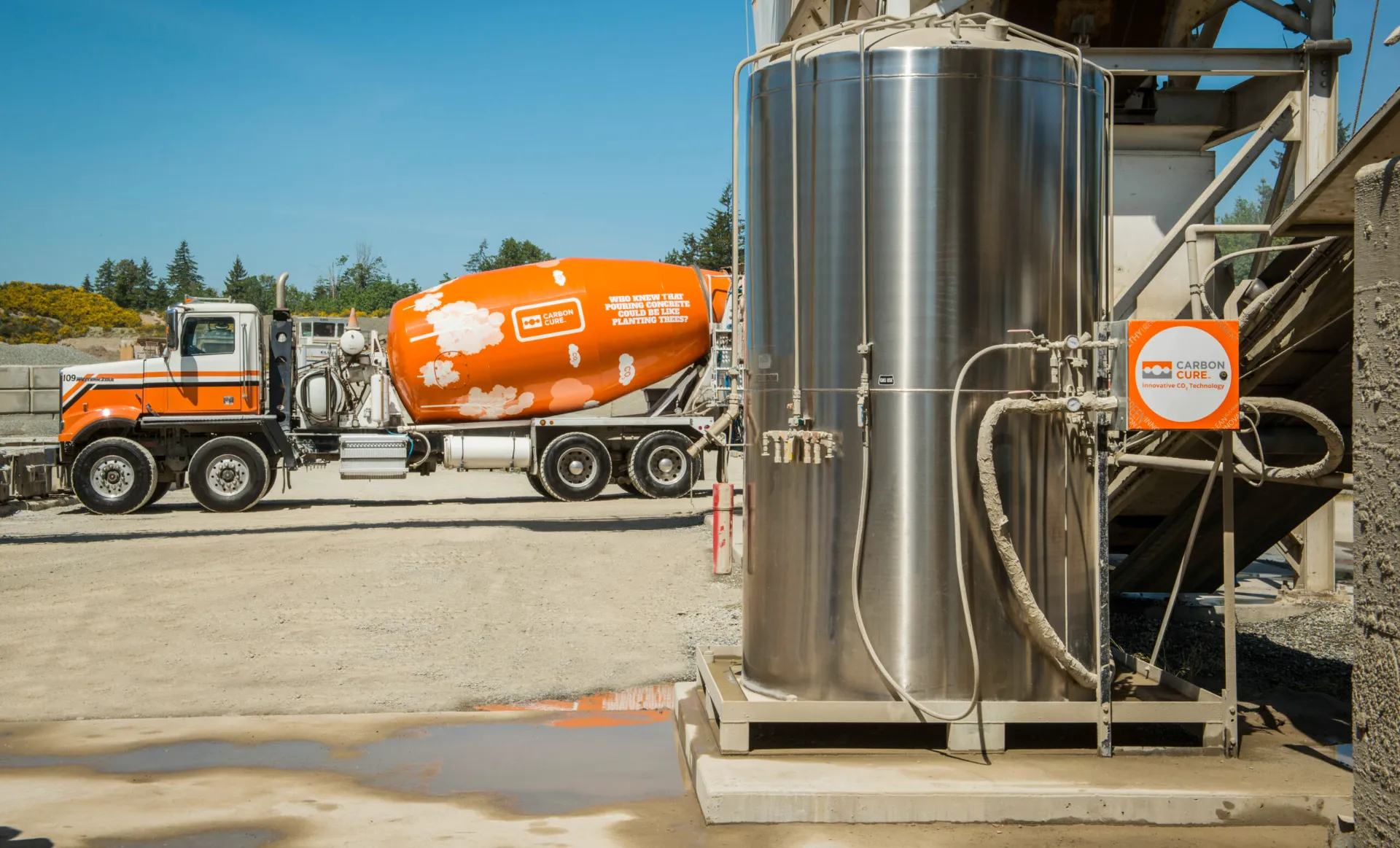
Concrete is the most widely used material in the world after water, yet cement manufacturing, a key ingredient in concrete, is one of the largest sources of global CO₂ emissions. If cement production were a country, it would rank as the third-largest emitter behind China and the United States.
Founded in 2012 in Nova Scotia, CarbonCure Technologies has developed a breakthrough system that injects precise doses of captured CO₂ during concrete manufacturing. The gas mineralizes instantly, becoming permanently embedded in the material. This process not only reduces the carbon footprint but also improves the concrete’s compressive strength, allowing producers to reduce cement usage and further cut emissions.
CarbonCure’s long-term mission is to reduce and remove 500 million metric tons of CO₂ from the atmosphere annually.

To date, CarbonCure’s customers have delivered more than 3.5 million truckloads of concrete infused with its technology, avoiding over 226,000 metric tons of CO₂ emissions. Achieving these results requires complete visibility into the concrete lifecycle to identify every opportunity for efficiency.
“This perspective allows CarbonCure to examine the entire process and pipeline of concrete development to identify potential for efficiency in terms of reducing the carbon footprint,” said Brad Vickers, Sr. Director of Engineering.
CarbonCure’s equipment can be retrofitted into an existing plant in a single visit. The CarbonCure Valve Box connects to an onsite CO₂ tank, automatically injecting the correct dose into fresh concrete or reclaimed wash water. The Control Box integrates with plant batching software, providing real-time visibility into the manufacturing process.
“It’s a process that needs continuous innovation and deployment of hardware,” Vickers added.
Each CarbonCure installation is built as a distributed wireless system. Field units mounted near mixing equipment control the injection process and gather operational data, which is synced to CarbonCure’s command center in real time.
“We can easily see the status of the device, ensure that everything is working correctly, and monitor injection status,” said Stamadianos. “Seeing how much CO₂ goes into every batch of concrete, we can generate carbon credits. Using the data matched with batching information, we can analyze the mix design for its efficiency.”
To collect this data securely — especially from remote sites without internet access — CarbonCure turned to Soracom.
“Our hardware design partner, NeuronicWorks, had worked with Soracom in the past and pointed us to the company,” said Stamadianos. “I saw that with Soracom Beam, we could easily and readily configure the device to talk with an SSL connection. That made our security solution simpler because we no longer needed to manage certificates. Soracom also gave us the ability to use secure web sockets.”
With Soracom Beam, CarbonCure avoided the complexity of building and maintaining a VPN-based architecture, ensuring secure bidirectional communication between field devices and the cloud while supporting global scalability.

More than one million truckloads of concrete have now been delivered using CarbonCure’s system. In April 2021, the company won the NRG COSIA Carbon XPRIZE, a 54-month global competition for breakthrough carbon utilization technologies, and has since been recognized for its safety standards and role in major construction projects such as Amazon HQ2 and the LinkedIn Middlefield Campus.
“There’s a lot of potential to build infrastructure that helps CarbonCure scale past their existing PLC solution and create options to help both smaller and larger concrete producers become more sustainable,” said Stamadianos. “The solution that we have is strong, but we need to keep rolling it out and iterating upon it to fully maximize its potential. It’s about continually solving problems and ensuring that we have the hardware and software infrastructure to keep evolving.”
With Soracom as a connectivity partner, CarbonCure can focus on advancing its technology and expanding its reach to help the concrete industry meet the demands of a sustainable future.
As e-commerce accelerates and global logistics grows toward an expected $6.55 trillion valuation by 2027, the industry faces mounting staffing shortages and pressure to improve efficiency. Many logistics operations, especially in the B2B sector, still rely on legacy, analog processes that slow down communication and resource allocation.
“Logistics is an analog world centered on the exchange of paper and faxes,” said Hiroki Kusumi, Product Manager at Hacobu. “In order to work around the shortage of truck drivers, we need to acquire data through digitization, eliminate waste, and improve efficiency.”
While large courier companies have introduced real-time tracking for consumer deliveries, smaller and medium-sized transport providers have lacked access to affordable, scalable solutions for fleet visibility and coordination across multiple partners.
Hacobu’s goal was to design a system that could be used commonly across operators, enabling a shared, digitized approach to tracking delivery status and streamlining communication between businesses.
Hacobu’s MOVO suite consists of five applications designed to work together and integrate with third-party services for a full logistics ecosystem:
At the heart of this suite is MOVO Fleet, which uses GPS-equipped IoT terminals to track vehicle positions in real time, optimize delivery routes, and provide accurate ETAs. Devices transmit data every five seconds, replacing slow, phone-based status updates with a single dashboard view — even allowing subcontractor vehicles to be monitored alongside a company’s own fleet.
“We saw small and medium-sized transportation companies unable to improve and streamline their delivery routes because they couldn’t afford to efficiently monitor the status of their vehicle deliveries,” said Kusumi. “We thought that by providing a tool that would allow them to manage their dynamic information inexpensively, we would be able to raise the level of digitization in the industry as a whole.”
When searching for a connectivity partner, Hacobu prioritized cost efficiency and scalability to make MOVO accessible for SMBs. Soracom’s pay-as-you-go pricing and strong connectivity in target markets stood out.
“The first requirement in terms of communication was to keep costs down,” Kusumi said. “We considered whether there was anything suitable for our usage environment, where communication is frequent but the data volume is not that large at a time.”
MOVO Fleet devices use Soracom Air for cellular connectivity, enabling not only affordable data transmission but also remote monitoring of communication status via the Soracom User Console. This allows Hacobu to oversee all deployed devices, order new SIMs quickly, and integrate API commands for added operational efficiency.
“Soracom had a high affinity for developing low-cost, easy-to-manage services,” Kusumi noted. “It was also important to be able to monitor the communication status remotely. Soracom’s ability to do so from the management screen was highly valued.”

Since launching in 2018, MOVO has grown from a small-business-focused tool to an industry-spanning platform used by more than 500 manufacturers, retailers, and logistics companies.
One transport company used MOVO Fleet’s route optimization capabilities to reduce its fleet by eight vehicles — then redeployed those vehicles to start a new business.
“Today, the system is used not only by small and medium-sized transportation companies but also by major retail and wholesale distribution companies,” Kusumi said.
Looking ahead, Hacobu aims to extend MOVO beyond telematics and asset tracking to address broader industry challenges, including reducing CO₂ emissions in response to climate change.
“We would like to provide functions and data that can support these efforts,” Kusumi said. “We want to help support various challenges in the logistics industry digitally.”
When expanding into Hamamatsu, the largest city in Shizuoka Prefecture and home to 200,000 propane-using households, residential energy pioneer NICIGAS saw a chance to completely rethink its operations.
Unlike city gas customers clustered in dense areas, propane users are spread out, making door-to-door meter reading costly and inefficient. Regional Head Manager Takeshi Suzuki recognized that traditional methods wouldn’t scale in Hamamatsu’s market.
“We wondered if we could change that conventional business model from ground zero, using the power of IoT and apps,” said Suzuki.
The new Hamamatsu Sales Office would be the prototype for a fully digitalized approach to customer management, billing, and service.
At the heart of the transformation is Space Hotaru, a smart gas meter and Network Control Unit developed with Soracom that automatically collects usage data and detects abnormalities. By transmitting readings over cellular networks, Space Hotaru eliminates the need for monthly in-person visits, cutting costs and improving productivity.
The Hamamatsu office introduced three key “lessening” measures:
These changes reduced clerical workloads to just one-fourth of previous levels and enabled the Hamamatsu office to launch in only 18 months, far faster than the traditional two to four years.
The Space Hotaru project is a collaboration between Nicigas, Unabiz, Kyocera Communications, and Soracom. Using Soracom’s Air service for IoT SIM connectivity, Space Hotaru can transmit reliable, secure meter data across thousands of dispersed locations.
“NICIGAS represents a prime example of the benefits that a smart IoT connectivity platform brings to large-scale deployments,” said Ken Tamagawa, Soracom Co-founder and CEO.
Soracom’s architecture supports massive scaling while maintaining cost control – critical for a rollout that spans tens of thousands of homes.

Going digital has redefined daily operations at Nicigas. Clerks now focus on customer engagement, meter data is collected hourly for more accurate forecasting, and delivery efficiency has improved dramatically, cutting rotation speed by up to 50%.
Customers benefit from transparent usage data in the My NICIGAS app and targeted digital offers, while Nicigas slashes printing and distribution costs.
Following Hamamatsu’s success, Nicigas has begun rolling out the model to other offices, with ambitions to share the system beyond the gas industry.
“The keyword for the future is co-creation, not competition,” said Suzuki. “We hope that Space Hotaru and our cashless and paperless systems will be utilized by companies all over Japan.”
The European road freight market is projected to reach €340 billion in value, driven by steady growth and the essential role of trucking, utilities, and shipping in the modern economy.
But growth brings risk. Cargo theft remains a persistent problem, with an average cost of over $186,000 USD per incident. Fleet operators need to know where their vehicles and assets are at all times, and to recover them quickly if stolen.
With IoT-enabled tracking, fleet owners can now monitor location, speed, and route in real time, ensuring both on-time deliveries and enhanced security.
Mobile Objects delivers customizable GPS and asset tracking solutions through its SaaS platform, mOTelematix. These devices, available in standard and outdoor models, are:
Once installed, the trackers send real-time location and movement data to a central web or mobile app, where operators can:
With their long battery life, rugged design, and flexible deployment, these trackers fit seamlessly into any fleet or asset management operation.

To keep fleets connected across national borders, Mobile Objects uses Soracom Ar for global cellular service in 150+ countries with a single APN and multi-operator coverage. This ensures consistent tracking for assets traveling within or between countries.
Soracom’s platform also offers:
With Soracom, Mobile Objects can deliver the reliable, borderless tracking that modern fleets require.
Celebrating its 20th anniversary in 2021, Mobile Objects continues to serve customers primarily in Switzerland, Germany, and Austria — with expansion on the horizon.
“We expect to grow our customer base significantly over the next 24 months,” said Denk. “So the global support Soracom offers will be welcome in the future.”
With Soracom’s secure connectivity and scalable platform, Mobile Objects is positioned to keep fleets connected, secure, and efficient wherever they travel.